Info

Posts tagged improv comedy

Susan Messing is fucking awesome. When we asked for a bio, she wrote: “Susan Messing has been an improviser and comedian for almost 30 years. So far so good, as no one has kicked her offstage. Yet.”

Photo © Brian McConkey

Photo © Brian McConkey

When did you first know you wanted to do improv/comedy/acting for a living?

I have always wanted to be an actor, a swimming coach, or a hockey goalie. After college, discovered improv and was hooked, especially because I wouldn’t have to memorize anything.

Who has had the greatest influence on your career, and why?

I would say that Mick Napier had the greatest influence on the kind of comedy that pleases me as he was someone who was doing it. That said, there have been a myriad of people whose work I have admired: Lucy, Gilda, Dick Gregory…

What was your first paid improv-related job?

My first paid job was kind of improvised. I was hired for a murder mystery at the Clock Tower Inn in Rockford, Illinois. I was the ‘killer’ but had to pretend all weekend that I was someone who would actually pay money to spend a weekend at The Clock Tower Inn in Rockford, Illinois to do a murder mystery. Mostly lying as myself.

How much have former instructors, coaches, and team members played a part in your career?

Everyone I have ever met has seeped into the core of my consciousness and shaped who I am.

Do you see improv as a means to doing other work, or an end in itself?

Improv is both for me.

What comes to mind when you hear the words “working improviser”?

When I hear the words ‘working improviser,’ that sounds like it is describing my life, teaching and performing here in the States and abroad. That said, improvisers can become copywriters, astronauts, and corporate trainers. This question makes me want to slap someone.

Describe a typical day in your life.

A typical day in my life involves keeping my child alive. I teach either at iO, The Annoyance, or The Second City, and three nights a week perform in one of those theaters. I manage to see my husband and tell him he’s brilliant, because he is. We have dumb animals that I keep alive too. Usually one weekend a month I am booked to go out of town to teach and perform.

What’s the salary range for a working improviser in your city?

No idea. I primarily make my living teaching and performing improv comedy, but I don’t think that most people do here in Chicago. Nobody does improv for the hope of a great salary. Ever.

Improv has been steadily infiltrating corporate and popular culture. With all of the interest in improvisation, why is it still so hard to get bums on seats at shows? (Or is it, in your experience?)

Here in Chicago and on the road, I am very spoiled and grateful in terms of having the best audiences, ever. That said, there are so many improv venues and opportunities to play that I think that people might occasionally get overwhelmed at their options. Also, they might just want to sit in front of the couch and smoke weed and watch The Bachelor.

What’s the best, worst, or weirdest gig you’ve done as an improviser?

See first job. The other ones I have probably blocked out of my memory for damn good reasons.

Do you see any advantages or disadvantages to being a woman in improv?

No.

Where do you see yourself 10 years from now?

Ten years from now I hope to have the laughter and joy of a healthy and happy daughter and the continued love of my husband, family, and friends. I will be doing exactly what I am doing with exactly who I want to be doing it with just like the present moment. I will be spending a lot of time in the Redwood Forest in a tiny house or home in Chicago with our several golden retrievers and little to no cats. I will be super cute which will translate into very sexy. I will be in support of a far more humane world with improv as a fine template. Happy and grateful and hopefully helpful.

Jimmy Carrane is an improviser, interviewer, teacher, author, and long-time member of the Chicago improv community. As creator and host of the Improv Nerd podcast, he’s interviewed the comedy cognoscenti, from TJ and Dave to Rachel Dratch to Bob Odenkirk. He is currently writing his third book about improv.

Jimmy Carrane headshot

Photo © Julia Marcus/Zoe McKenzie Photography

When did you first know you wanted to do improv/comedy/acting for a living?

I think when I was very young. My first memory was I wanted to be a stand up. I always loved comedy. I thought I was going to be a big, famous movie and TV star and have my own sitcom. As you know, those guys make a lot of money.

Who has had the greatest influence on your career, and why?

Lately, I would say Howard Stern. I have always been attracted to this whole concept of truth in comedy. I love his honesty. He can really tell a great story and he does wonderful interviews. I am more inspired by him than jealous, which for me is progress.

What was your first paid improv-related job?

David Koechner tells the story, which I barely remember, that apparently I had gotten a gig for a group of us doing improv games at a race track. As I remember it, the gig was doing games for some guy’s birthday party. Either way, we got paid. They paid me directly with a check and I divvyed up the money. I went to the bank and cashed the check and then paid everyone cash. It was $50 bucks. This part we both agreed on: I Xeroxed the $50 bill that I paid him and said something like “Keep this as copy of the first money we made improvising.”

How much have former instructors, coaches, and team members played a part in your career?

No one was a better hands-on teacher than Martin DeMaat. Much of my teaching style comes from him, just from simply taking his classes and observing how he encouraged us to spend a lot of time warming up and having fun and how he could side coach and say very little but get a lot out of you. Del Close was a huge influence as well. He taught me about the importance of emphasizing truth in comedy, and he taught me to respect myself as an artist. David Koechner was my roommate when I was in my late 20s and early 30s, and before I met him, I really didn’t think I could do characters or impressions. But I would watch him do it and study him, and then I realized I could do it, too.

Do you see improv as a means to doing other work, or an end in itself?

It’s both. Improv is whatever you want it to be. Improv is flexible. For me, the skills that I learned in improv were extremely valuable when I started hosting a show on Chicago Public Radio. I knew how to listen very attentively to each guest, how to adjust in the moment to their personalities and drop my agenda in my questions. It helped me become an excellent interviewer, which of course has helped me in my podcast, as well.

What kind of things might an improviser do to make a living?

How do you know if you made it improv?

Any job that keeps you in the arts is something that can benefit from improv training. You can write for a sitcom, work in radio, create commercials, or work in advertising. Of course, if you want to stay closer to the comedy world, you can teach, coach, direct, act or produce. Over the years, I have done all of those as well as film and TV work that comes to town, acted at trade shows, written corporate shows and videos, served as an MC for events, and lead team building for companies using improv training. Anything that keeps you in the comedy-improv-acting-writing game is perfect for someone with an improv background.

What’s the salary range for an improviser in your city?

I do not know that one.

Improv has been steadily infiltrating corporate and popular culture. With all of the interest in improvisation, why is it still so difficult to get bums on seats at shows? (Or is it, in your experience?)

In my travels around the country teaching and doing live tapings of Improv Nerd, this issue of getting people to your improv is a problem in every market. I think most improv is still dependent on improvisers for their audience. Today, improvisers have more performance opportunities and are taking more classes than ever. If you ask an improviser if they would rather go see a show or be in one, I think you know what the answer would be. So those people who would 10 years ago be in the audience are doing bar-prov or are in class or at rehearsal. I think improv needs to be more accessible to a mainstream audience. Shows like Improv Shakespeare and Baby Wants Candy seem to have accomplished this, but it’s very difficult to do. If you figure out how to get more butts in the seats, let me know.

What’s the best, worst, or weirdest improv gig you’ve done?

I was with the Annoyance Theater and we were doing improv on a hot and muggy August day on a children’s stage at an outdoor festival in Chicago. It was around 1997, and the general public didn’t really know what improv was, especially kids. The show before us was Universal Studio’s Beetlejuice ahow. The set was amazing. It looked like and it cost half a million dollars. It was a set from a movie. It had smoke and all these special effects. The actors dressed like the movie. It was the slickest, most professional thing I had ever seen. The crowd was packed with kids and parents. The parents were more blown away than their kids. The response they got was like were at a rock concert. I was like, “Oh man, this is like trying to follow the Rolling Stones! God help us.” At this point, we hit the stage, dehydrated and with half the cast hung over because it was Sunday around 10 a.m. We had about 15 children with their parents sitting on the grass and in the first improv game, one of the least edgy cast members decides to go blue. The audience dwindles at this point. We try to explain what improv was, but it was futile. Nobody cared. We pushed through and kept going. The only reaction we seemed to be getting were families getting up and leaving. Though we were humiliated, we were grateful that improv is a team sport, and we had other people to share in our misery.

Do you think it’s easier to make a living as an improviser today than it was when you were starting out?

Yes, I think as a teacher there are far more opportunities both teaching in the corporate world and in improv schools and theaters. There are also more opportunities to get paid as a performer than when I started out. Today in Chicago, you can do a boat for Second City, or write or perform or do corporate training for most of the big improv theaters. There is even an ad agency in Chicago that hires improvisers to help with the creative side of adverting. Yes, there are a lot more opportunities.

Where do you see yourself 10 years from now?

I would like to have a national radio and TV show, be a best-selling author and be a famous stand up/storyteller doing one-man shows in huge, sold-out theaters for 1,000 to 1,500 people. And I’d also like to be a loving father who pays attention to his kids and a great husband who pays attention to his wife – unlike what I got in my childhood.

James Gangl is one of Canada’s awesomest improvisers. He’s a comedian, writer, storyteller, filmmaker, member of Bad Dog Theatre Company, and performer with improv troupe extraordinaire, Bonspiel! His one-man show, Sex, Religion & Other Hang-ups won the Ed Mirvish Award for Entrepreneurship and a Canadian Comedy Award. Follow him at: https://twitter.com/jamesgangl

sweater larger

When did you first know you wanted to do improv/comedy/acting for a living? What were you doing before?

I always felt like an actor. I remember when I was three I would put signs up all over the house that read “the show starts in five minutes.” Then I’d herd my parents and whatever guests were over into our living room so I could put on a show. Of course I hadn’t planned the show…who needs a script, right? I just demanded attention, jumping up and down on the sofa and making up songs about vampires.

I knew I wanted to do it for a living as soon as I realized there was a living to be made. Again, I always loved it so I guess my dream was to be an actor but I was also super practical so I got a degree in Business and Computing instead. I worked in marketing for five years while auditioning on the side until I finally made the leap to focus on my passion full time.

Who has had the greatest influence on your career, and why?

Jesus.

I grew up super-religious and every aspect of my life was touched by my belief system. Mostly I just felt guilty about swearing and being lewd on stage but eventually my experience with religion became a wealth of inspiration for my writing.
Besides Jesus, my brother Alex was an excellent influence. My family wasn’t unsupportive of my ambition but they weren’t supportive either. I always looked up to my brother Alex and he was the only member of my immediate family who openly celebrated my love of performing. He was always behind me and he went to all my high school plays, beaming from the front row. He’d even brag about me to his friends. I get warm fuzzies just thinking about it now. His encouragement was a key motivator.

What was your first paid improv-related job?

A guy, let’s call him Jeff, from my level D improv class invited me to play a version “slide show” at his 40th birthday party. My job was to make up the narrative to Jeff’s life using real slides that were being projected. As slides flashed onto the screen I’d point to the people projected and label them as “Uncle Henry, the alcoholic” and “money grubbing Aunt Louise.” Unfortunately, the slides involved his real family and friends who sat shocked and offended in the audience. In hindsight, it may have gone better is I was actually introduced and the audience was told that I was improvising. Instead I was some stranger talking smack about the families most initiate memories. Ah well, hindsight is 20-20. $40 well earned.

How much have former instructors, coaches, and team members played a part in your career?

Their influence is huge. When I started I was watching Slap Happy (Kerry Griffin, Sandy Jobin-Bevans, Dave Pearce, and Tabetha Wells) tear it up. I thought what they did WAS improv, period. So I copied them completely. Alumnae Cafe was huge with Bob Martin, Jack Mosshammer, Paul O’Sullivan and Linda Kash…god were those folks pros. They made me realize how good improv really could be.

As I got better so did my friends and colleagues and because improv is my work and my play, my colleagues became my best friends. Now my pals are helping my growth. Jan Caruana regularly helps me with scripts and I’m always bouncing ideas off Alastair Forbes, Rob Baker and Ashley Botting.  Really, at this point I’m surrounded by stupidly talented people. I’m making a movie with former Theatresports member Alex Hatz, I get photos done with Big in Japan Alumni, Kevin Thom… Most of my artsy projects are done with improviser pals.

Do you see improv as a means to doing other work, or an end in itself?

Yes.

Look, if you are doing improv because you want to be a great actor, stop doing improv. If you are doing improv to become a great stand-up, stop doing improv. Same for sketch and film and music and cooking. Take an acting class, write jokes, write some sketches, buy a tambourine and a Dutch oven…that will get you to your goal quicker. Having said that, if you do improv because you love it, you will continue to do it. That’s what happened to me. I loved it. I was addicted. I couldn’t stop.

Improv was my introduction to the world of performance and became my means to doing other work.  Spending hours becoming a better improviser improved my stage presence and acting ability. It gave me confidence in my comedy. It helped me in front of the camera and gave me the motivation to write. It was the catalyst that lead me to everything else and continues to influence my work in wonderful ways. Having said that, there’s not a lot of money in improv. So YES! Beautiful improv is amazing and wondrous and fulfilling…but, if you want to live off your art you will likely need to learn how to act and/or write.

When you hear the words “working improviser,” what comes to mind?

I think a working improviser is someone who is regularly performing, teaching, coaching and directing improv. At the moment I don’t think it’s possible to sustain yourself with performing improv alone. At the very least a “working improviser” will be teaching as well.

My advice to the improviser that wants to pay rent is this: Get yourself an agent. Like right away. The agent doesn’t have to be good, they just have to send you out for commercials. Improv prepares you best for commercials. The ad industry loves improvisers even if they don’t know it! Ads are usually 30 seconds long and comedic, and therefore they use broad archetypes like “the geek,” “the love interest,” “the goof,” “the thug” as their staple characters. When I started improvising all I did was broad characterizations and that’s exactly the kind of stuff ad folks want. Plus you can improvise! Throw in a button at the end of your audition and everyone will think you’re a genius. Plus, commercials can pay tons of money. So…go get an agent. (And it wouldn’t hurt if you took some on camera classes as well. Acting in front of the camera is much smaller.)

Describe a typical day in your life.

The days are really different. A typical week looks like me going to a handful of auditions and prepping them if they are big and chunky. I cook a lot of my own meals, which is great because I can easily keep a stew bubbling as I run lines. I write too. I’m on the pitch list for DNTO and regularly come up with pitches for stories I want to tell on the radio. At night I teach and do the odd show and try to flirt with girls. And play embarrassing board games that 15-year-olds play.

What’s the salary range for an improviser in your city?

Honestly, I don’t really know. Most improvisers are doing other things to pay the rent. Here’s the range for various improv related sources of income: For teaching you make anywhere from $30 – 55/hr (CAD$). For coaching maybe $20 – 50/hr depending on who you are and who the troupe is. You might get paid $20 – $40 and some beer tickets to do shows at an improv or sketch stage at night. If you can get into corporate workshops or shows, well that’s a whole other story (put an additional zero on those numbers).

As a side note: if a producer invites top talent to play and uses their names on the bill, the talent should be treated very well. Be nice, buy drinks, have snacks. You’ll want the talent to come back even if you can’t afford to pay them well on that particular night. Having said that, if that producers fills the room they should pay well too (add zeros).

Improv has been steadily infiltrating corporate and popular culture. With all of the interest in improvisation, why is it still so difficult to get bums on seats at shows? (Or is it, in your experience?)

I think the amount of people seeing improv has been rising steadily. Fifteen years ago there were maybe two or three improv shows that ran weekly.  Those shows had ups and downs like shows do today. Compare that with today where there are three shows a night (at least). That’s part of the reason it’s hard to get bums in seats. The audiences have grown but the amount of improv performances have increased exponentially and so there is lots of competition for eyeballs.

The second problem is an old one but it persists: People don’t know what improv is. Yes, its popularity has been growing, but compare improv with more popular mediums and the challenge becomes obvious. Movies have trailers that tell you what you’re getting into. Stand-up is funny and has years and years of TV exposure. Even today, every late night talk show on network television starts with a stand-up set. Improv is slightly harder to explain and hence the barrier to entry is higher.

People order the same thing at the same restaurant because they know they’ll like it; improv is still an unknown element.

There are a zillion improv shows. Having a zillion show dilutes audiences, so even if the total amount of people going has increased, the number of improv show has increased exponentially too.

What’s the best, worst, or weirdest improv gig you’ve done?

The best improv gig I ever did was in Vienna. I was a  green improviser but I convinced Jim Libby at the English Lovers to let me play. It was the opening night of their new season and the space was big and beautiful and jam-packed. We were doing a montage and if the scene started in English it would continue in English but if it started in German it would continue in German. I speak German like a three-year-old and the audience found that out pretty quickly. The more I tried to speak the language (and failed), the more the audience loved me. The show ended with an improvised musical number. My scene partner was a professional opera singer with the Vienna State Opera and I wasn’t. Still, as the underdog I got to sing the last verse in terribly broken German and the crowd leapt to their feet. A standing ovation at an improv show… Crazy.

Do you think it’s easier to make a living as an improviser today than it was when you were starting out?

100%. There’s way more awareness and that has led to bigger houses, more students, more corporate work and more opportunity. Fifteen years ago paid improv coaches were virtually unheard of, now it’s common. It’s not easy, but there is money to be made.

Where do you see yourself 10 years from now?

Hopefully splitting my time between LA and Toronto. I love my city, but am also loving all my experiences in front of the camera. That’s driving me toward LA. I hope my day job is regular TV and film work, and I get to continue to write and perform my own solo work.

Either that or learning to cook professionally in Chile.

Laughter’s a funny thing.

What tickles you may not amuse your neighbour, as I can attest from heated discussions about Family Guy.

We tend to laugh more in a group than when we’re alone (although Colbert could make me corpse with a raise of his eyebrow). We also laugh more easily around friends and family.

It’s defined as “a physical reaction in humans and some species of primate, consisting typically of rhythmical, often audible contractions of the diaphragm and other parts of the respiratory system.” Ooooo..K.

So why do we do it?

The Laughter of Surprise

Sounds like: Shrieks, barks, sustained guffaws, often associated with cheers or applause.

When improvisers and the audience make a discovery, when a character takes a left turn into crazy, or when someone on your team brings back the suggestion everyone’s forgotten and ties things up with the perfect blow line…that’s the Laughter of Surprise.


The Laughter of Recognition

Sounds like: A rat-a-tat-tat of laughs, chuckles, or sometimes a beat of silence followed by laughter and steady applause.

This type is like an “Aha!” from the audience. It comes when they hear something they can relate to: current events, pop culture, or just good ol’ human behaviour. Louis CK uses this type of comedy to great effect in his stand-up…


“People can laugh hysterically at something as mundane as ‘junk drawer.’ Use your rich life experience, and bring that to the stage.” – Susan Messing

Finally, there’s…

The Laughter of Relief or Tension Broken

Sounds like: Either nervous tittering, or like a bomb just went off in the theatre.

When you’ve had a six-minute laugh-free set (intentional or not), the slightest thing can set off this kind of reaction.

It could be someone tripping on stage, slurring a word or saying it incorrectly, or any one of a million other tiny, inconsequential things. Anything that breaks the pattern that came before.

Sometimes the audience is nervous for you, in which case you’ll hear nervous laughter.

Other times, the tension can be created by drama. The scene’s not tanking, it’s just intense. The audience gets wound up, too. So the moment it tips from dramatic to deranged, it creates a laughter explosion.

All three kinds of laughs feel great. If I think back on old sets, I can still hear and feel the different reactions to scenes I’ve watched or played in. And to me, there is no sweeter sound.

“If you want to tell people the truth, make them laugh, otherwise they’ll kill you.” – Oscar Wilde

Last year we posted Eight Ways To Be Good With The Improv. Here’s some more.

1. Be willing to fail.
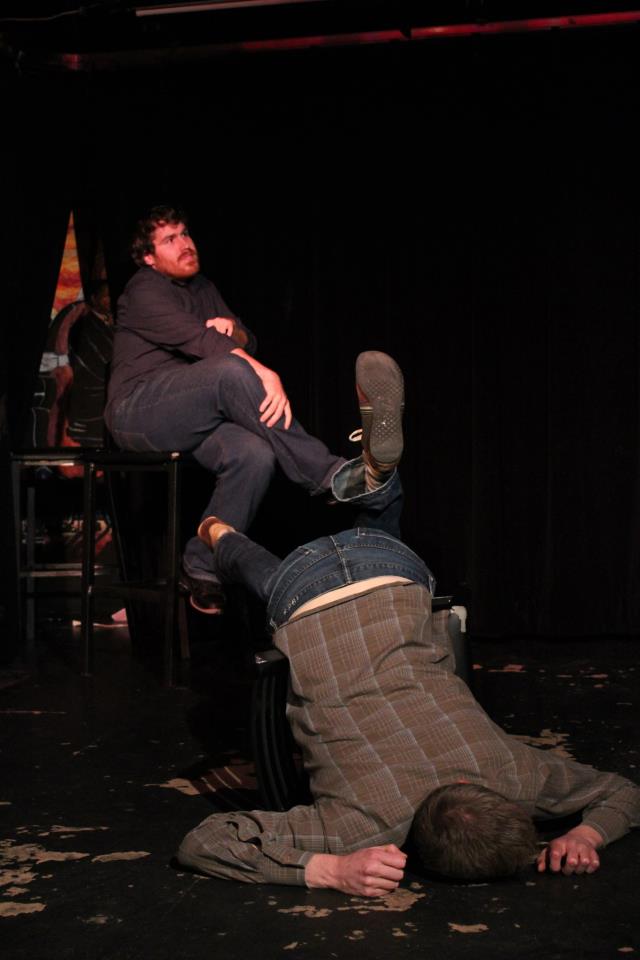
Photo © Adrianne Gagnon

Photo © Adrianne Gagnon

When we’re learning to improvise, we fail constantly. Improv teaches us that mistakes are OK, and life becomes freeing and fun. But after a while, we can start to fall into certain patterns of behaviour.

  • You always go in to first beats with Bob
  • You start every scene by holding an imaginary beer
  • You reference Star Wars at least once every show
  • When all else fails, zere’s always your hilarious Cherman accent, ja?

We repeat these patterns because they’re safe and familiar. Chances are they got laughs in the past. But if you want to grow as an improviser, you need to step outside your comfort zone.

Jump in the deep end. Throw something out there without knowing where it’s going. Get yourself into trouble. When you give yourself permission to fail, you open up new possibilities.

“Fall, then figure out what to do on the way down.” – Del Close

2. Go with your gut.

There are times when performers are so in sync, their responses so lightning-fast, it almost seems supernatural. When we’re truly in the moment, improv is effortless. Like UCB’s motto, we “don’t think.” So what’s doing the thinking for us?

Your brain is designed to filter out information, or else your conscious mind would be overwhelmed. But your subconscious takes it all in.

We make moves based on the information we have. Consciously, we’re usually focused on ourselves and our scene partners. Subconsciously, we’re doing much, much more.

When your subconscious takes in what you’re doing, what your scene partner is doing, what the rest of your team is doing, what the audience is doing, what the person in the booth is doing, what song is playing at the bar, every single scene you’ve ever seen or played, and sends you an idea…you take that damn idea!

3. Slow down.

“If it’s done well, I’ll watch somebody tie their shoe.” – David Pasquesi

Photo © Crista Flodquist

Photo © Crista Flodquist

When the lights go up in Trust Us, This Is All Made Up, TJ and Dave stand silently on stage. No one says anything for a full 14 seconds. Most improvisers would be chewing their hand off by that point, but taking the time to read each other is par for the course for this duo.

Here’s an exercise they teach, which is great for connecting with your scene partner:

Two players stand across from each other. One is the sender, the other is the receiver. The sender tries to communicate their character, their relationship to their scene partner, their want or situation – all without miming or speaking. The receiver then says what they got from the other person’s energy and body language.

The first time Cameron and I did this exercise, TJ asked what I got from Cameron’s character.

“Well, he’s my husband, and he’s about to tell me that he told his boss to stick it, and now he’s been fired.”

Cameron’s eyes widened. “I was her husband, I’d just told my boss to go fuck himself, and I quit!”

(For the record, this was waaaaaaay before he basically did that in real life.)

The next time you walk onstage, take a moment to pause, breathe, and fully check in with your scene partner. You don’t need to rush to be funny.

4. Be here now.

We spend a lot of time in our heads, and not just when we’re improvising. If you’re feeling guilt and shame, you’re thinking about the past. When you feel fear and anxiety, you’re thinking about the future.

It doesn’t matter whether you’re worrying about tonight’s show, stressing about what character to bring next, or feeling bad about that stupid thing you did in fourth grade: now is all that exists.

Know that you have everything you need in this moment. When you bring your focus to what’s in front of you – whether it’s your scene partner or a plate of lasagna – then you’re truly living. (And who cares if you forgot your swim trunks in Grade 4? Underoos are the coolest!)

Of course, like all things, it takes practice. For further reading, we recommend The Power of Now by Eckhart Tolle, The Four Agreements by Don Miguel Ruiz, and Comfortable with Uncertainty by Pema Chodron.

5a. Reach out and touch someone.

Have you seen that show, Two People Standing And Talking in a Void? It’s the one where no one touches anyone, physically or emotionally.

If you’re in a scene professing your love to someone, and you’re both standing still two feet apart, move closer. Couples touch. Touch his cheek. Caress her arm. Boop his nose. Hold hands.

Touching is a great way to show you’re humans with emotions. Patting your scene partner on the head, or putting them on your shoulders says a lot about your characters.

5b. Reach out and touch something.

Before a scene starts, the only things that exist on stage are people and chairs (ohhh, that’s where they got the name). After the scene starts, everything exists. Like The Matrix, we just need to declare it.

We learn about ourselves by exploring the world around us. So grab some chairs and make a hot tub, a ferris wheel, or a TARDIS. Reach out and find an object, then use it to define your character. You don’t have to know what you’re reaching for. The joy is in the discovery.

6. Study the masters.

Read Napier and Norman and TJ & Dave. Read interviews, e-books and blogs. Subscribe to podcasts and listen on your way to work.

Most of all, go see live shows. If you live in a big city like New York, Toronto or London, you can see top improvisers almost any night of the week. If you live in a small town, festivals like the Del Close Marathon, Vancouver International Improv Festival, or NC Comedy Arts are a great way to see these people all in one place.

And for a mere ten dollars, you can see TJ and Dave perform at their brand new theater in Chicago. That’s like seeing Simon and Garfunkel in concert at 1965 prices. Heck, if you have to jump on a Greyhound to get there, it’s worth it.

7. Play with people who are better than you. Play with people less experienced than you.

There’s a tendency to stick with the same group of people throughout our career. It might be your Con class, your first Harold team, or any number of other cliques.

Ensembles are great for building trust, but if you feel like you’re in a rut, mix it up a little. (See “Be willing to fail.”)

There are great young performers who are still students. And great veteran performers who are still playful. Don’t be scared to ask one of your heroes if they’d like to perform with you. And if you’re an old pro, do a show with your students. It’s a great reminder to take care of your scene partners, and they might surprise you by how much funnier they are.

8. Have other interests.

We said it before, but it bears repeating. Improv is an incredible gift, but there’s no surer way to suck the well dry than to drain it constantly.

If you’re taking five classes, doing three shows a night, and spending all your free time with other improvisers, it’s time to reassess before you burn out.

The pros know this. In between directing the Second City Mainstage, opening a new theater, and writing a new book, Mick Napier practises card tricks, shoots pool, plays guitar, and builds stuff with erector sets. David Razowsky travels the globe teaching improv, but he also spends time discovering each city, trying new foods, and honing his photography skills.

Enjoy all that improv has to offer, but be sure to make time for other things.

“The more art you bring to your life, the more life you bring to your art.” – David Razowsky

Photo © Kevin Thom

Photo © Kevin Thom

Editor’s Note: Regarding #3, David Knoell prefers the word “patient” to “slow,” to avoid confusion between having awareness and bringing low energy. David Razowsky prefers “mindful.” These are both great descriptors, so use whatever resonates with you.

Once upon a time, there were surprisingly few online resources for improvisers. Now there’s a plethora of awesome podcasts that cater to our favourite cult. Best of all, they’re free! Thank you, internets.

Screen Shot 2015-09-14 at 11.58.41 AM

A.D.D. Comedy with Dave Razowsky and Ian Foley

Improv guru David Razowsky hosts this series of passionate chats with friends he’s amassed in his 30-plus-year career. While big-name guests like Colbert, Carell, and Nia Vardalos may snag your interest, less-familiar luminaries are every bit as entertaining. Actors, writers, producers, teachers, and other folks share their stories of life on stage, screen, and behind the scenes.

The Andy Daly Podcast Pilot Project

Are you ready to laugh? Ready or not, this show will have you in stitches. A staple of New York and LA’s improv scene, Daly is one of the funniest yes-anders out there. Using characters created on Comedy Bang! Bang!, his lightning-fast wit and hilarious guests make this podcast worthy of repeat listenings. There are only nine episodes so far, but fingers crossed he’ll be back for another season.

The Backline with Rob and Adam

In the mood for some in-depth, honest, insightful info, served up with a side of laughs? Rob Norman and Adam Cawley’s real-life camaraderie makes their podcast a pleasure to listen to. Each week they offer a wealth of anecdotes and advice on everything from shame to shortform, friends to festivals, acting, time travel, and much, much more.

Comedy Bang! Bang!

Long before its television debut, Scott Aukerman’s podcast was home to some of the funniest people on the planet: Paul F. Tompkins, Andy Daly, Jason Mantzoukas, Matt Besser, Bob Odenkirk, Sarah Silverman, Bill Hader, Anthony Jeselnik, Keegan-Michael Key, Nick Kroll, Tim Meadows, Amy Poehler, Seth Rogen, Weird Al, David Wain, Tenacious D, Jessica St Clair, Aziz Ansari, Fred Armisen, Nathan Fielder, Michael Ian Black, Jason Schwartzman, Jon Hamm, Janeane Garofalo…the list goes on. And on. And – at over 300 episodes – on.

Word to the wise: Callbacks and inside jokes are rampant, so if you’re new to the show, do yourself a favour and start at the first big Bang! Bang!

Improv4Humans

Like an improvised “Bat,” Matt Besser’s podcast creates memorable theatre for the mind. Each week, Besser and his guests improvise based on audience suggestions from the web. Regulars Andy Daly, Zach Woods, Lennon Parham and Tim Meadows, along with special guests like Todd Glass, Jason Mantzoukas and John Gemberling make for some very fucked-up but always funny stuff.

Improv Nerd

Chicago-based Jimmy Carrane’s mix of interview, improvised scenes, and post-improv analysis is as fascinating as it is unfiltered. And like his blog, Carrane isn’t afraid to delve into the dark places of his guests’ souls. With over 100 episodes so far, guests include Mick Napier, TJ and Dave, Susan Messing, David Razowsky, Key & Peele, and Bob Odenkirk, to name just a few.

Improv Obsession

Stephen Perlstein is the first to admit he doesn’t know everything about improv, so he interviews people who do to learn more about the craft. If you’re looking for something that’s more theory and how-to, this is a good one to have in your arsenal. Will Hines, Billy Merritt, Matts Besser and Walsh, and Tara Copeland are among the 50+ guests to date.

Pack Improv with Miles Stroth

In this weekly podcast, Stroth invites someone from the improv/acting community for a live interview at ACME Comedy in LA.

WTF with Marc Maron

While not technically improv, no podcast list would be complete without Maron’s acerbic interviews. With over 500 episodes to date, WTF revived his career and launched him on a new trajectory. And while not everyone’s a fan (see Maron and Michael Ian Black’s twitter feud), there’s no denying his guest list and interview style reign supreme.

Zenprov

Marshall Stern and Nancy Howland Walker host this series of podcasts about the art of Improvisational Acting in general, and how Zen thought relates and helps you as an actor, in particular.

(Tip of the hat to Oliver Georgiou for Zenprov, and Alex Wong for Miles Stroth!)

(Editor’s note for non-Canadians: A “power play” in hockey is when at least one opposing player serves a penalty, giving your team a numerical advantage on the ice.)

I’m officially a Senators fan.

On Monday, the Ottawa Senators (NHL team, for those who aren’t Canadian) fired their coach, Paul MacLean. The day after a great come-from-behind victory, too. Possibly their best game all year. Weird.

Why fire the coach after an amazing game?

When did this become a sports blog?

I mean, what the hell is going on here?!

Listen to the reason GM (General Manager, sheesh) Bryan Murray gave for letting MacLean go.

“I think what happened last night was, it was one of our better games, there’s no question. The good thing that happened for us was that we got behind 3-0. We forgot about all the rules and structure and everything. We just went out and played hockey.

Hockey’s a game and sometimes you just have to go play. Have a little fun with it and chase the puck and do things. We did that and I think our speed showed up. I think some talent showed up and we made some plays and fortunately for us, we won the hockey game. But I think that’s what I would like to see our team be – our players have to have some fun. It’s a game. We have to have some fun playing the game.

We have so many rules sometimes that we take the fun away from it, so maybe now, we’ll play a little different style – we’ll play a little more aggressive style. We’ll try to chase the puck more often and I think that will play to the strength of the young people on our hockey team.

And that’s what I would like to see happen – that we get back to real simple (play). Move the puck. Be in a good position. Help each other and be creative in your way. We have got some very instinctive hockey players here, just play that way.”

I was watching the press conference when it happened (flipping around until Chopped came on), and it blew my mind. It seems obvious that hockey is a game when you ask kids. But when you ask adults, it’s not a game. Nothing’s a game. It’s a business. And you have to win to make money. And winning comes from hard work and doing it right.

It’s a bold statement for a PROFESSIONAL hockey team (meaning playing for money, NOT for fun) to make. But a damn important one. So many “creative” industries try to set up the rules and structures for how to work, instead of promoting play.

The ad agency I got fired from (the most recent time) was implementing the rules of staying late, working weekends, being in the office at all times and a bunch of other old fashioned ways of thinking. None of which have anything to do with being more creative.

So thank you Bryan Murray. Thank you for understanding that even at a professional level, if take away the play, you ain’t got nothin.

Going on the record to say that the Senators will make the playoffs. If I were bolder, I’d say win the cup, but, you know, they’re not that good…. ahhh fuck it.


Sens FTW!

(This post originally appeared at playwithfireimprov.com)

Here’s a bounty of goodies any improviser (maybe you?) would love to open on Festivus morning. First up…

A Load Of Hooey

Bob Odenkirk’s new book is just the thing to get you through post-Breaking Bad, pre-Better Call Saul doldrums.

Like Steve Martin’s Pure DrivelA Load of Hooey is a pastiche of bits and pieces from one of comedy’s most ingenious minds. As the description says, “Odenkirk’s debut resembles nothing so much as a hilarious new sketch comedy show that’s exclusively available as a streaming video for your mind.”
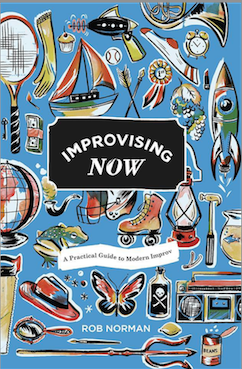
 

Improvising Now

If you want to up your long form game, look no further than Improvising Now. Rob Norman’s book is as entertaining as it is educational, and at 150 pages, it’s the perfect stocking stuffer. (If you have stretchy, rectangular stockings.)

Improvising Now - Norman

Bears & Balls: The Colbert Report A-Z

Only six more shows! Thankfully, Sharilyn Johnson and Remy Maisel’s Bears & Balls: The Colbert Report A-Z helps ease the pain. Crammed with memorable moments and “who knew?” insights, this meticulously researched volume is a worthy addition to any Colbert fan’s shrine.

Cover Image © Kurt Firla

Cover Image © Kurt Firla

Pax Vaporizer

Vape to your heart’s content this holiday season with the sexy new Pax Vaporizer. At 300 bucks it ain’t exactly cheap, but it’s amazing how many impoverished improvisers swear by it.


Improviser’s Clock

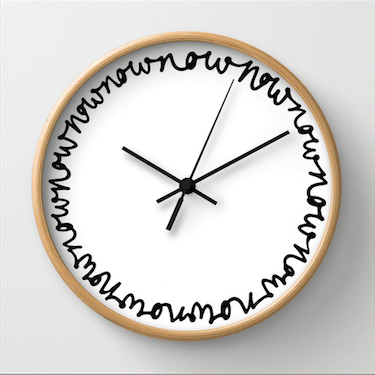
Now you can be in the moment, every moment, with our very own improviser’s clock. Click here or below to shop the full range of designs. And be sure to check out our store for cool shirt designs by Rob Ariss Hills.

Improv Clock


Few things are sadder than performing to an empty room.

Unless you’re TJ and Dave, you need a little planning to ensure a good turn-out. Here are some tips that can help.

Know Your Audience

Who are you performing for? Is it hardcore improv nerds, or comedy lovers in general?

Is it a monthly show with a built-in fan base, or are you trying to get fresh blood (and votes) for Cage Match?

Just like advertisers, you need to define your target audience. “Anyone with five bucks” is not a demographic.

Before you invite all 2,031 of your “friends,” ask yourself if Aunt Myrna, the guy you went to junior kindergarten with, and those eight ‘bots would really come.

Quality Is Job One

A friend of mine saw a show recently, and was pleasantly surprised by how much he enjoyed it. “There’s so much bad improv out there,” he confided.

Yikes.

Anyone can have an off night, but when you don’t commit to doing your best, it reflects badly on all the awesome sets other improvisers are committed to.

Have you and your team rehearsed? Are you familiar with the format you’ll be playing?

Learning stuff on the fly with strangers may be fine if you’re a pro, but for many people, familiarity with the cast and structure are key to a good show. Just because they’re called make-’em-ups doesn’t mean people want to pay to watch you figure shit out on stage.

Be professional. Book a rehearsal (or several, depending on the scale of the show). If it’s a one-off (a fundraiser, for instance) or a jam-type situation, at the very least try to get there an hour beforehand, so you can meet and bond with your cast mates.

Quantity Is Job Two

There’s a delicate balance between not promoting your show enough, and promoting it too much.

Don’t create a Facebook event a month in advance, and promote it every day until the show.

Do promote judiciously. If everyone on the team has the same circle of friends, you don’t need all seven of you to mention it in your status.

Don’t post the wrong time, date, or venue. (You’d be surprised how often this happens.)

Comedy Is Visual

Even a well-written e-vite can get lost in celebrity gossip and kitten videos. One way to break through the clutter is an eye-catching poster.

Your poster should reflect the show and/or team’s character. You can use it online, as well as print copies to put up in bars, theatres, and coffee shops.

Keep the messaging simple; it’s a poster, not a blog. The name of the show, date, time, and place are fine. Include a website if you have one (but only if it’s up to date).

Again, keep your audience in mind. Don’t assume everyone who sees your poster will understand what you’re selling. Before you joined the improv community, would you know what the fuck a “Harold Night” was?

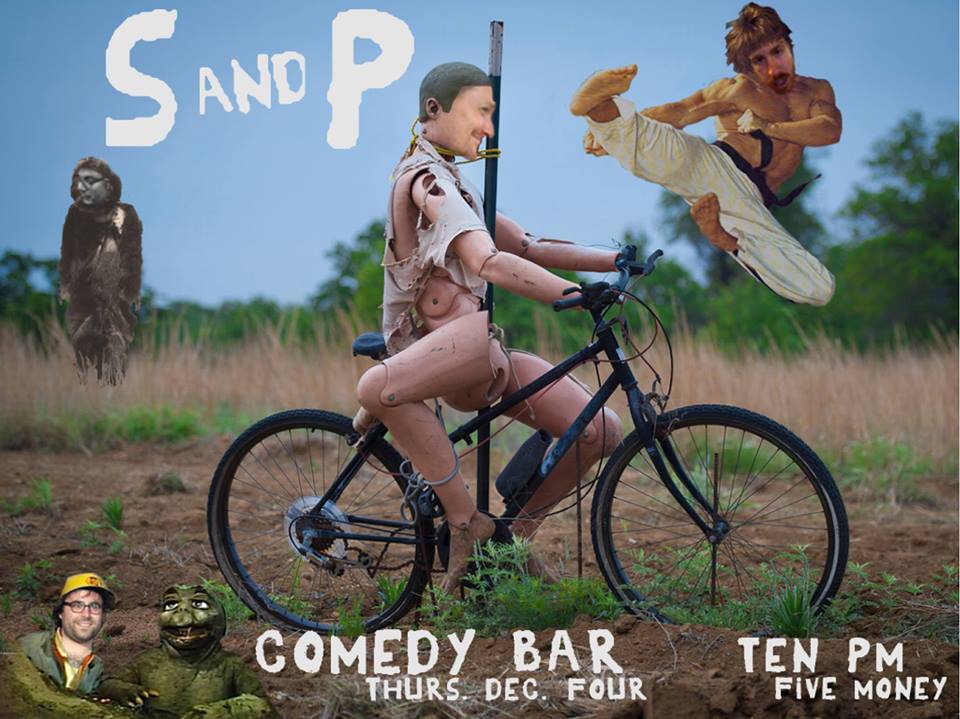
Unless your show is strictly for other improvisers, you need to spell things out a little. It can still be a tease though, like this awesome example:

Image © Scott Williams, ScottWilliamsDesign.com

Image © Scott Williams, ScottWilliamsDesign.com

At the other end of the logic spectrum, fans of Standards & Practices love their boundary-pushing style. Kevin Whalen creates promo posters that reflect the team’s surreal sensibility.

Image © Kevin Whalen/Standards & Practices

Image © Kevin Whalen/Standards & Practices

Rob Norman and Adam Cawley are to Toronto’s improv scene what James Franco and Seth Rogen are to…uh…each other. This stunning artwork captures the duo’s brooding bromance and colourful imaginations perfectly.

R&N Cawls Orig

Image © Marshall Lorenzo

One of our favourite campaigns was for Ghost Jail Theatre. They produced a memorable series of posters created by overlaying shots of two different improvisers, usually a male and female. The effect was haunting, intriguing, and completely different than everything else in the community.

The next season, they created hybrid images of three players. The slightly off-kilter results stopped passersby in their tracks. (The posters were so popular, they were stolen within hours of being put up.)

Image © Katie Bowes

Image © Katie Bowes

This poster’s understated, Mad Men cool is the perfect foil for the Bacchanalian beer-swilling orgy that is Mantown. If you’ve seen the show before, the contrast is hilarious. And if you’re a newb, the image is enough to pique anyone’s interest.

Mantown Current

Image © Kurt Firla

Cross Promote

Doing another gig close to the date of your show? Ask the MC if they can mention it when they intro you. Better yet, direct people to your Facebook event page. (You don’t really expect them to remember show details after five beers and some Jägerbombs, do you?)

Set It In Motion

If you really wanna go all out, why not make a video? Kevin Whalen and Matt Folliott created this stop-motion short for Sex with Jeremy, a showcase for teams Sex T-Rex and The Jeremy Birrell Show:

Now go forth, break legs and blow minds!

Sometimes in improv, we try to force a storyline so that it follows the rules of “the real world.” And while grounded scenes can be very entertaining, there’s something to be said for great acting married with crazy circumstances.

Case in point: The Avalanches’ Frontier Psychiatrist. The characters and their surroundings may look nutty, but their performances are very natural. Which makes the complete package weird as shit…and utterly wonderful.

Click below to view the video.