
I do not worry about the past and I am not fearful of the future because my life is supremely concentrated in the present, and the right response comes to me, to every situation as it occurs. – Vedic Seer

Photo © Kevin Thom
The improv blog with attitude.
I do not worry about the past and I am not fearful of the future because my life is supremely concentrated in the present, and the right response comes to me, to every situation as it occurs. – Vedic Seer
Photo © Kevin Thom

Photo © People and Chairs
Top row, from left:
1. Improvise (inscribed “Fuck it! – Mick Napier”)
2. Burrito, the Official Food of Improvisers
3. Christmas gift (came with Portlandia DVD)
4. Because sometimes a photo booth is more fun than an iPhone
5. Kinder Egg Franken-toy made from two figurines
6. Nug Nahrgang’s Instagram feed
7. High-end U-lock key for piece-of-crap bike
8. Profits from show (split three ways)
2nd row:
9. Business card – Bam!
10. USB with Piñata Full of Bees
11. DIY guitar pick
12. Gum (for post-burrito green room politeness)
13. Old timey postcard for sending message from the past
14. Emergency toothpicks/Christmas gift igniter
15. Jetstream rollerball
3rd row:
16. Best. Show. Ever.
17. DCM wristband
18. Hipster room key
19. Master Class notes
Bottom row:
20. Koosh ball
21. Lucky dollar bill from CIF
22. Deodorant (for rehearsals)
What’s in yours?
I was talking with Suzanne Pope, creator of Ad Teachings recently, when she asked me if improv is helpful in the workplace.
“Hells yeah!” was my professional answer.
“If you could sum up just one thing it can do,” she said, “what would it be?”
“Uhhhhh…”
(So much for eight years of training in “Don’t think.”)
The truth is, my mind was teeming with answers. Because really, what doesn’t it help?
Tina Fey explains the core principles brilliantly in her Rules of Improvisation. If all you did was Agree, Say “Yes, And…”, Make Statements, and remember that There Are No Mistakes, you’d be further ahead than 95% of nine-to-fivers. But it doesn’t stop there. Improv can also help you:
Read The Room
Improv teaches you to pay attention to your scene partner. In real life that could be your client, your co-worker, or your boss. (It could also be your spouse, your child, your pusher or your taxidermist, but for now let’s keep it work-related.)
When you walk into a meeting and everyone’s frowning, the client is nervously fidgeting with his phone, or the person across from you is smiling but her eyes are lifeless circles, all of this is valuable information. Information that can and should be weighed before you open your mouth.
I used to go to client meetings thinking only about the work I was there to sell. Now, my focus is the people I’m presenting to.
You may not always make the sale, avoid conflict, or find a solution on the spot, but taking the time to connect with your audience almost always results in a better relationship.
Give And Take Focus
You know those people who never let you get a word in? You get in an occasional “Mmm” or “Huh,” while they never seem to take a breath. Or maybe you know someone who cuts you off, finishes your sentences, or talks over top of you.
What about competitive listening? That’s when someone pretends to pay attention, but they’re really just waiting for an opening to air their opinion.
We’ve all experienced these at one time or another, and a lot of us are guilty of them, too.
Learning to give and take focus is a skill. The more you practise – especially listening, which is more than just hearing and involves your whole body, as well as paying attention to the other person’s body language – the better you’ll communicate.
Commit 100%
If you’re reading this on your smartphone while the TV is on and your son is asking you to look at his finger painting, stop. Choose one thing to focus on and give it your full attention.
When you’re not fully present…well…allow me to share a recent interaction:
Me: (looking at iPhone) (groan) I just realized I did something that I had already done.
Cameron: Well, I guess it’s really done now.
Me: (looking up from phone) What’s done?
When you’re present to your choices, it’s incredibly powerful. For you, and your audience – whether you’re on stage, in a boardroom, or sitting across from your loved one.
Try fully committing to your next handshake, hug, or crappy little low-budget, nobody-cares-about-it-so-no-one’s-paying-attention project, and see what happens.
Collaborate
I’ve seen countless ideas whittled away by committees, in brainstorming sessions, new business pitches, and creative presentations.
One person throws out an idea. Someone else says “I like it.” Heads start nodding as people become excited about the possibilities. Then the overthinking begins.
“Why is the dress yellow?”
“That bowl doesn’t celebrate the cereal.”
“How long is the logo on screen? We always super our logo right off the top.”
“I read some research that said people don’t like humour.”
“A Jack Russell terrier is a gay man’s dog.”
“I think these scripts are lame.”
*(All of those comments are actual feedback I’ve heard over the years.)
There’s a big difference between collaborating as a team and nay-saying a concept into the ground before it’s even had a chance to live.
Not every idea is gold. But 9 times out of 10, when something gets pecked to death, it’s coming from a place of fear. Which leads me to my last and favourite reason to take improv.
Take Risks
A lot of us don’t take risks because we’re afraid of failure. But when you realise there are no failures, only learning, it becomes a lot easier to try things. The more risks you take, big and small, the more experience – and experiences – you have to draw from.
Unfortunately, many businesses are risk averse. They’d rather do things the way they’ve always been done than risk possible failure by trying something new. But the truth is, change is constant. And those who embrace change are far more likely to stay relevant than those who cling to the past. (Kodak, anyone?)
Yes, change is scary. But as a wise man once said, “Shit happens.”
Companies evolve. People come and go. What was hot last year (or last week, or this morning) is already passé.
Improv teaches you to respond to whatever is happening, and be cool with it. The next time you find yourself fretting about a meeting, a project, or a new business pitch, just remember the words of Second City alumnus, Stephen Colbert:
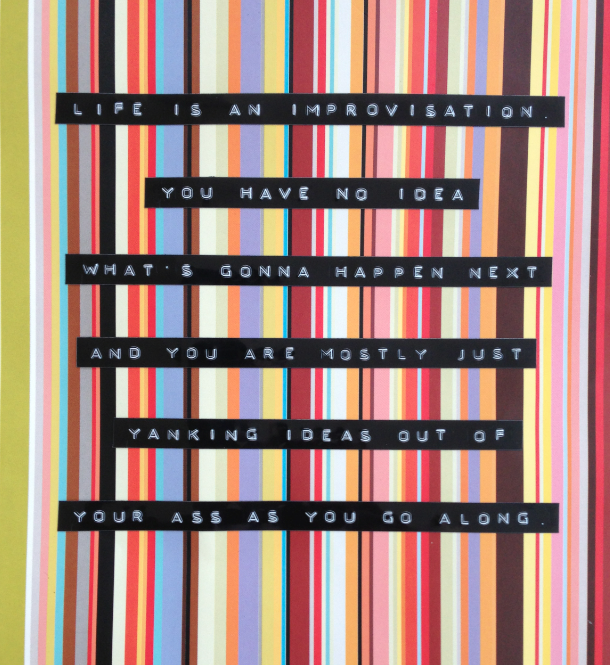
Image © People and Chairs
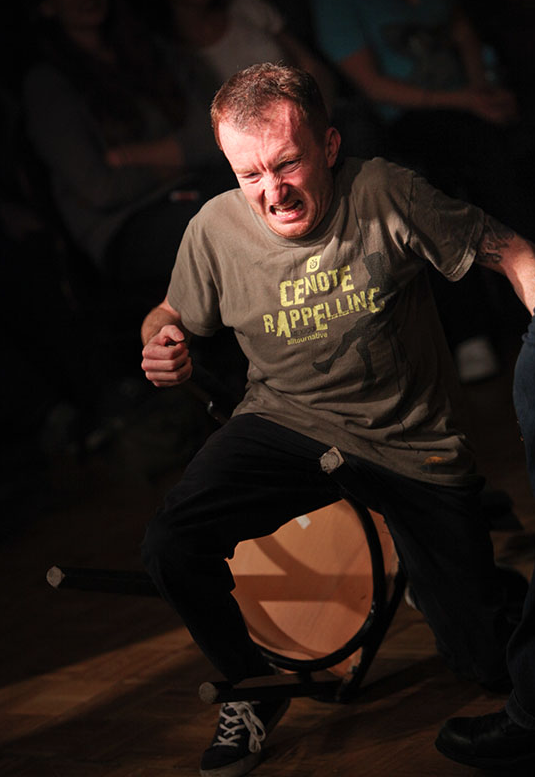
Photo © Kevin Thom
You didn’t get on a Harold team.
You didn’t make it to Mainstage.
You didn’t get a callback.
Your pilot wasn’t picked up.
Your show got cancelled.
When shit happens, it’s easy to think maybe you’re not cut out for this. Especially when you see your friends and peers doing so much better (at least in your mind).
But the truth is, not everyone who becomes successful in comedy does so because they’re the funniest or most talented. Some people just want it more, work harder, and refuse to quit. They do it because they love it; because they have no choice but to pursue it.
Even when you achieve a goal, there are no guarantees.
Steve Carell was fired from Second City.
Action, Stella, and The Ben Stiller Show were all cancelled after one season.
And Dan Harmon, creator of Community, was fired from his own show.
But perhaps most astonishing is Bob Odenkirk. Though he’d proven himself as an actor and writer with SNL, The Larry Sanders Show, and Mr. Show with Bob and David, he and David Cross were far from wealthy. (Sadly, they don’t earn a penny from Mr. Show.) Until fairly recently the pair couch surfed at friends’ places when travelling or touring, so they could use their money to fund passion projects.
Then Vince Gilligan cast Odenkirk in Breaking Bad, and the rest is history.
When you hit a roadblock, think of it as a redirect.
If you’re just starting out, maybe you need more stage time, more classes, or more life experience. If you’re further along the career curve, maybe your talents would be better utilized writing your own web series, putting together a Fringe play, or even teaching.
Whatever you do, don’t stop.
Just remember that every experience is valuable, because it’s part of your unique story. Even the sucky bits. Especially the sucky bits. And keep going.
“Be the person who wants to do it the most.” – Steve Carell
Here’s a fun project for a lazy Sunday.
We have a ton of comedy ephemera we’ve collected over the years, but it’s just been sitting in a box. I decided to make this simple strip collage using programs from two of my favourite Second City revues, Live Wrong and Prosper and Dreams Really Do Come True! (And Other Lies).
I started by painting a piece of illustration board black (you can also paint cardboard or use black construction paper). I cut the two program covers into strips and glued them down with Mod Podge, or you can use any white glue. Then coat the final piece with glue to seal it.
I love the way it turned out! You can make a similar one with show flyers, posters, programs, or festival schedules. It’s a great way to showcase fond memories.

There’s a theory in personal finance that says, “Your income is the average of the five people you spend the most time with.”
It’s enough to strike fear in the hearts of actors everywhere.
If you’re not earning big bucks, the thinking goes, you need to seek out people who do and start spending time with them. (What they don’t say, is what to do if those five people are douchebags.)
Before you quit improv to become a commodities trader, there’s another concept that’s far more valuable in my opinion: the idea of “psychic income.” It involves all those things that you don’t get paid for, but which give something back to the world – and in so doing, fill your cup as well.
For most of us, improv pays little (if anything), but it’s off the charts in terms of psychic income.
Few things compare to the high you feel when you’ve finished a great set. The same goes for coaching or teaching. You may not be earning six figures, but where else can you experience the joy of watching grown men and women play “Big Booty”?
Citibank’s slogan used to be “Live richly.” (That was before the whole subprime mortgage meltdown. Then they changed it to “Citi never sleeps” – presumably because no one was sleeping after the subprime meltdown thing.)
If you want a rich life, it’s simple:
Surround yourself with people who enrich you.
People you admire or aspire to be like. People who are smarter than you, who broaden your understanding of the world. People who go out and make things happen, as opposed to just sitting around criticizing. People who make you laugh.
When I look at my favourite improv teams, they’re made up of friends who respect and support each other. They share what they have unreservedly, and celebrate each other’s successes.
That’s living richly.

Photo © Caleigh Le Grand
Bonspiel! Theatre’s Ashley Botting, Alastair Forbes, Rob Baker & James Gangl spin comedy gold
When you hear the word “artist,” what do you picture?
(a) That Picasso guy
(b) That Van Gogh guy
(c) Turtlenecked hipsters who say “juxtapose” and “deconstructed” while stroking their Llewyn Davis beards
It’s time for a new definition.
I don’t care if you’re a barista, a broker, or a shoe salesman. I couldn’t care less if you haven’t picked up a paintbrush since 1992. I don’t give a shit if the last time you did something creative was when Mr Beresford gave you a D minus in pottery.
What you do in your day job is not who you are, even if you work in a so-called “creative” field. Also, fuck Mr Beresford.
Being an artist doesn’t require paint or clay or a stage. It’s not about the medium you choose, it’s about using your ability to create, and using it daily.
That last part is key. Because while you’re an artist, the chances are very good that you’re blocked. Most of us are. We spend hours, weeks, months, years working on other people’s ideas, but somehow we never seem to find the time for our own.
The Artist’s Way
It’s a 12-week course in recovering creativity. You’ll learn how to silence your inner critic, make new discoveries as you heal old wounds, and find the joy in making space for art in your everyday life.
As a kid, I loved to draw, write stories, play the piano, and make my own “TV shows.” I did these things every day as far back as I can remember. But when I started working in advertising, I stopped making art for myself.
After 20 years of squeezing what creativity I could into ads for cars and banks and cleaning products, two things helped me find my own voice again: learning to improvise, and The Artist’s Way.
“Every child is an artist. The problem is how to remain an artist once he grows up.” – Pablo Picasso
If you feel like you’ve lost your sense of play…
If you yearn to make short films or decorate cakes or write your own comics or make things from popsicle sticks…
If it’s been so long since you did something creative, not for money or someone’s approval, but just for the fun of it, you need The Artist’s Way
Just as important, the world needs your art.
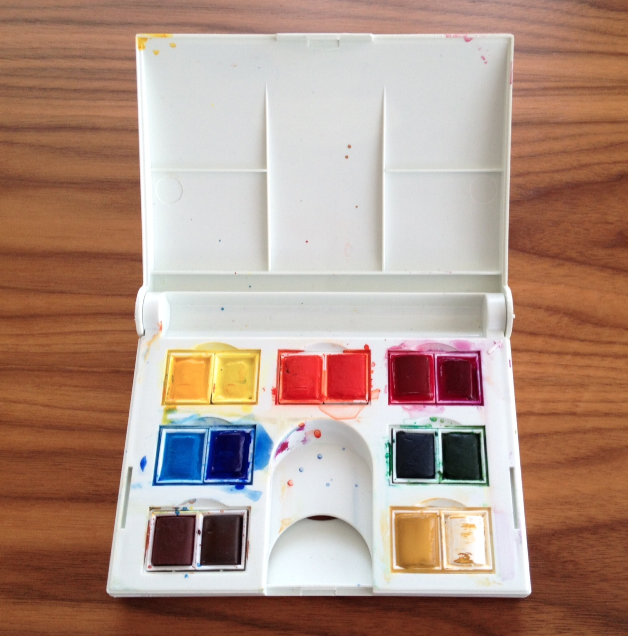
P.S. I bought the watercolour set above four years ago. The colours made me smile, so pretty in their little trays. But when I got home, I got scared. What if I tried to make something and it SUCKED? So I put it in storage and promptly forgot about it. Within two weeks of starting The Artist’s Way, I got over my fear, as you can see.
A special thank you to Shari Hollett for introducing me to it.
We’ve all been there.
Venues where the bar fridge is louder than the performers. Shows where no one shows up. Sets so bad that no amount of alcohol can blot out the shameful memory.
For me, it’s any number of shows that took place at the Savannah Room. It was, to put not too fine a point on it, a shithole.
“You’re crazy if you think I’m touching this filthy stage.”

Photo © Reggie D’Souza
More than once the place had to be evacuated due to flooding. I remember seeing Matt Folliott doing tech, his sneakers submerged in cables and rainwater, and wondering if this was the night we would all die.
Then there was the stage.
It wasn’t large, but this thing had holes that surely led to Middle Earth.
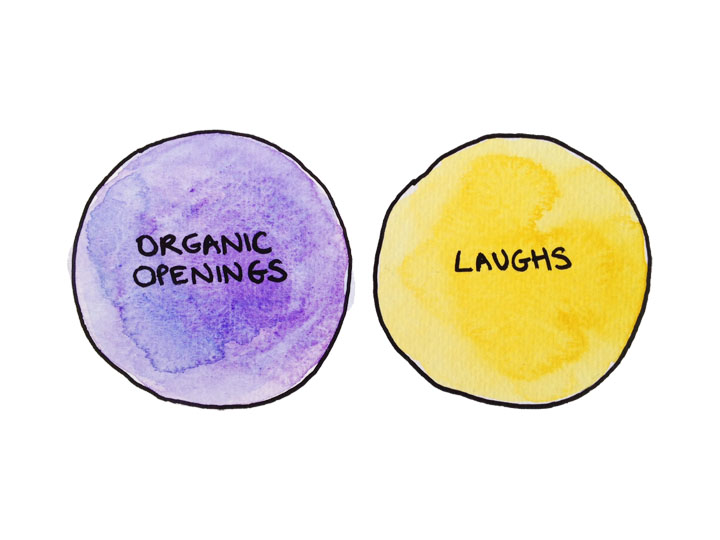
One time Charna Halpern taught a workshop there. Forty or so people signed up. Half of us watched as the other half got on their hands and knees to do an organic opening.
They started pounding the stage with their hands, getting faster and more intense.
We watched in horror as a dust cloud rose from the ancient carpet. Prehistoric molecules, no doubt redolent of polio and semen, stood out in stark relief under the lights.
Oblivious, the players kept pounding. When the dust cloud was finally higher than Charna, everyone started coughing uncontrollably.
But my special and favourite Savannah story involved my first Harold team, Leroy. Rob Ariss Hills, Gene Abella and I were on stage when a cat brushed past my leg.
I was momentarily caught off guard, but went back to killing it with my patented Shaft character. That’s when I saw it again.
It wasn’t a cat. It was a rat. And it was coming back toward us.
I shrieked and jumped into the first row of chairs (empty, of course) as the rat swept the scene. Gene said later he wished he’d tagged it out.
Shortly after, the Savannah Room closed its doors for the last time.
That’s my worst show. What’s yours?

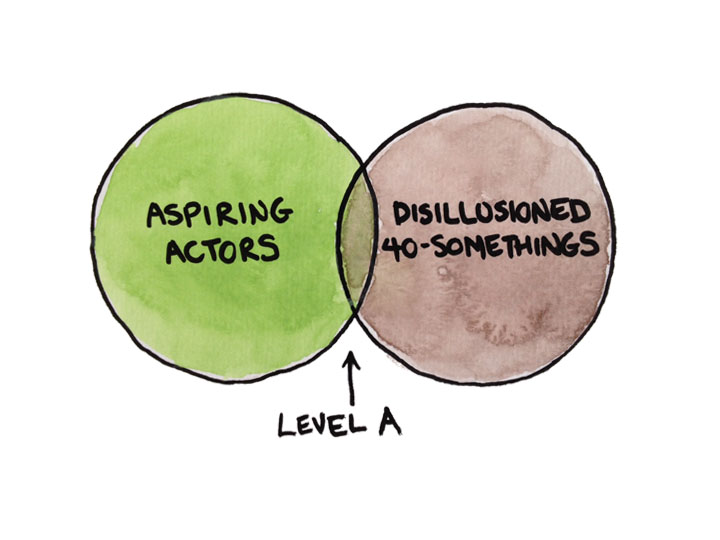



All artists are improvisers. And all improvisers are artists.
That’s why we love this TED Talk by Shea Hembrey. It’s hard to fathom the sheer quantity AND quality of his creative output.
Like an improv set, he started out on his artistic journey without much more than a strong point of view. Where it led him will astonish you.
Click below to watch.


 People and Chairs