Info

Posts from the Improv Tips & Quotes Category

Normally we’re suspicious of anything titled “Spoof! Funny!” It’s a bit like the greasy spoon with the “Best Coffee In Town” sign. But with Chef Gordon Ramsay as clickbait, how could we resist?

We’ve written before about not acting funny if you wanna be funny, and this video is a perfect example of how contrast creates comedy. With skilful editing, Ramsay is the straight man to a crazy situation, and the results are effing brilliant.


Screen shot 2015-04-19 at 11.19.46 PM

Recently a friend was passed over for something he’d auditioned for.

Ouch. Been there.

When Cameron and I finished Level E, ooooh, about a million years ago, there weren’t many options for improv students.

Second City’s long-form program was still a twinkle in Rob Norman’s eye. Neither Cameron nor I had even heard of Bad Dog or Impatient Theatre, both of which specialized in something called “The Harold.”

So we did what everyone else in our class did: auditioned for the Conservatory. When Cameron called me to say he got in, I was thrilled. Then gutted, when I realized I hadn’t made the cut.

giphy

“I was told to bring physicality.”

I replayed the audition endlessly in my mind, analyzing every word and gesture for signs that I sucked.

As I beat myself up for the 50th time about choosing to play a Mormon, my friend Marko said, “Sal, I’m sure you were fine. They probably just needed someone taller, or shorter, or younger, or older, or with acne.”

I laughed, because he was right.

As a copywriter, I’ve sat through hundreds of auditions and the truth is, no one knows how they’ll turn out. Not the actors, the casting director, the director, the creative team, or the client.

Sometimes you think you know what you’re looking for, then someone completely the opposite blows you away. Sometimes two people nail it, but there’s only one slot available. And sometimes even great actors just have a bad day.

I’ve seen talent rejected for being too fat, too thin, too pretty, too weird, and too “normal.”

One time a client rejected a girl because of her braces. We explained she didn’t wear braces (we checked). He didn’t care. End of discussion.

Auditions are a collaborative process, and as crazy as it might sound, even being the best doesn’t always get you the gig.

Just ask Jim Carrey, David Cross, or the dozens of other A-list comedians who didn’t make SNL.

I certainly wasn’t the best in my audition, but I probably wasn’t the worst, either. Or maybe I was, and that’s OK. I’d rather try something and be terrible than never attempt it for fear of failing.

I tried out for Conservatory again and still didn’t get in. Looking back, it was a blessing. I now know I’d rather improvise than write sketch. Someone else deserved that place on the Second City stage.

Instead, I learned everything I could about long-form. I took Intro to Harold with David Shore, Acting for Improvisers with Shari Hollett, Power Improv with Joe Bill and Mark Sutton, workshops with Matt Besser, Susan Messing, Jet Eveleth, David Razowsky, TJ and Dave, Todd Stashwick, and Greg Hess. I learned Cat’s Cradle from Charna Halpern, and performed at festivals in Chicago and New York.

These days there are countless opportunities for anyone with a passion for improv. Even if you live in a small town, you can:

• Find like-minded friends (even one) to perform with, rehearse with a coach, and do every show you can.

• Do improv jams. Find out which shows use audience members and put your name in the hat.

• Attend drop-ins. For anywhere from zero to five bucks, you can flex your improv muscles and play with a bunch of new people.

• Support the community. Go see shows by friends and peers, as well as your improv heroes.

• Try your hand at producing. Maybe you’ve identified a niche for a format that no one’s filled yet. This is your chance to bring it!

• Take classes. Not just improv, but acting, writing, puppetry, singing…whatever floats your boat.

• Study other improvisers, live or online (search your favourite teams, teachers, and authors for videos).

• Listen to podcasts.

• Make your own comedy shorts. Invite your friends to participate. You don’t need fancy equipment; you can shoot and edit it on your iPhone. (Modern Family filmed an episode entirely on iPhones, iPads and Macs.)

• Read. There are so many awesome books, on improv and art and creativity. For some of our faves, click here.

• Write. Write Morning Pages, short stories, tweets, sketches, web series, screenplays, or a blog.

Above all, go easy on yourself. Hearing a “no” may feel like a dead end, but it’s really just a redirect. Remember the improv tenet of “go with,” and trust that it will lead you somewhere fun. Because maybe, to go back to Woody’s quote, God is chuckling because He knows how much cooler your future is than you could ever imagine.

Photo © Kevin Thom

Photo © Kevin Thom

One of the great reasons to love improv is its fleeting nature. There’s no record of it. It comes, it goes. We’re left with our memories of it. Our memories. It’s a nice gift we let ourselves have. It helps if you like you.

One of the great things about performing improv is that we aren’t able to watch ourselves improvise. We have a vision in our skull of what we look like when we’re in the act of unfolding a character. It helps us unfold and evolve that character, for there’s no evidence as to whether we’re “doing it right” or “doing it wrong.” Because we don’t see it, we give ourselves the opportunity to just create without self-judgment.

That is, until someone does something that puts our process smack dab into our eyes.

When I was the Artistic Director at Second City Los Angeles we had a very small space that was our theatre. Just a black box, a small riser of a stage, and flat black walls. One day our stage manager, all on his own, decided it would be a good idea to put mirrors up on the walls. All the walls. Covered ’em. Now every interaction was brilliantly reflected, every action apparent, every movement mirrored.

I hated it. I’m long gone from that event and I still cringe. When I was on stage living a character that was a beautiful woman, now I could see that I wasn’t. I was me…a man. When I was on stage being a young boy character, now I could see that I wasn’t. I was me…a man. When I was on stage acting all suave Daniel Craig-y, now I could see that I wasn’t. I was me, Jewish David Razowsky.

That mirror invited my ego in, my “self” in. It trumped my imagination, it heavily challenged my suspension of disbelief, it brought “me” in, when I didn’t need “me” to appear, nor to be an arbiter of how I was doing.

Over the years I’ve learned to be mindful, to be in the moment, to give focus to what serves my joy and my scene partner. I’ve learned to stop looking into a mirror, realizing that so often that mirror isn’t literally a mirror, rather it’s a mental reflection where we artists sacrifice the joy of the process for the “thrill” of falling down the rabbit hole of doubt, dancing with judgment and second-guessing. I’ve learned to see the mirror, but not to look into it.

David Razowsky is a master improv instructor. He’s the former Artistic Director of the Second City Training Centre, a co-founder of the Annoyance Theatre, and the host and creative force of ADD Podcast with Dave Razowsky and Ian Foley. He has a long list of celebrity friends, and an equally impressive collection of Bloody Mary photos.

Screen shot 2015-01-21 at 4.09.03 PM

Photo © Lindsey Gemme

Photo © Kevin Thom

Photo © Kevin Thom

SmallerMarkSuttonHeadshot

Last year we posted Eight Ways To Be Good With The Improv. Here’s some more.

1. Be willing to fail.
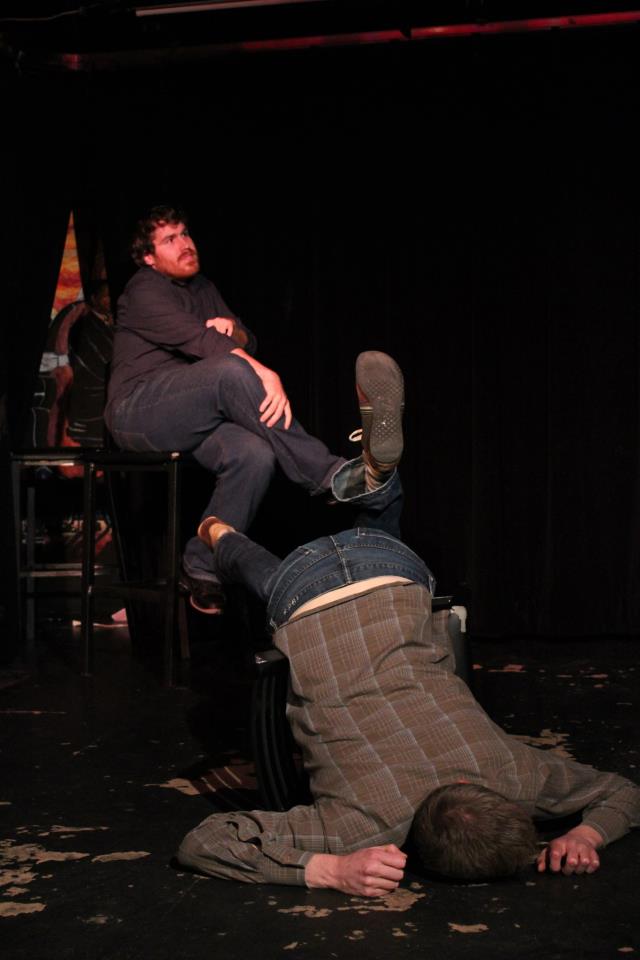
Photo © Adrianne Gagnon

Photo © Adrianne Gagnon

When we’re learning to improvise, we fail constantly. Improv teaches us that mistakes are OK, and life becomes freeing and fun. But after a while, we can start to fall into certain patterns of behaviour.

  • You always go in to first beats with Bob
  • You start every scene by holding an imaginary beer
  • You reference Star Wars at least once every show
  • When all else fails, zere’s always your hilarious Cherman accent, ja?

We repeat these patterns because they’re safe and familiar. Chances are they got laughs in the past. But if you want to grow as an improviser, you need to step outside your comfort zone.

Jump in the deep end. Throw something out there without knowing where it’s going. Get yourself into trouble. When you give yourself permission to fail, you open up new possibilities.

“Fall, then figure out what to do on the way down.” – Del Close

2. Go with your gut.

There are times when performers are so in sync, their responses so lightning-fast, it almost seems supernatural. When we’re truly in the moment, improv is effortless. Like UCB’s motto, we “don’t think.” So what’s doing the thinking for us?

Your brain is designed to filter out information, or else your conscious mind would be overwhelmed. But your subconscious takes it all in.

We make moves based on the information we have. Consciously, we’re usually focused on ourselves and our scene partners. Subconsciously, we’re doing much, much more.

When your subconscious takes in what you’re doing, what your scene partner is doing, what the rest of your team is doing, what the audience is doing, what the person in the booth is doing, what song is playing at the bar, every single scene you’ve ever seen or played, and sends you an idea…you take that damn idea!

3. Slow down.

“If it’s done well, I’ll watch somebody tie their shoe.” – David Pasquesi

Photo © Crista Flodquist

Photo © Crista Flodquist

When the lights go up in Trust Us, This Is All Made Up, TJ and Dave stand silently on stage. No one says anything for a full 14 seconds. Most improvisers would be chewing their hand off by that point, but taking the time to read each other is par for the course for this duo.

Here’s an exercise they teach, which is great for connecting with your scene partner:

Two players stand across from each other. One is the sender, the other is the receiver. The sender tries to communicate their character, their relationship to their scene partner, their want or situation – all without miming or speaking. The receiver then says what they got from the other person’s energy and body language.

The first time Cameron and I did this exercise, TJ asked what I got from Cameron’s character.

“Well, he’s my husband, and he’s about to tell me that he told his boss to stick it, and now he’s been fired.”

Cameron’s eyes widened. “I was her husband, I’d just told my boss to go fuck himself, and I quit!”

(For the record, this was waaaaaaay before he basically did that in real life.)

The next time you walk onstage, take a moment to pause, breathe, and fully check in with your scene partner. You don’t need to rush to be funny.

4. Be here now.

We spend a lot of time in our heads, and not just when we’re improvising. If you’re feeling guilt and shame, you’re thinking about the past. When you feel fear and anxiety, you’re thinking about the future.

It doesn’t matter whether you’re worrying about tonight’s show, stressing about what character to bring next, or feeling bad about that stupid thing you did in fourth grade: now is all that exists.

Know that you have everything you need in this moment. When you bring your focus to what’s in front of you – whether it’s your scene partner or a plate of lasagna – then you’re truly living. (And who cares if you forgot your swim trunks in Grade 4? Underoos are the coolest!)

Of course, like all things, it takes practice. For further reading, we recommend The Power of Now by Eckhart Tolle, The Four Agreements by Don Miguel Ruiz, and Comfortable with Uncertainty by Pema Chodron.

5a. Reach out and touch someone.

Have you seen that show, Two People Standing And Talking in a Void? It’s the one where no one touches anyone, physically or emotionally.

If you’re in a scene professing your love to someone, and you’re both standing still two feet apart, move closer. Couples touch. Touch his cheek. Caress her arm. Boop his nose. Hold hands.

Touching is a great way to show you’re humans with emotions. Patting your scene partner on the head, or putting them on your shoulders says a lot about your characters.

5b. Reach out and touch something.

Before a scene starts, the only things that exist on stage are people and chairs (ohhh, that’s where they got the name). After the scene starts, everything exists. Like The Matrix, we just need to declare it.

We learn about ourselves by exploring the world around us. So grab some chairs and make a hot tub, a ferris wheel, or a TARDIS. Reach out and find an object, then use it to define your character. You don’t have to know what you’re reaching for. The joy is in the discovery.

6. Study the masters.

Read Napier and Norman and TJ & Dave. Read interviews, e-books and blogs. Subscribe to podcasts and listen on your way to work.

Most of all, go see live shows. If you live in a big city like New York, Toronto or London, you can see top improvisers almost any night of the week. If you live in a small town, festivals like the Del Close Marathon, Vancouver International Improv Festival, or NC Comedy Arts are a great way to see these people all in one place.

And for a mere ten dollars, you can see TJ and Dave perform at their brand new theater in Chicago. That’s like seeing Simon and Garfunkel in concert at 1965 prices. Heck, if you have to jump on a Greyhound to get there, it’s worth it.

7. Play with people who are better than you. Play with people less experienced than you.

There’s a tendency to stick with the same group of people throughout our career. It might be your Con class, your first Harold team, or any number of other cliques.

Ensembles are great for building trust, but if you feel like you’re in a rut, mix it up a little. (See “Be willing to fail.”)

There are great young performers who are still students. And great veteran performers who are still playful. Don’t be scared to ask one of your heroes if they’d like to perform with you. And if you’re an old pro, do a show with your students. It’s a great reminder to take care of your scene partners, and they might surprise you by how much funnier they are.

8. Have other interests.

We said it before, but it bears repeating. Improv is an incredible gift, but there’s no surer way to suck the well dry than to drain it constantly.

If you’re taking five classes, doing three shows a night, and spending all your free time with other improvisers, it’s time to reassess before you burn out.

The pros know this. In between directing the Second City Mainstage, opening a new theater, and writing a new book, Mick Napier practises card tricks, shoots pool, plays guitar, and builds stuff with erector sets. David Razowsky travels the globe teaching improv, but he also spends time discovering each city, trying new foods, and honing his photography skills.

Enjoy all that improv has to offer, but be sure to make time for other things.

“The more art you bring to your life, the more life you bring to your art.” – David Razowsky

Photo © Kevin Thom

Photo © Kevin Thom

Editor’s Note: Regarding #3, David Knoell prefers the word “patient” to “slow,” to avoid confusion between having awareness and bringing low energy. David Razowsky prefers “mindful.” These are both great descriptors, so use whatever resonates with you.

Few things are sadder than performing to an empty room.

Unless you’re TJ and Dave, you need a little planning to ensure a good turn-out. Here are some tips that can help.

Know Your Audience

Who are you performing for? Is it hardcore improv nerds, or comedy lovers in general?

Is it a monthly show with a built-in fan base, or are you trying to get fresh blood (and votes) for Cage Match?

Just like advertisers, you need to define your target audience. “Anyone with five bucks” is not a demographic.

Before you invite all 2,031 of your “friends,” ask yourself if Aunt Myrna, the guy you went to junior kindergarten with, and those eight ‘bots would really come.

Quality Is Job One

A friend of mine saw a show recently, and was pleasantly surprised by how much he enjoyed it. “There’s so much bad improv out there,” he confided.

Yikes.

Anyone can have an off night, but when you don’t commit to doing your best, it reflects badly on all the awesome sets other improvisers are committed to.

Have you and your team rehearsed? Are you familiar with the format you’ll be playing?

Learning stuff on the fly with strangers may be fine if you’re a pro, but for many people, familiarity with the cast and structure are key to a good show. Just because they’re called make-’em-ups doesn’t mean people want to pay to watch you figure shit out on stage.

Be professional. Book a rehearsal (or several, depending on the scale of the show). If it’s a one-off (a fundraiser, for instance) or a jam-type situation, at the very least try to get there an hour beforehand, so you can meet and bond with your cast mates.

Quantity Is Job Two

There’s a delicate balance between not promoting your show enough, and promoting it too much.

Don’t create a Facebook event a month in advance, and promote it every day until the show.

Do promote judiciously. If everyone on the team has the same circle of friends, you don’t need all seven of you to mention it in your status.

Don’t post the wrong time, date, or venue. (You’d be surprised how often this happens.)

Comedy Is Visual

Even a well-written e-vite can get lost in celebrity gossip and kitten videos. One way to break through the clutter is an eye-catching poster.

Your poster should reflect the show and/or team’s character. You can use it online, as well as print copies to put up in bars, theatres, and coffee shops.

Keep the messaging simple; it’s a poster, not a blog. The name of the show, date, time, and place are fine. Include a website if you have one (but only if it’s up to date).

Again, keep your audience in mind. Don’t assume everyone who sees your poster will understand what you’re selling. Before you joined the improv community, would you know what the fuck a “Harold Night” was?

Unless your show is strictly for other improvisers, you need to spell things out a little. It can still be a tease though, like this awesome example:

Image © Scott Williams, ScottWilliamsDesign.com

Image © Scott Williams, ScottWilliamsDesign.com

At the other end of the logic spectrum, fans of Standards & Practices love their boundary-pushing style. Kevin Whalen creates promo posters that reflect the team’s surreal sensibility.

Image © Kevin Whalen/Standards & Practices

Image © Kevin Whalen/Standards & Practices

Rob Norman and Adam Cawley are to Toronto’s improv scene what James Franco and Seth Rogen are to…uh…each other. This stunning artwork captures the duo’s brooding bromance and colourful imaginations perfectly.

R&N Cawls Orig

Image © Marshall Lorenzo

One of our favourite campaigns was for Ghost Jail Theatre. They produced a memorable series of posters created by overlaying shots of two different improvisers, usually a male and female. The effect was haunting, intriguing, and completely different than everything else in the community.

The next season, they created hybrid images of three players. The slightly off-kilter results stopped passersby in their tracks. (The posters were so popular, they were stolen within hours of being put up.)

Image © Katie Bowes

Image © Katie Bowes

This poster’s understated, Mad Men cool is the perfect foil for the Bacchanalian beer-swilling orgy that is Mantown. If you’ve seen the show before, the contrast is hilarious. And if you’re a newb, the image is enough to pique anyone’s interest.

Mantown Current

Image © Kurt Firla

Cross Promote

Doing another gig close to the date of your show? Ask the MC if they can mention it when they intro you. Better yet, direct people to your Facebook event page. (You don’t really expect them to remember show details after five beers and some Jägerbombs, do you?)

Set It In Motion

If you really wanna go all out, why not make a video? Kevin Whalen and Matt Folliott created this stop-motion short for Sex with Jeremy, a showcase for teams Sex T-Rex and The Jeremy Birrell Show:

Now go forth, break legs and blow minds!

Photo © Kevin Thom

Photo © Kevin Thom

Photo © Kevin Thom

Photo © Kevin Thom

There are some fascinating and important discussions going on on the internets right now. One that’s very close to our hearts is artists getting paid what they’re worth.

A few years ago, I was talking with someone* in the improv community who expressed shock, even disdain for how much Second City paid its teachers. Not because it paid them too little, mind you, but because it paid them well.

I tried to process what I’d just heard. “Why the fuck wouldn’t they pay their instructors a decent wage?” I thought.

Was improv really held in such low regard – even by improvisers – that it wasn’t worth paying for?

After all, we’re talking about something that makes people feel good, helps them both professionally and personally, and dramatically changes lives. If improv were a pill, Big Pharma would be making billions off of it.

The line between art and commerce can be a murky one, as this open letter to Oprah reveals. In it, the author (a hula hoop performer named Revolva) talks about this whole notion of working for free, or very little.

I’m a big fan of “do what you love, and the money will follow.” And if you write or act or sing or dance or paint because it gives you joy, great. It’s when others profit from what you’re doing and don’t give something back that things can turn sour.

There’s a big difference between inviting friends to perform in your show at The Bishop & Belcher (now with hot and cold buffet!), and asking total strangers to do what they do professionally, for free.

A couple of years ago Standards & Practices did a St Patrick’s Day show. They wanted some Irish step dancers to open for them, so they called up a dance school, who suggested two of their students. Like most improvisers, S&P don’t have deep pockets, but they pooled together and offered the dancers $100 for five minutes.

The night of the show, the girls danced their hearts out. One of them played the fiddle at the same time, like something out of Riverdance. It was electrifying, the audience was thrilled, the dancers were happy, and S&P felt it was money well spent.

And that’s something I’ve noticed: it’s often struggling artists who make sure other artists get paid – perhaps because they’ve done so many “freebies” themselves.

They’re the ones who put $20 in the Pay What You Can jar. Or who donate to festivals and fundraisers, even if they get nothing in return. Not because they’re rich, but because they know that art makes us all richer.

Need a nice poster for your show? Throw your improviser buddy who does graphic design a few bucks.

Want to mix things up by hiring a stand-up to host? Ask them what their rate is; don’t just assume they’ll do it for beer.

It’s about respect for each other, and each other’s skills.

That’s why I’m hoping Revolva’s post won’t just get shared, but will shake things up, and help give more talented artists their due.

In the meantime – aside from teaching – doing improv will probably never pay a king’s ransom. And as long as no one’s taking advantage of performers, that’s fine. We do it because we love it, because it’s a privilege, and because it’s one of the few places you can fail in public, and laugh about it.

That, to me, is priceless.

*(I should point out that person is the only one who’s expressed such a view to me. It was their stature and tenure in the community that gave me pause.)