Info

Posts from the Guest Posts Category

Jeremy Birrell is an actor, improviser, musician, and avid Beatles fan. Canadians know him as “that funny guy” from a variety of commercials. He is also the star of the long-running improvised spectacle, coincidentally named The Jeremy Birrell Show.

Ahh the beauty of improv. So fresh, so raw, so unpredictable – yet so scary, so harsh, so unorganized. What better tool for an actor to use when entering an audition with the hope of winning some friends, but possibly losing them before he or she can exit the casting room with an awkward “Thanks again guys. Do you want me to leave the door open or…?”

In my experience, being an actor and an improviser go hand in hand. Both are about taking risks.

When I first started out in the biz, I was a young pup: naïve, possibly better looking (?), desperately trying to leave a mark and/or trademark on the vast, gargantuan, evil Dark Lord that was and maybe still is the acting industry.

Whether it was horrible one-liner auditions like, “Hey man, you goin’ to eat that?” or even more horrific commercial auditions like, “Hey man, you goin’ to eat that?” I was constantly trying to add a little extra JB charm. (That’s Jeremy Birrell, not Justin Bieber.)

One time my agent sent me out for a non-union gig. It was your classic cattle call with people wedged in, random sweaty skin, not to mention the whiff of insecurity in the room; either that, or a lack of ventilation and deodorant combined.

When I finally got called in, I found out it was a group audition. People were lined up against the wall like they just murdered someone. Meanwhile the casting table of 10 or so people immediately sized us up, looking confused, semi-pissed off, or both. As I was trying to figure out who the director was, he finally spoke without making eye contact.

“OK guys, I don’t want to spend too much time on this.”

Awesome. So the director is the guy who looks pissed off the most. As we took our group direction (“Dance monkey, shut up monkey, start talking monkey”), one of the actors  delivered a line to another actor. This is where the actor decided to improvise a line or two.

It’s a valid choice; we’re all trying to add a little extra to our current “nobody” status. The problem was, his current audience was in no way forgiving or patient. It’s good to try something new, fresh and out of the ordinary, but when something clearly isn’t working, move on. Or even better, find an ending.

With the director already shifting in his seat, the actor chose to riff a few extra lines in French. Everyone at the casting table shook their heads while he continued his show-off French.

When he finally exited the scene (foreshadowing his no-opportunity with this gig), I decided what better time in my SOC status than to toss in an ad lib myself. I leaned in to the girl beside me and said, “Wow, that guy can speak French?”

There was actual laughter from the other side of the table. The director gave a smirk, like, “You weren’t supposed to say an f’ing word, but that was sort of OK.”  Needless to say, I won me some friends that day, as well as a semi-principal role in a three-day commercial shoot. I also had the pleasure of working with that same director, who might I add, liked to scream “FUCK!” after every time he said “CUT!”  It never got old.

Cut to a year later. I have a really nice director congratulating me on getting a commercial during the wardrobe fitting, and telling me basically why I got the part.

“We liked that thing you did with your hands,” he said, like I should remember instantly.

“Oh yeah, right…the hands thing.”

What the fuck is he talking about? Then, like a fly hitting a windshield: holy shit, he’s talking about a little gesture I did with my hands, insinuating a catfight that was about to take place in a boardroom. (Yes, it was a beer commercial.) Something so simple, so little, had once again won me some friends, and this time a principal role.

Well actually no, it didn’t. The next day, after a second wardrobe fitting, the client decided he just didn’t like the way I looked, mainly in the facial region.

Fast forward a few years later. I suddenly start booking a lot of commercials. All the directors sort of know my name – or at least recognize my teeth. The receptionists at the casting houses actually say Hi, with full eye contact. And they don’t point out to everyone in the waiting room that I’m horribly late. Instead they just say, “So Jeremy, you’ll be going in next…” And every actor in the room hates me. OK, so maybe that doesn’t always happen. Every actor in the room usually loves me when I come in late.

I think what shifted was that I had to work at it. The more rooms I got in, the better I got. I took more risks, which enabled me to be more intuitive with what the director was trying to get across in his or her (very brief) description of a scene.

Don’t get me wrong. I still go in every now and then, completely bomb, and shit all over the audition unintentionally with no clue if I have a serious case of IBS. The point is, when having a bad audition, whatever I brought into it, it’s not working. We performers all know that feeling, and know what we can learn and take from that.

In conclusion, I think that with acting and improv, you’re never going to fully win over everyone. Some will be pleased, and some not so pleased. But in the midst of all that, it’s important to keep going. Keep moving forward. Take all the experiences, all the wisdom you’ve stored so preciously in your head like an owl and f’ing use it. (I said “f’ing” because I don’t want you to think I’m yelling at you.)

We as actors, improvisers, and performers must constantly remind ourselves to dust off any remnants of a possible “chipped shoulder.” If all we see is a jaded industry, then that’s what will continue to suck our souls dry. And before you know it people start asking if you’re a vampire. Or even worse, “Were you in any of those Twilight films?”
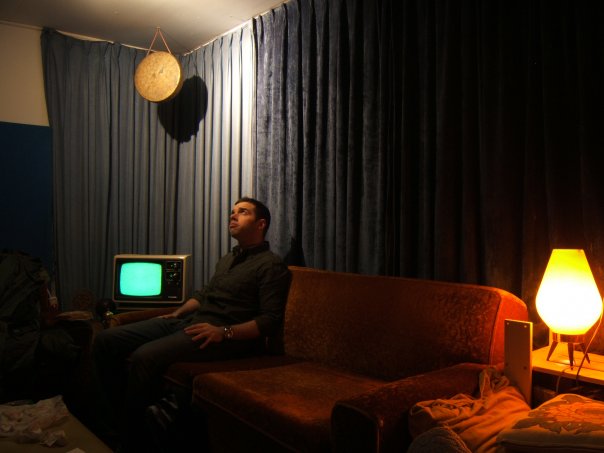
Photo © Jeremy Birrell

Jimmy Carrane wrote this for his blog, and we liked it so much we had to share it. 

I got into improv for the wrong reason: to be liked. I was looking for everyone to validate me, especially the audience.

“Oh, what a noble thing I am doing,” I thought, “making people laugh.” I was lying to myself. I desperately needed their love, and I would bend and twist myself into any shape they wanted as long as they would accept me. I wish I could say I lost my voice, but the truth is I never had one to lose.

Since I was performing to justify my existence, I never let audiences see the real me. Why would I show them that? If I did, they would be repulsed and reject me.

So for years, I hid on stage. I hid behind characters who made safe choices, who supported other players but didn’t make an initiation. I’ve seen tons of improvisers in the same spot. They hide by being witty, by shying away from anger on stage, by being a caricature instead of saying something truthful about themselves through their character.

This is the worst kind of juggling act — trying to express yourself and trying to please people at the same time. And you know what? It doesn’t work, not even a little.

Eventually, I did start to find my voice. When I did my one-man show, “I’m 27, I Still Live At Home and Sell Office Supplies,” I took some big risks in showing my real self – how depressed I was, my anger at my mom, my self-loathing.

If you truly want to be an artist in any field, you have to take risks, which means making people uncomfortable, and the person who’s going to feel the most uncomfortable is you.

Unfortunately, though, you can’t learn the lesson of taking risks just once. It’s a lesson you have to keep relearning over and over again, and many times, I’ve gone back to hiding on stage.

A couple of weeks ago I got married to the most beautiful and kind person, Lauren. Our wedding was on a perfect Sunday fall evening at the super elegant Chicago History Museum. At the reception, both Lauren and I gave some impromptu speeches to our guests who came to celebrate this special day with us. When I took the mic out of Lauren’s hands, I felt a little performance high, which I sometimes get, and I spoke from my heart. I started out thanking people in my wedding party and then I acknowledged the three therapists in the room who had all helped me get to this place in my life where I could actually get in married. I mentioned the age difference between Lauren and I, a source of shame for me since I am 48 and she is 34. And finally, I also acknowledged my friends from the numerous 12-step programs that I’m affiliated with.

In that three or so minutes, my voice was stronger and clearer than it has ever been, and I was no longer hiding. This was me, take it or leave it. Some people appreciated what I said, others not so much. I was uncomfortable and I had pissed some people off, but I realize that for me, it was the right thing to do, and it was important for me to show who I really am.

After almost 25 years in improv, I finally understand that I had it all backwards. Being truthful and revealing things about yourself is the best way to connect with your audience.

To really make an impact on the audience, you have to risk not being liked. You have to say things that may be unpopular or play characters whose point of view is rough or not politically correct.

When your voice get stronger and clearer you are going to piss some people off, which is a good sign that you are on the right path.

Sure, being yourself and being really honest isn’t easy, but if you don’t do it, you’ll be killing yourself and your art at the same time. I’m going to keep trying.

Image © Improv Nerd

Jeremy Voltz is a wicked funny, crazy smaht improviser, singer, and mathlete. (Check it: He’s currently studying for his PhD in the subject.) He is a member of acapella singing group Countermeasure, and the improv singing sensation JerJosh and the SteveCams.

While you’re getting notes, how often have you heard “You guys were tentative out there,” or “You were in your heads”? It happens to all improvisers at some point, and even though we can point it out when it happens, it’s not so clear what causes it, or how to fix it. But let’s talk about it anyway!

Here’s my take on what goes on in your brain when you’re on the side of the stage, watching a scene. Of course you listen intently to what’s happening on the stage, because that’s what you’ve been trained to do. You’re listening for an idea so that when that scene ends and you find yourself on the stage, you’ve got something great to initiate. You’re listening for inspiration.

For example, you’re watching the scene and you hear one of your teammates, fed up with their crappy doctor, shout, “What, did you get your medical degree at clown school?” And instantly, you picture clown medical school, the whole thing, with doctors all dressed as clowns, administering 50cc of seltzer to the face, and you love it and want to see it and want to play with it. Oh crap, what’s happening in the scene now?

This is your conscious mind doing all of this extrapolating and laughing at how funny your inspiration is. You can try to turn it off, but clown medical school is fucking funny, so don’t beat yourself up over thinking about it. Cool, we’ll come back to this whole inspiration thing.

There’s also a completely different background process in your brain, at an unconscious level, which is silently evaluating the current scene for an edit. IT IS CRAZY GOOD AT KNOWING WHEN A SCENE IS DONE. You just feel it, you know, it’s instinctual, basal. It’s just a bell that goes off when the third hilarious heightened thing happens, or the angry character shoots the other in the chest and then just stares hauntedly at the gun he’s holding. You know when that scene is over, in your gut.

Now, when your explosive desire to edit a scene lines up with that great, hilarious thing you’re compelled to initiate (clown medical school), it’s magical. But most of the time, they don’t happen at the same time. My belief is that often, hesitancy on stage is the inability to deal with the fact that these two things happen at different times. “I know the scene needs to end, but that funny thing I was inspired to do doesn’t make sense anymore, so I can’t edit!”

It’s a pickle, no doubt about it. Both of these feelings you get are compulsions. If you subscribe to the Dave Razowsky style of play, you follow your compulsions. But these two compulsions are sort of at odds with each other. Though if you subscribe to Dave Razowsky, then you also kind of subscribe to Buddhism (at least on stage). Don’t believe me? Read this interview. His improv philosophy greatly reflects the Buddhist mentality of being completely in the moment, and being completely aware of the impulses you’re feeling. Not judging them, just being aware of them.

So here’s another piece of Buddhism for you: It’s impossible to solve all of your problems. The desire to do so is in fact a problem. But instead, become aware of problems, without judgment. “See them.” I’ve outlined a problem for you, and it’s often an unconscious one. Do I know how to solve it? Nope!* But I do know how to make you aware of it, and in gaining awareness, you may lose your fear of it.

Here’s an exercise. It gets players used to:

(1) Playing from their gut and tapping into their compulsions

(2) Realizing when a scene needs to end, independent of everything else

(3) Evaluating whether or not their idea is good for the show and still relevant

Have your group do two-person scenes. During each scene, have players on the backline raise their hand when they think the scene should be edited. When a few players raise their hand at the same time, that’s probably a good spot to end the scene.

As a bonus, take note of who is raising their hands and when. (It’s an interesting insight into how you collectively play.)

Ask for a new scene, and repeat this a few times. Players will put their hands up at different times, and that’s OK. There can be a few good places to edit. Once players feel comfortable with calling for edit points, change gears.

This time, have them put up their hand during scenes when they’re inspired to do something. When a few people have their hand up and the scene reaches a good edit, pause the scene, ask a player with their hand up if their idea is still relevant or if they still want to do it, and have them come in. It might be that the time has passed, in which case, move on to the next person with their hand up. Do this for a while.

After this is comfortable, put the two together. Have players raise their left hand if they think the scene is done, right hand if they have an idea. Ask them to put their hand down if they are no longer compelled to follow the idea. The coach should call the scenes when a few people agree on an edit point, and ask somebody with their right hand up to initiate their idea.

This sounds clunky, and it is. It’s not really how an improviser should improvise, as it requires some mental juggling on the backline.  Its goal is to make improvisers aware of what’s happening inside them. The purpose of the exercise is not to fix anything. It’s not to make people think more, or less, or play differently. Just to “see”, as a Buddhist might say. Just to become aware of what hesitancy is at its core. I was surprised at the results when I did this with the longform team I coach, Surprise Romance Elixir, and they were too. Give it a try, and lose your fear of being on the backline!

*OK, I said I don’t know how to deal with these two competing compulsions, but that’s not exactly true. In certain situations, I do. And the balance changes depending on the type of show I’m in.

If it’s a Harold, then it’s extremely important to edit in a timely fashion. And you don’t need a fully-formed premise to initiate a scene in a Harold, either. So I’m letting my editing compulsion dominate.

But if I’m doing a narrative show, where the team is crafting a story around a protagonist, then I better have an idea in mind for where I’m taking the story if I initiate a scene, even if it means letting a scene go a bit longer than it should. And if I don’t have a good idea of where to take it, well then, I’m gonna hope somebody else does!

But how you personally balance these two compulsions is a tough conversation to be having unless you can actually recognize when these compulsions happen. You should be able to point to them and say “That’s when my brain thought this scene was over, and that’s when I got the idea to initiate clown medical school.” Which is precisely the point of the above exercise. Try it!

Photo © Kevin Patrick Robbins

Josh Bowman is a professional fundraiser, story-teller, comedian, and blogger. He has worked and consulted in Vancouver, New York, and now Toronto for almost a decade. Josh also runs and writes for tenthingsivelearned.com, writes for The Huffington Post, and improvises around Toronto, including regular shows with The Beasts and Opening Night Theatre

On a couple of occasions recently, I have had conversations with fellow improvisers about how improv classes and workshops tend to function, and how we train in our art form in general. In my experience, a standard rehearsal/class/workshop goes like this:

Warm-ups.

Scenes.

Get feedback from your instructor.

Have some chuckles.

Go home, with a note or two to work on.

Repeat.

The value of this work is highly contingent on your instructor, how many notes you get, and how open and able you are to improve.

When you think of Olympic or professional athletes, they train on a daily basis, conditioning their bodies for long periods of time to get ready for their event/game day. As an athlete, you don’t just play your sport or practice your event; you work all the muscles in your body by cross-training in the gym, outdoors, or with a trainer. You use plyometrics to be able to move explosively on the field/court/etc. You weight train. You memorize and run plays, and watch tapes to think strategically. You circuit train.

We want to be consistently excellent on stage, but we are often afraid to do the work it takes to get to that level. I wonder what would happen if we trained for improv like athletes train for games. Thinking along this line, I would like to propose a first draft of a potential training regimen for a group of improvisers, and see if anybody would be interested in testing this out with a group (or, alternately, if there is any interest in me running some free classes to see how the damn thing would work). The caveat is: you would have to regularly go through this routine, without falling back on traditional coaching. Then, track the results on stage.

Just like any training routine, this is far from the only way to do it, but I wonder if we start thinking differently about the work we do before we are on stage, how much better our performances would get? What other routines could we add? What if we trained three times a week, with different circuits every time?

The focus here is on physical activity, memory, stagecraft, speed, trust, and elemental scene work. The circuit should be repeated over and over until the end of class, with no break. If preferred, it can be repeated for the majority of class, then a quick break, followed by scene work and an evaluation. If everybody isn’t exhausted after class, then something is being done incorrectly. Participants should have water readily available, and wear comfortable clothes.

Improv Circuit Training Routine

Ten stations, 30 seconds per station. Each station has a large sign indicating exercise (as per below).

Each player should do as many full circuits as possible. Coach is to hold timer and shout (or signal/buzz/ding) at 15-second intervals and 30-second intervals.

Half of the improvisers rotate clockwise, half counter-clockwise. All players should be partnered up, which may mean adjusting flow and number of stations. Ultimately, you are going through each station with a partner, who will switch for every exercise.

Station 1

Burpees to failure for 30 seconds for both players as follows:

Push-up to plank to full standing up. Jump and slap your knees. Repeat. No rest.

Station 2

Player 1 shouts proper first names at Player 2 for 15 seconds. Then switch. No pauses, must be as fast as possible.

Station 3

Alternating trust falls. No pause. As fast as possible.

Station 4

Two 15-second scenes. Must establish proper names, who, what, when, where, emotional state, and commit to an action in the environment as early as possible in the scene. Player 1 initiates first scene, player 2 initiates second.

Station 5

Both players put both hands over the centre of their chests and stand four feet apart. Breathe in deeply and slowly three times. Slowly open your eyes. Keep breathing. Focus on breaths and maintain eye contact.

Station 6

Player 1 makes faces at Player 2, as many as possible, for 15 seconds. Switch.

Station 7

Both players face each other and rotate hips in a circle, keeping upper body still. Speak at the same time (i.e. “two-headed expert”). Nobody may lead. It may not make sense, that is fine. Keep rotating hips throughout.

Station 8

Player 1 is given an emotion by Player 2 and must do a 15-second silent dance routine based on that emotion. Fully and seriously commit. Switch.

Station 9

Player 1 gives 15-second monologue to Player 2. Player 2 consistently gives notes on posture and facial expression to ensure Player 1 looks as actorly and kingly/queenly as possible. Switch.

Station 10

30 seconds of Shakespearean dialogue with accents (accents may be whatever). All while doing squats to the best of your ability. For squats, keep arms straight out in front of you. Tighten abs and core, chest out, head up. Bend knees and lower until you are at least at a 90-degree angle. Should dip straight down, and feel it in your quads and butt.

Back to Station 1


Carmine Lucarelli is one of the smartest, funniest, most enjoyable performers you’ll ever see. He consistently kills as a member of The Get Ready For It Experience, Lashings of Apologies, and Painter’s Radio. He’s also a respected teacher, and is rumoured to own some fancy jeans.

Jimmy Carrane is the co-author of Improvising Better: A Guide for the Working Improviser. He’s the host of Studio 312 on Chicago Public Radio, has taught at The Second City, iO Chicago, and Annoyance, and is the brains and voice behind the podcast Improv Nerd.

This a great post from Jimmy Carrane’s blog, reproduced with permission.

Anger is one of the most intimate emotions and the one many improvisers are most terrified to play on stage. Instead of thinking of anger as a gift to their partner, they think they are doing something wrong. And when even a hint of it starts to bubble up in scene, they stop it immediately, backing away from it like a hot stove. They shove it down, deny it, suppressing the emotion and the scene. Afterwards, they will say things like “I wanted to get angry, but you’re not supposed to get angry. Anger is conflict and you told us we were supposed to avoid conflict.”

It’s safe to say many improvisers are confused about playing angry. Let’s be clear: Anger is not conflict, anger is an emotion. And emotions are energy that can fuel a scene.

“Ok,” you’re thinking. “Now what do we do about it?”

Easy. First, when anger comes up in a scene, look at is as a gift that you are giving to your partner, they same way you would when supporting a game or building off of the the last thing that was said. You are giving them an emotional gift — something they can react off of, which creates energy and tension — all necessary ingredients for comedy.

Second, when anger comes up, heighten the emotion and commit to it 100 percent, knowing that if you commit your ass off it will transform into another emotion.

Think of the last time you had argument or fight with someone you were close to. You started out yelling at the person, knowing physically  you can only do that for so long. Then it transformed into exhaustion or you started crying or laughing hysterically. Either way the anger was transformed. If you deny or suppress anger and only commit to it lightly, you will never give it a chance to transform, and that energy will be trapped inside of you, causing you to feel stuck.

Finally, and most important, is “Agree Through The Anger.” When most improvisers hear someone screaming at them in a scene, they naturally want to defend themselves, just like we do in life. This causes the players to get defensive, which leads to an argument and typically degenerates into a whole “Yes I did… No you didn’t… You’re such a jerk” kind of scene that goes nowhere.

Instead, agree your way through the anger. Take a look at the scene below.

Man: (Very angry and accusatory) I can’t believe you flushed the pot down the toilet.

Woman: (Very angry and accusatory back) I am tired of you being high around the baby.

Man: (Self righteous) It was Chuck’s weed.

Woman: (Enraged) Your freaking dealer was over here? In our house?!

Man: (Enraged back) Yeah, his neighbor has been snooping around, and he was afraid he’d call the cops, so was like ‘Could you store this for me?’ That’s what friends do!

Woman: (Incredulous) In C-a-r-oline’s diaper!

Man: Yes, I am taking care of you and this family. I am not willing to risk everything I work hard for to be taken away from us.

Woman: You have not worked in two years, Stu. You are on unemployment!

Man: And if you get a felony do you think you are still eligible? They will take that right away from you before you even go to court.

As the argument gets more and more heated, keep agreeing and adding specifics that heighten the stakes of the scene. If you do this, you will start looking forward to adding anger to your scene work and won’t be so afraid of it!

Tip for Your Life: I have seen this work in my real life as well. My girlfriend used to say, “Are you making fun of me?” I always agree to this question and say, “Yes, I am always making fun of you.” It diffuses the situation and it’s fun to watch people’s responses. The words “thank you” are also always a good substitute for “yes” in life. People have said “You are so mean,” or “You are so selfish.” Instead of defending it, I say “thank you” and then watch their jaws drop.

Photo © Sam Willard

Simon Pond is naturally funny, the way some people are naturally thin, or Kanye and Kim are naturally going to implode.

Like many great improvisers, Simon is also frighteningly smart. When he’s not doing archaeological digs or sampling fine wines, you can find him performing with Pondward Bound, Second City’s The Bench, as well as CCA-nominated sketch troupe Jape. You may also recognize him from How To Spot An Improviser

Photo © Nicole White

Today I want to share with you some things about the brain and improv that I have been thinking a lot about lately. You may find it boring and useless, which is probably why we don’t hang out together.

I am not really an expert in brain science, but I have had the joy of spending time with a lot of very smart people who study everything from the neuroscience of rat olfaction, to the link between art and the early human brain. That said, all of the mistakes and oversights in this post are purely my own. Unless I am confronted, then I will blame them.

When I am not improvising, I am a graduate student at Trent University working towards an M.A. in Archaeology. My thesis project involves studying the link between early human stone tools and early human cognitive abilities. It is going okay, thank you for asking.

The interesting thing about the evolution of the human brain is that over the last six million years we evolved these massive calorically-expensive brains that we carry around in our heads. The most interesting and enigmatic question of human evolution is probably, “Why such big brains?” It turns out that these big brains support a variety of behaviours that are uniquely developed in humans. The most notable of these behaviours is language, but the list also includes such things as complex tool use, advanced planning ability, artistic representation, music, and maybe even a sense of humour.

The literature on the biological and evolutionary basis for humour is pretty mixed. A good amount of it focuses on the differences between men and women, which in my opinion is probably unproductive at best. However, there is some good, thoughtful work out there. My readings have led me to a few conclusions:

• One, humour is a real thing and is a pan-human phenomenon.

• Two, humour is an adaptive, or the direct by-product of an adaptive behaviour (meaning it exists for a reason).

• And three, the base of all humour is the combination of two somewhat incongruous ideas. Don’t think about the last point too much, it will make you less funny.

But being funny in improv isn’t really the same as sitting around a paleolithic campfire and cracking wise. In fact, anybody who has ever performed comedy knows that the formalized setting of a comedic performance makes it very different from just making jokes with friends. Unfortunately, nobody has really taken the time to figure out what happens in the brain during improv from a psychological perspective (at least not anybody I have been able to find). So instead we must turn to studies of the “other” improv, musical improvisation.

In my experience, there seems to be a startlingly high number of neuroscientists who like to dabble in jazz music. Or perhaps, there are just a startling low number of people in my social group who perform jazz music. Either way, one of these neuroscientists was nice enough to decide to combine his two passions and study what areas of the brain are used during the performance of improvised music (Limb and Braun 2008).

Limb and Braun took a number of highly skilled jazz musicians and put them inside an MRI machine, which is able to determine in real time, which areas of the brain are active during a particular behaviour. He gave the musicians a little plastic keyboard (as a metal one would be incredibly dangerous in an MRI machine) and had them play both a standard learned song, as well as some improvised music.

When he compared the two samples, he found that there were some real differences in which parts of the brain were used during improvisation. Most interestingly, he found that there was a decreased use in areas that are concerned with goal orientation and self-monitoring. The author suggests that this sort of release of inhibition may be necessary in general for creative output.

Perhaps the old UCB adage of “Don’t think” is not completely accurate, as you really do have to use your brain to integrate a series of complex ideas while improvising. Instead, highly-skilled improv happens when we “don’t plan” and “don’t judge.” If you are an improviser you probably know that already, but now you have science to back you up! I take comfort in that. If you do too, we should probably hang out.

Reference:
Limb CJ, Braun AR (2008) Neural Substrates of Spontaneous Musical Performance: an fMRI Study of Jazz Improvisation. PLoS ONE 3(2): e1679.
(There is also a TED Talk on the subject. Click here to view it.)

Matt Folliott is an actor/improviser/comedian, and member of Standards & Practices. He’s performed in festivals across North America, including DCM, CIF, VIIF, Out Of Bounds, Improvaganza, and Mprov. He even has a couple of souvenir tattoos – but that’s another post.

Inspired by Amy Shostak’s 12 Tips for Festival Organizers, I decided to write a post from the other perspective: that of the festival performer.

I’ve had the pleasure and honour of attending some of the best comedy festivals in North America. There’s nothing like a well-run festival. The energy is electric, the performers feel welcomed and supported, and everyone leaves saying the same thing: “I’ll come back!”

These are just a few tips to help make your festival experience even more enjoyable and worthwhile.

1. Have a game plan. Plan your trip. Plan your trip! PLAN YOUR TRIP! Most festivals will have activities planned for their guests, and that’s awesome, but it never hurts to have your own agenda. Take advantage of your time like a member of the illuminati takes advantage of our ignorance. Also, if you’re heading to the States, have a game plan of what you’re telling Customs. They don’t like performers crossing the border, so make sure you have another reason for entering. You don’t want your trip ruined before it even begins; ruin it with drugs, alcohol and sex with strange people, not poor planning. Key Word: Research

2. Smile, be friendly and engaging. Let’s be honest. Only ten percent of improvisers get paid for festivals, so get that out of your head right away. You ain’t doing this for the money! You’re there to meet fellow performers, create friendships and make professional connections. Always be thinking, “I’m so LA,” and force yourself out of that shell, Franklin! Meet people, you won’t regret it. Key Word: Shmooze

3. If you have the option, stay with your fellow performers in hotels or on their couches. Bonding is key at any festival, so if you get the chance to live or crash with other performers, do it. That’s also were all the fun happens; you know, when you’re hanging out with ten or so other funny people with nothing else to do but crack jokes and be silly all while you’re being fuelled by beer and bad food. Also, being billeted can really lower the cost of your trip, so look into it already! Key Word: Bonding

4. Be on time. For your call times, for festival workshops, for planned activities, for everything. No one likes a Late Larry or a Tardy Tamara. People get that you might be running behind, you were probably up late partying, but try your hardest to be on time. Festival organizers have put in work to get you there and set things up for you, so show some love back and show up. Key Word: Punctual

5. Don’t be a comedy snob. If you’re asked to do mixer shows or short form improv or to judge theatre sports, say yes! Maybe you don’t like mixer sets because they can be clusterfucks, or maybe you don’t like shows sprung on you without notice. Well, get over it pal. Being asked to do other shows at a festival is a compliment, as well as an opportunity to make new friends and admirers. Take the chance to try new things, and challenge yourself to find the fun in things you haven’t enjoyed in the past. Key Word: Try

6. Kill your shows! It’s easier said than done, but you’ve got to impress. Think of the song Lose Yourself by Eminem; that’s the type of attitude you have to have before every show. Now stop thinking about the song Lose Yourself by Eminem, and never revisit that thought again. Just remember you’re there to do what you already do at home, so don’t stress. Remember, you’re awesome! So stop shitting bricks and have fun. Believe me, audiences in other cities want to see you succeed. So take a deep breath and go out there and show them what you’re made of: star light and cosmic dust. Key Word: Play Hard

7. Meet your audience. After your show is the perfect time to say hello to the local crowd that came out to support you. Let them know you appreciate them coming, and get to know your potential fans. Plus, you never know what hilarity will ensue when you meet the people. Next thing you know you’re in the back of a van with a guy named Rainwater, hitting a four-foot bong and getting a back rub from a limber cat. What? It could happen at a festival, man. Put on your politician hat and get out there, shake hands and kiss babies, and then kiss the mothers of those babies to see if they have fathers. If not move in for the kill. Key Word: Approachable

8. Sleep. Just do it. If you go too hard you’ll burn out partying or exploring your new surroundings or getting super high with Rainwater the Albino Shaman from the strip mall. Sleep is needed at these festivals to keep your head in the game and your stick on the ice. Key Word: Nap

9. Take Workshops. Most festivals offer workshops, usually with instructors you may never have the opportunity to work with again. Did you hear me? You might never see these people again, so what you are waiting for? Take a workshop already! Anyhooter, workshops and classes are always less expensive for festival performers, and are sometimes free if you’re lucky. Plus you’ll get to meet other improvisers and have the chance to refresh your skills. If you’re really lucky, you might put a brand new tool in that old leather belt of yours, grandpa. So what are you waiting for? Sign up for that workshop! Key Word: Register

10. See shows! Festival shows are inspiring and motivating. So many of the most memorable shows I’ve seen have been at festivals or on the road. So get that performer’s pass  and watch a show. Watch a bunch of shows. Watch some shows, then watch some more. You catch the drift. Key Word: Watch

11. Meet festival volunteers and administrative staff. This one gets overlooked sometimes, and it’s a damn shame because those people volunteering to rip tickets at the door or those lovely humans sitting in the office are the life blood of festivals. Without people like them, nothing would get done. After all, we’re artists. We think with our hearts not our heads. We need these kind, caring, lovers of comedy to make sure dopes like us know where we are supposed to be and where to point the jokes. Their service is invaluable. God speed tiny dancers, you are the wind beneath our wings. Key Word: Volunteers

12. Communication. This is a two-way street and is super important if you are to enjoy yourself in your comedic travels. Ask questions, ask for help, and keep the lines open with festival organizers and fellow performers. I mean how are you going to know if you don’t ask? Key Word: Ask

Well that about covers it I think. Maybe you have a few of your own that you would have added in. You know what? Keep it to yourself, no one likes a know-it-all. Happy travels fellow comedy nerds!

Photo © James Binnie

Courtney Walker is a writer, feminist, fiercely funny member of improv teams Corgi In The Forest and Beauty School Dropouts, and someone you want in your corner when the audience suggestion is “defenestration.”

Here are some lessons you learn when you’re a girl in the world.

1)    Be pretty.

2)    Care what other people think of you.

If you’ve ever tried to be/do these things while performing improv then I can promise you that those scenes probably weren’t very good.

So when we start doing improv we learn a lot of things about ourselves, right? Well one of the first things I became aware of was how I watched myself. And as I watched other female improvisers I started to see a pattern. In the way women were relating to themselves on stage.

If Judith Butler taught me anything (or more like, if I understood anything she was ever talking about) it was how we are taught to perform gender from the very first moments we spend on this planet.

And for girls one of the first things we learn, perhaps the most dominant lesson, is to be aware of our bodies, and more specifically to be worried about our bodies and how they appear to others.

I’m not really talking about the much ballyhooed evil effects of fashion magazines on the self esteem of teens (although ballyhoo! To all of them!). I’m talking about something much deeper, much… sadder.

We learn that our bodies should and always will be available for consumption by others. And because of this we are taught that our commodity must always be consumable.

Okay so what the fucking fuck does this have to do with improv? Let me tell you.

So I realized I was watching myself. To make sure that I was consumable. Not to make sure that I was, you know, doing my best work. I was correcting my posture not to better embody the physicality of my character, but to make sure my stomach fat wasn’t rolling over the top of my jeans. I was stopping myself from being physical on stage because I was afraid I would look ugly or stupid or decidedly unsexy or that my butt would be exposed.*

And this monitoring, this constant anxiety that I would not look good made me a shitty improviser in the following ways:

1)    I was outside of myself, judging myself. Which beyond just limiting the way I used my body in scenes, just generally made me more judgmental of myself and made me second guess my instincts in a way that me hesitant on stage.

2)    I just wouldn’t/couldn’t do interesting things on stage. I could/would only be a character/object/whooshpickle as long as I was sure that I would still look okay. And this pretty much limited me to standing with stomach sucked in turned on a 45 degree angle to the audience, or sitting on a chair, turned on a 45 degree angle to the audience.

And when I would watch other improvisers I would be blown away and I would think, “What are they doing that I’m not?” and then I realized they were using their bodies. Using their whole bodies, lying on the floor, bending over whichever way they could, whichever way they needed to, moving their whole face, embracing all the weird, ugly, messy, awkward things their body could do. And it was fucking awesome to watch.

And so I held a summit with myself, and from this summit there came a resolution.

“Be it resolved that Courtney will try her best not to care about how she looks on stage and that she will move her body and face in new and ugly ways in the service of creating exciting and engaging performances.”

And this wasn’t easy. I started small. I started crying on stage. A lot. And I’m not talking about dainty leading lady crying. I’m talking about ugly, snorting alien creature crying. (Which, full disclosure, is pretty much how I cry in real life anyway.)

And it was completely liberating. And the more I did it the braver I got. I started to move more, and more importantly I started to move without judging. I was no longer monitoring myself to make sure I looked okay. I was fully in the moment, using my body in the same way I would use my brain on stage – to discover great moments with the people I was playing with. And the more I had these great moments, the better I felt about myself as a player, which gave me more confidence on stage. And that confidence allowed me to take more risks… you see where I’m going with this.

All this to say: Women, be brave. Trust your bodies. Be generous to yourselves. Allow yourself to really play. And you’ll be awesome.

A Note On Show Photography

As a result of my resolution, facebook is now riddled with pictures of me looking really stupid. This used to bother me. I used to dissect them, consider untagging them, go on all-celery-and-fish diets etc. etc. etc. But then, in accordance with the subsection of the resolution that required me to be generous to myself, I started loving those stupid pictures. Because if I looked stupid in those pictures, it meant I hadn’t spent the whole damn show POSING and had actually existed in the moment. And I came to realize that when there is an especially stupid picture of myself, the scene that it captures is always one of my stronger ones. The scenes that I walk away from thinking “Shit, I gotta do more of THAT.”

* It occurs to me that maybe I just need to buy new pants, but while I’m on the subject, here’s something I’ve been meaning to say. I think it’s a really bad idea to wear skirts/stilettoes/tube tops on stage. It stops you from doing things. I don’t care if you’ve been clomping around in five-inch heels since puberty, wear limiting clothing items on stage and you will be a limited improviser. Period.

Photo © Andrea Ballantyne

Courtney (third from right) emotes with Corgi In The Forest

Devon Hyland is one of those annoyingly talented people who acts much older than he is. (Meaning he’s as funny as Don Rickles, but without the receding hairline.) He writes and performs award-winning Fringe plays, plays a mean guitar with his band Fashion Tips, and does improv with The Second City among other things. When he’s not making people laugh, Devon has been known to attend the occasional Blue Jays game.

Photo © Ian Brown

DISCLAIMER:

Firstly, I was asked to write this article about improv. Don’t be getting all uppity because you think I’m not smart enough to be writing articles on anything.

Secondly, I was going to write an article called Shows Not Starting On Time! or Behaving Professionally! or Angry Face Emoticons: A Visualization Of My Views On Toronto Improv!, but I realized that was completely negative thinking.

Improv teaches us to be positive, so instead of telling people what I think is bad, I’m going to focus on the good. That’s why I chose to write this positive list of positive things that I have found to be positive (true) about improv.

1. People Change: You And Your Fellow Improvisers Will Get Better

When I was a younger pup than I am now, I’d sometimes watch performers and write them off. I determined that they were “the performers that they were,” and that I had seen all I needed to see from these people to know how good they would become. They did not have the “It” factor. Because of this, they were simply not destined to be performers.

I imagined they would eventually slip away and I would be left, alone, centre stage, reaping the benefits of being born with the “It” factor. It was only a matter of time.

Now, however, I do not believe that someone cannot obtain this coveted “It” factor.

This is because I’ve been shown over and over that I was wrong in my initial assessments. These performers are funny, I discovered, and I don’t know why! And it’s not just me; they now succeed in entertaining rooms full of varied audience members with ease. These are the same people I thought were never, ever going to become as mysteriously wonderful as I now think they are. And with good reason: they stunk!

They were lacking confidence, quiet, hunched, and non-deliberate in their actions. They literally repelled my eyes. Why couldn’t they realize they weren’t meant to be performers? Why couldn’t they realize that people like me – naturally wonderful people – had more of a right to the stage?

Now I look on and mope as a bubble of beautiful potential (the “It” factor, I’d argue) surrounds their bodies.

With hard work, performers have the power to find the gifts that are hidden within themselves. Maybe barking jokes isn’t your thing. Maybe subtle acting ain’t your forte. You’ll eventually discover what you believe to be your skill set. This skill set is the reason you started improv in the first place, and once you’re confident in it and can show it to your audience, the world’s your oyster.

People do change, and the boring performer you’re watching (or are), has the potential to blow you away (or blow yourself).

2. Somebody’s Probably Enjoying It

The unfortunate reality is this: many audience members do not want to be there. So as an improviser, you’ll often perform a show for crowd of people who:

a) have no interest in improv, or

b) have no interest in you

This is usually demonstrated by eye rolls and yawns. But even though it seems like the whole crowd is against you, I’ve found that there’s more often than not at least one person in the audience who’s enjoying him or herself. There’s no way to know where this quiet, happy peanut is sitting, so why don’t we just pretend he or she is at the back of the room? Play to this person and don’t worry about the naysayers.

And while you’re at it, why not play to someone else at the back of the room, too? Imagine a person you love and want to impress. Maybe it’s your soon-to-be-girlfriend/soon-to-be-wife/soon-to-be husband. Maybe it’s Lorne Michaels. Perform your heart out for that ghost person. Hopefully doing this will bring out a better performance in you, and those dumb yawners will shift their focus to the stage. After all, yawners change.

3. You Can Learn From Anyone

I used to think I was above taking classes from my peers. Ohhow wrong I was! Please don’t believe that just because you have equal or greater experience than someone that they can’t teach you anything. And please don’t disregard somebody’s opinion because you think you’re a better performer than they are.

Because I’ll tell you this: you are not a 100% all-around perfect performer. In at least one instance, I’ll bet these new scrubs have got you beat.

Whether it’s the way they drop puns into medieval references, or the way they paint the stage with more whimsical grace than an a-squiring knight, they have something to teach you. Everyone has something to teach you. There is no person in this world from whom you cannot learn, so take classes often and anywhere.

4. Don’t Wait Your Turn

Apparently I have been younger than everyone else my whole life, because no matter what my age, there’s always someone who pats me on the back and says, “Oh, you’re just a young thing.” I find this more telling of them than it is of me. After all, they’re only stating my age – something of which I should hope I need no reminder. In their case however, they’re pointing out that they see this as important. I do not.

While I’m not advocating that new improvisers should disregard experience as an asset, I would encourage newbies to believe that their experiences will resonate with an audience just as profoundly as those of a seasoned veteran.

It doesn’t matter how long you’ve been on this Earth; you’ve experienced life in an infinite number of unique ways that open-minded audiences are clambering to have shown to them. You’ve also experienced life in so many universally-common ways that crowds will have no problem connecting with you.

Show your audience you’re confident in the connection you have with them, and they will respond positively. You don’t need to wait until you’ve performed 300 shows before you start thinking your improv is worth watching. You are an interesting and funny person now.

Now get up there and let us all bask in your glory, jerkwad.

5. Good Show > Good Improv

I’ve watched improv troupes sink deeper and deeper into a hole of unfunny, boring improv about a thousand times. They’re stuck. The audience knows it, and they know it. What could the non-performing members on the sides be thinking at this point?

“This show is going so badly. I can’t wait for it to end. I’m going to stick on the sidelines of this scene and just ride it out. Eventually we’ll all get through this. Then I’ll grab a beer and think about my wrongdoings.”

Just sweep it. End it. Cut your losses. For your own sake and for the audience’s sake.

Nobody wants to watchfour more minutes of a boring scene so you can show us you’re able to weave your way out of a seemingly-contradictory situation. We won’t appreciate the accomplishment as much as we’ll appreciate laughing. And we want to laugh!

The positive angle on this seemingly-angry rant is this: you do not need to believe that your audience is only interested in “good improv.” They want to have a good time.

While it may be true that some on-looking improvisers will snub their noses at you for contradicting your stage mates, sweeping a struggling scene instead of saving it, breaking the fourth wall and engaging the audience, or pretending to eat what you’ve just said and moving forward as though it never happened (a favourite of mine), there are more people in the crowd who will thank God that they do not have to sit through any more “good improv.”

I’m not advocating that you sell your teammates down the river. I’m advocating for you and your teammates to recognize that the #1 goal in your performance… is a good performance.

Once we recognize something isn’t working, we have a chance to make it out alive. We just need to do something about it, instead of hoping the Improv Gods will respect us for playing nice and riding a terrible scene through to completion. Because they won’t respect you – they’ll be furious with you for boring the heck out of the audience members who aren’t improvisers themselves. This was positive, right?

6. Talk to People You Admire

One of my favourite early experiences in improv was congratulating Marty Adams after one of his first Second City Touring Company shows. He was thrilled. At least, he acted thrilled. He put on a big smile and shook my hand and said “Awww, thanks so much.” I felt great, I’m sure he felt great, everyone felt great. So don’t be afraid to talk to people you respect, unless you hate feeling great.

For a long time I was deathly afraid of talking to people I admired. I used to go and watch the improv sets at Second City, and afterward I would stand outside for a few minutes for the performers to come out. I’d only wait a few minutes because that’s how long my nerves would allow me. After that, I’d scurry back to the subway, thinking to myself, “I’ll never get the confidence to talk to those people and oh how they must think I’m square!”

My advice to shy people is this: engage the performers you respect. If you start a dialogue with a performer you admire, you’re more likely to learn something about why they are such a great performer.

On top of that, people love to be told they’re awesome. Can you name someone who doesn’t like to be told they’re awesome? If so, give him or her this email address: donttellmeimawesome@devonhyland.ca. I would love to talk to this freak. Seriously, that email address works and I would love to talk to this freak.