Info

Last year we posted Eight Ways To Be Good With The Improv. Here’s some more.

1. Be willing to fail.

Photo © Adrianne Gagnon

Photo © Adrianne Gagnon

When we’re learning to improvise, we fail constantly. Improv teaches us that mistakes are OK, and life becomes freeing and fun. But after a while, we can start to fall into certain patterns of behaviour.

  • You always go in to first beats with Bob
  • You start every scene by holding an imaginary beer
  • You reference Star Wars at least once every show
  • When all else fails, zere’s always your hilarious Cherman accent, ja?

We repeat these patterns because they’re safe and familiar. Chances are they got laughs in the past. But if you want to grow as an improviser, you need to step outside your comfort zone.

Jump in the deep end. Throw something out there without knowing where it’s going. Get yourself into trouble. When you give yourself permission to fail, you open up new possibilities.

“Fall, then figure out what to do on the way down.” – Del Close

2. Go with your gut.

There are times when performers are so in sync, their responses so lightning-fast, it almost seems supernatural. When we’re truly in the moment, improv is effortless. Like UCB’s motto, we “don’t think.” So what’s doing the thinking for us?

Your brain is designed to filter out information, or else your conscious mind would be overwhelmed. But your subconscious takes it all in.

We make moves based on the information we have. Consciously, we’re usually focused on ourselves and our scene partners. Subconsciously, we’re doing much, much more.

When your subconscious takes in what you’re doing, what your scene partner is doing, what the rest of your team is doing, what the audience is doing, what the person in the booth is doing, what song is playing at the bar, every single scene you’ve ever seen or played, and sends you an idea…you take that damn idea!

3. Slow down.

“If it’s done well, I’ll watch somebody tie their shoe.” – David Pasquesi

Photo © Crista Flodquist

Photo © Crista Flodquist

When the lights go up in Trust Us, This Is All Made Up, TJ and Dave stand silently on stage. No one says anything for a full 14 seconds. Most improvisers would be chewing their hand off by that point, but taking the time to read each other is par for the course for this duo.

Here’s an exercise they teach, which is great for connecting with your scene partner:

Two players stand across from each other. One is the sender, the other is the receiver. The sender tries to communicate their character, their relationship to their scene partner, their want or situation – all without miming or speaking. The receiver then says what they got from the other person’s energy and body language.

The first time Cameron and I did this exercise, TJ asked what I got from Cameron’s character.

“Well, he’s my husband, and he’s about to tell me that he told his boss to stick it, and now he’s been fired.”

Cameron’s eyes widened. “I was her husband, I’d just told my boss to go fuck himself, and I quit!”

(For the record, this was waaaaaaay before he basically did that in real life.)

The next time you walk onstage, take a moment to pause, breathe, and fully check in with your scene partner. You don’t need to rush to be funny.

4. Be here now.

We spend a lot of time in our heads, and not just when we’re improvising. If you’re feeling guilt and shame, you’re thinking about the past. When you feel fear and anxiety, you’re thinking about the future.

It doesn’t matter whether you’re worrying about tonight’s show, stressing about what character to bring next, or feeling bad about that stupid thing you did in fourth grade: now is all that exists.

Know that you have everything you need in this moment. When you bring your focus to what’s in front of you – whether it’s your scene partner or a plate of lasagna – then you’re truly living. (And who cares if you forgot your swim trunks in Grade 4? Underoos are the coolest!)

Of course, like all things, it takes practice. For further reading, we recommend The Power of Now by Eckhart Tolle, The Four Agreements by Don Miguel Ruiz, and Comfortable with Uncertainty by Pema Chodron.

5a. Reach out and touch someone.

Have you seen that show, Two People Standing And Talking in a Void? It’s the one where no one touches anyone, physically or emotionally.

If you’re in a scene professing your love to someone, and you’re both standing still two feet apart, move closer. Couples touch. Touch his cheek. Caress her arm. Boop his nose. Hold hands.

Touching is a great way to show you’re humans with emotions. Patting your scene partner on the head, or putting them on your shoulders says a lot about your characters.

5b. Reach out and touch something.

Before a scene starts, the only things that exist on stage are people and chairs (ohhh, that’s where they got the name). After the scene starts, everything exists. Like The Matrix, we just need to declare it.

We learn about ourselves by exploring the world around us. So grab some chairs and make a hot tub, a ferris wheel, or a TARDIS. Reach out and find an object, then use it to define your character. You don’t have to know what you’re reaching for. The joy is in the discovery.

6. Study the masters.

Read Napier and Norman and TJ & Dave. Read interviews, e-books and blogs. Subscribe to podcasts and listen on your way to work.

Most of all, go see live shows. If you live in a big city like New York, Toronto or London, you can see top improvisers almost any night of the week. If you live in a small town, festivals like the Del Close Marathon, Vancouver International Improv Festival, or NC Comedy Arts are a great way to see these people all in one place.

And for a mere ten dollars, you can see TJ and Dave perform at their brand new theater in Chicago. That’s like seeing Simon and Garfunkel in concert at 1965 prices. Heck, if you have to jump on a Greyhound to get there, it’s worth it.

7. Play with people who are better than you. Play with people less experienced than you.

There’s a tendency to stick with the same group of people throughout our career. It might be your Con class, your first Harold team, or any number of other cliques.

Ensembles are great for building trust, but if you feel like you’re in a rut, mix it up a little. (See “Be willing to fail.”)

There are great young performers who are still students. And great veteran performers who are still playful. Don’t be scared to ask one of your heroes if they’d like to perform with you. And if you’re an old pro, do a show with your students. It’s a great reminder to take care of your scene partners, and they might surprise you by how much funnier they are.

8. Have other interests.

We said it before, but it bears repeating. Improv is an incredible gift, but there’s no surer way to suck the well dry than to drain it constantly.

If you’re taking five classes, doing three shows a night, and spending all your free time with other improvisers, it’s time to reassess before you burn out.

The pros know this. In between directing the Second City Mainstage, opening a new theater, and writing a new book, Mick Napier practises card tricks, shoots pool, plays guitar, and builds stuff with erector sets. David Razowsky travels the globe teaching improv, but he also spends time discovering each city, trying new foods, and honing his photography skills.

Enjoy all that improv has to offer, but be sure to make time for other things.

“The more art you bring to your life, the more life you bring to your art.” – David Razowsky

Photo © Kevin Thom

Photo © Kevin Thom

Editor’s Note: Regarding #3, David Knoell prefers the word “patient” to “slow,” to avoid confusion between having awareness and bringing low energy. David Razowsky prefers “mindful.” These are both great descriptors, so use whatever resonates with you.

Once upon a time, there were surprisingly few online resources for improvisers. Now there’s a plethora of awesome podcasts that cater to our favourite cult. Best of all, they’re free! Thank you, internets.

Screen Shot 2015-09-14 at 11.58.41 AM

A.D.D. Comedy with Dave Razowsky and Ian Foley

Improv guru David Razowsky hosts this series of passionate chats with friends he’s amassed in his 30-plus-year career. While big-name guests like Colbert, Carell, and Nia Vardalos may snag your interest, less-familiar luminaries are every bit as entertaining. Actors, writers, producers, teachers, and other folks share their stories of life on stage, screen, and behind the scenes.

The Andy Daly Podcast Pilot Project

Are you ready to laugh? Ready or not, this show will have you in stitches. A staple of New York and LA’s improv scene, Daly is one of the funniest yes-anders out there. Using characters created on Comedy Bang! Bang!, his lightning-fast wit and hilarious guests make this podcast worthy of repeat listenings. There are only nine episodes so far, but fingers crossed he’ll be back for another season.

The Backline with Rob and Adam

In the mood for some in-depth, honest, insightful info, served up with a side of laughs? Rob Norman and Adam Cawley’s real-life camaraderie makes their podcast a pleasure to listen to. Each week they offer a wealth of anecdotes and advice on everything from shame to shortform, friends to festivals, acting, time travel, and much, much more.

Comedy Bang! Bang!

Long before its television debut, Scott Aukerman’s podcast was home to some of the funniest people on the planet: Paul F. Tompkins, Andy Daly, Jason Mantzoukas, Matt Besser, Bob Odenkirk, Sarah Silverman, Bill Hader, Anthony Jeselnik, Keegan-Michael Key, Nick Kroll, Tim Meadows, Amy Poehler, Seth Rogen, Weird Al, David Wain, Tenacious D, Jessica St Clair, Aziz Ansari, Fred Armisen, Nathan Fielder, Michael Ian Black, Jason Schwartzman, Jon Hamm, Janeane Garofalo…the list goes on. And on. And – at over 300 episodes – on.

Word to the wise: Callbacks and inside jokes are rampant, so if you’re new to the show, do yourself a favour and start at the first big Bang! Bang!

Improv4Humans

Like an improvised “Bat,” Matt Besser’s podcast creates memorable theatre for the mind. Each week, Besser and his guests improvise based on audience suggestions from the web. Regulars Andy Daly, Zach Woods, Lennon Parham and Tim Meadows, along with special guests like Todd Glass, Jason Mantzoukas and John Gemberling make for some very fucked-up but always funny stuff.

Improv Nerd

Chicago-based Jimmy Carrane’s mix of interview, improvised scenes, and post-improv analysis is as fascinating as it is unfiltered. And like his blog, Carrane isn’t afraid to delve into the dark places of his guests’ souls. With over 100 episodes so far, guests include Mick Napier, TJ and Dave, Susan Messing, David Razowsky, Key & Peele, and Bob Odenkirk, to name just a few.

Improv Obsession

Stephen Perlstein is the first to admit he doesn’t know everything about improv, so he interviews people who do to learn more about the craft. If you’re looking for something that’s more theory and how-to, this is a good one to have in your arsenal. Will Hines, Billy Merritt, Matts Besser and Walsh, and Tara Copeland are among the 50+ guests to date.

Pack Improv with Miles Stroth

In this weekly podcast, Stroth invites someone from the improv/acting community for a live interview at ACME Comedy in LA.

WTF with Marc Maron

While not technically improv, no podcast list would be complete without Maron’s acerbic interviews. With over 500 episodes to date, WTF revived his career and launched him on a new trajectory. And while not everyone’s a fan (see Maron and Michael Ian Black’s twitter feud), there’s no denying his guest list and interview style reign supreme.

Zenprov

Marshall Stern and Nancy Howland Walker host this series of podcasts about the art of Improvisational Acting in general, and how Zen thought relates and helps you as an actor, in particular.

(Tip of the hat to Oliver Georgiou for Zenprov, and Alex Wong for Miles Stroth!)

(Editor’s note for non-Canadians: A “power play” in hockey is when at least one opposing player serves a penalty, giving your team a numerical advantage on the ice.)

I’m officially a Senators fan.

On Monday, the Ottawa Senators (NHL team, for those who aren’t Canadian) fired their coach, Paul MacLean. The day after a great come-from-behind victory, too. Possibly their best game all year. Weird.

Why fire the coach after an amazing game?

When did this become a sports blog?

I mean, what the hell is going on here?!

Listen to the reason GM (General Manager, sheesh) Bryan Murray gave for letting MacLean go.

“I think what happened last night was, it was one of our better games, there’s no question. The good thing that happened for us was that we got behind 3-0. We forgot about all the rules and structure and everything. We just went out and played hockey.

Hockey’s a game and sometimes you just have to go play. Have a little fun with it and chase the puck and do things. We did that and I think our speed showed up. I think some talent showed up and we made some plays and fortunately for us, we won the hockey game. But I think that’s what I would like to see our team be – our players have to have some fun. It’s a game. We have to have some fun playing the game.

We have so many rules sometimes that we take the fun away from it, so maybe now, we’ll play a little different style – we’ll play a little more aggressive style. We’ll try to chase the puck more often and I think that will play to the strength of the young people on our hockey team.

And that’s what I would like to see happen – that we get back to real simple (play). Move the puck. Be in a good position. Help each other and be creative in your way. We have got some very instinctive hockey players here, just play that way.”

I was watching the press conference when it happened (flipping around until Chopped came on), and it blew my mind. It seems obvious that hockey is a game when you ask kids. But when you ask adults, it’s not a game. Nothing’s a game. It’s a business. And you have to win to make money. And winning comes from hard work and doing it right.

It’s a bold statement for a PROFESSIONAL hockey team (meaning playing for money, NOT for fun) to make. But a damn important one. So many “creative” industries try to set up the rules and structures for how to work, instead of promoting play.

The ad agency I got fired from (the most recent time) was implementing the rules of staying late, working weekends, being in the office at all times and a bunch of other old fashioned ways of thinking. None of which have anything to do with being more creative.

So thank you Bryan Murray. Thank you for understanding that even at a professional level, if take away the play, you ain’t got nothin.

Going on the record to say that the Senators will make the playoffs. If I were bolder, I’d say win the cup, but, you know, they’re not that good…. ahhh fuck it.


Sens FTW!

(This post originally appeared at playwithfireimprov.com)

Here’s a bounty of goodies any improviser (maybe you?) would love to open on Festivus morning. First up…

A Load Of Hooey

Bob Odenkirk’s new book is just the thing to get you through post-Breaking Bad, pre-Better Call Saul doldrums.

Like Steve Martin’s Pure DrivelA Load of Hooey is a pastiche of bits and pieces from one of comedy’s most ingenious minds. As the description says, “Odenkirk’s debut resembles nothing so much as a hilarious new sketch comedy show that’s exclusively available as a streaming video for your mind.”
 

Improvising Now

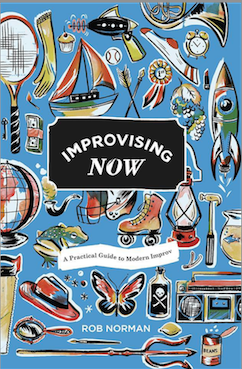
If you want to up your long form game, look no further than Improvising Now. Rob Norman’s book is as entertaining as it is educational, and at 150 pages, it’s the perfect stocking stuffer. (If you have stretchy, rectangular stockings.)

Improvising Now - Norman

Bears & Balls: The Colbert Report A-Z

Only six more shows! Thankfully, Sharilyn Johnson and Remy Maisel’s Bears & Balls: The Colbert Report A-Z helps ease the pain. Crammed with memorable moments and “who knew?” insights, this meticulously researched volume is a worthy addition to any Colbert fan’s shrine.

Cover Image © Kurt Firla

Cover Image © Kurt Firla

Pax Vaporizer

Vape to your heart’s content this holiday season with the sexy new Pax Vaporizer. At 300 bucks it ain’t exactly cheap, but it’s amazing how many impoverished improvisers swear by it.


Improviser’s Clock

Now you can be in the moment, every moment, with our very own improviser’s clock. Click here or below to shop the full range of designs. And be sure to check out our store for cool shirt designs by Rob Ariss Hills.

Improv Clock


Few things are sadder than performing to an empty room.

Unless you’re TJ and Dave, you need a little planning to ensure a good turn-out. Here are some tips that can help.

Know Your Audience

Who are you performing for? Is it hardcore improv nerds, or comedy lovers in general?

Is it a monthly show with a built-in fan base, or are you trying to get fresh blood (and votes) for Cage Match?

Just like advertisers, you need to define your target audience. “Anyone with five bucks” is not a demographic.

Before you invite all 2,031 of your “friends,” ask yourself if Aunt Myrna, the guy you went to junior kindergarten with, and those eight ‘bots would really come.

Quality Is Job One

A friend of mine saw a show recently, and was pleasantly surprised by how much he enjoyed it. “There’s so much bad improv out there,” he confided.

Yikes.

Anyone can have an off night, but when you don’t commit to doing your best, it reflects badly on all the awesome sets other improvisers are committed to.

Have you and your team rehearsed? Are you familiar with the format you’ll be playing?

Learning stuff on the fly with strangers may be fine if you’re a pro, but for many people, familiarity with the cast and structure are key to a good show. Just because they’re called make-’em-ups doesn’t mean people want to pay to watch you figure shit out on stage.

Be professional. Book a rehearsal (or several, depending on the scale of the show). If it’s a one-off (a fundraiser, for instance) or a jam-type situation, at the very least try to get there an hour beforehand, so you can meet and bond with your cast mates.

Quantity Is Job Two

There’s a delicate balance between not promoting your show enough, and promoting it too much.

Don’t create a Facebook event a month in advance, and promote it every day until the show.

Do promote judiciously. If everyone on the team has the same circle of friends, you don’t need all seven of you to mention it in your status.

Don’t post the wrong time, date, or venue. (You’d be surprised how often this happens.)

Comedy Is Visual

Even a well-written e-vite can get lost in celebrity gossip and kitten videos. One way to break through the clutter is an eye-catching poster.

Your poster should reflect the show and/or team’s character. You can use it online, as well as print copies to put up in bars, theatres, and coffee shops.

Keep the messaging simple; it’s a poster, not a blog. The name of the show, date, time, and place are fine. Include a website if you have one (but only if it’s up to date).

Again, keep your audience in mind. Don’t assume everyone who sees your poster will understand what you’re selling. Before you joined the improv community, would you know what the fuck a “Harold Night” was?

Unless your show is strictly for other improvisers, you need to spell things out a little. It can still be a tease though, like this awesome example:

Image © Scott Williams, ScottWilliamsDesign.com

Image © Scott Williams, ScottWilliamsDesign.com

At the other end of the logic spectrum, fans of Standards & Practices love their boundary-pushing style. Kevin Whalen creates promo posters that reflect the team’s surreal sensibility.

Image © Kevin Whalen/Standards & Practices

Image © Kevin Whalen/Standards & Practices

Rob Norman and Adam Cawley are to Toronto’s improv scene what James Franco and Seth Rogen are to…uh…each other. This stunning artwork captures the duo’s brooding bromance and colourful imaginations perfectly.

R&N Cawls Orig

Image © Marshall Lorenzo

One of our favourite campaigns was for Ghost Jail Theatre. They produced a memorable series of posters created by overlaying shots of two different improvisers, usually a male and female. The effect was haunting, intriguing, and completely different than everything else in the community.

The next season, they created hybrid images of three players. The slightly off-kilter results stopped passersby in their tracks. (The posters were so popular, they were stolen within hours of being put up.)

Image © Katie Bowes

Image © Katie Bowes

This poster’s understated, Mad Men cool is the perfect foil for the Bacchanalian beer-swilling orgy that is Mantown. If you’ve seen the show before, the contrast is hilarious. And if you’re a newb, the image is enough to pique anyone’s interest.

Mantown Current

Image © Kurt Firla

Cross Promote

Doing another gig close to the date of your show? Ask the MC if they can mention it when they intro you. Better yet, direct people to your Facebook event page. (You don’t really expect them to remember show details after five beers and some Jägerbombs, do you?)

Set It In Motion

If you really wanna go all out, why not make a video? Kevin Whalen and Matt Folliott created this stop-motion short for Sex with Jeremy, a showcase for teams Sex T-Rex and The Jeremy Birrell Show:

Now go forth, break legs and blow minds!

Photo © Kevin Thom

Photo © Kevin Thom

Sometimes in improv, we try to force a storyline so that it follows the rules of “the real world.” And while grounded scenes can be very entertaining, there’s something to be said for great acting married with crazy circumstances.

Case in point: The Avalanches’ Frontier Psychiatrist. The characters and their surroundings may look nutty, but their performances are very natural. Which makes the complete package weird as shit…and utterly wonderful.

Click below to view the video.

Photo © Kevin Thom

Photo © Kevin Thom

There are some fascinating and important discussions going on on the internets right now. One that’s very close to our hearts is artists getting paid what they’re worth.

A few years ago, I was talking with someone* in the improv community who expressed shock, even disdain for how much Second City paid its teachers. Not because it paid them too little, mind you, but because it paid them well.

I tried to process what I’d just heard. “Why the fuck wouldn’t they pay their instructors a decent wage?” I thought.

Was improv really held in such low regard – even by improvisers – that it wasn’t worth paying for?

After all, we’re talking about something that makes people feel good, helps them both professionally and personally, and dramatically changes lives. If improv were a pill, Big Pharma would be making billions off of it.

The line between art and commerce can be a murky one, as this open letter to Oprah reveals. In it, the author (a hula hoop performer named Revolva) talks about this whole notion of working for free, or very little.

I’m a big fan of “do what you love, and the money will follow.” And if you write or act or sing or dance or paint because it gives you joy, great. It’s when others profit from what you’re doing and don’t give something back that things can turn sour.

There’s a big difference between inviting friends to perform in your show at The Bishop & Belcher (now with hot and cold buffet!), and asking total strangers to do what they do professionally, for free.

A couple of years ago Standards & Practices did a St Patrick’s Day show. They wanted some Irish step dancers to open for them, so they called up a dance school, who suggested two of their students. Like most improvisers, S&P don’t have deep pockets, but they pooled together and offered the dancers $100 for five minutes.

The night of the show, the girls danced their hearts out. One of them played the fiddle at the same time, like something out of Riverdance. It was electrifying, the audience was thrilled, the dancers were happy, and S&P felt it was money well spent.

And that’s something I’ve noticed: it’s often struggling artists who make sure other artists get paid – perhaps because they’ve done so many “freebies” themselves.

They’re the ones who put $20 in the Pay What You Can jar. Or who donate to festivals and fundraisers, even if they get nothing in return. Not because they’re rich, but because they know that art makes us all richer.

Need a nice poster for your show? Throw your improviser buddy who does graphic design a few bucks.

Want to mix things up by hiring a stand-up to host? Ask them what their rate is; don’t just assume they’ll do it for beer.

It’s about respect for each other, and each other’s skills.

That’s why I’m hoping Revolva’s post won’t just get shared, but will shake things up, and help give more talented artists their due.

In the meantime – aside from teaching – doing improv will probably never pay a king’s ransom. And as long as no one’s taking advantage of performers, that’s fine. We do it because we love it, because it’s a privilege, and because it’s one of the few places you can fail in public, and laugh about it.

That, to me, is priceless.

*(I should point out that person is the only one who’s expressed such a view to me. It was their stature and tenure in the community that gave me pause.)

Bears & Balls: The Colbert Report A-Z (Revised Edition) is the definitive guide to the Peabody-winning satire that rewrote the rules of comedy. We asked co-author and superfan Sharilyn Johnson for the truthiness, the whole truthiness, and nothing but the truthiness.

Cover Design © Kurt Firla

Cover Design © Kurt Firla

P&C: You’ve been covering comedy for 16 years, in print, radio, and with your blog, third-beat.com. When did you first become aware of Stephen Colbert, and were you a fan from the start?

SJ: I was a loyal Daily Show viewer when Colbert was still there, but I wasn’t a fan of the correspondents. At the time, the field pieces still had a bit of the “weird news” angle, and I often didn’t feel good about their choice of targets. It felt like they were making fun of well-meaning people. I didn’t pay close attention to Colbert until I saw him on a Daily Show panel in 2005 at the Just For Laughs Festival in Montreal. The energy and warmth he had in that context totally sold me. By the time the Report premiered that fall, I already had a sense of what was underneath the character, which made me appreciate the show more. Attending my first taping the following summer put me in overdrive.

P&C: Your book covers almost a decade. How has the show evolved over the years?

SJ: It’s been fascinating watching some of the old, lesser-known clips again. In the show’s initial eight weeks, in late 2005, the character was very heavy-handed. His voice was different. And he was a bit more of a jerk at the beginning, when the show was intended to directly mirror The O’Reilly Factor. It did find its stride quickly, though. Within the first year, the show started creating its own world, with its own rules, and the execution of the character loosened up. These days they really can do anything they want. They can think big, and Colbert is free to openly show the audience how much fun he’s having, both of which result in the show’s greatest moments.

P&C: TCR has a killer team of writers, including Stephen. How do you think his improv background has helped with his character and the show itself?

SJ: The majority of his writers have improv backgrounds. They typically work in teams of two to generate material, so collaboration is part of the process from the start. I think they use their improv brains to approach their writing the same way any improviser would. In any news story, they’d be looking for that “first unusual thing.” In the book, we talk a bit about the construction of The Word, and you could look at the verbal portion of that segment as an “If this, then what?” thought process.

As for Colbert himself, his interviews are perhaps the most obvious illustration of his improv skills at work. He has some prepared questions, but for the most part he’s reacting to the guest’s responses as his character. He’s also an incredible listener. Viewers might not realize that, because his character listens to nobody. That’s something we’ll see more overtly when he takes over the Late Show.

He’s sometimes talked about how at Second City, he learned to wear his character “as lightly as a cap.” I think his ability to show his humanity underneath the character has been an essential, if not the most essential, ingredient to the show’s longevity. Viewers would’ve gotten tired of “Stephen” if there wasn’t something else there to connect with.

P&C: When Kissinger was awarded the Nobel Peace Prize, Tom Lehrer said that political satire was obsolete. Why do you think TCR (and TDS) are so popular?

SJ: Aside from being hilarious? It used to be just the politicians who told you what to believe and what to think. Now it’s “journalists” doing it. People have this overwhelming sense of wanting to call bullshit on everything that’s being fed to them, but don’t know where to start. I think Colbert, Jon Stewart, and John Oliver are doing that for us. (But mostly, it’s that they’re hilarious.)

P&C: The Colbert Report is so brilliant night after night, it’s hard to think of highlights. That said, what are some of your favourite segments or episodes?

SJ: There are some obvious ones. Walk up to any Colbert fan and utter the word “Munchma,” and watch them dissolve in giggles. The Super PAC stuff was brilliantly executed. The Daft Punk episode was incredible, even more so when you learn what happened leading up to it. The Wheat Thins “sponsortunity” was proof positive that sometimes the simplest idea is the best idea. An early 2006 episode that had both the Charlene video and Stephen’s Laws of Love was a great one-two punch.

As far as lesser-cited ones? There’s a segment from 2011 called “Close Sesame” where he incompetently does the “marshmallow test” on himself. It’s pure clown and just wonderfully, innocently dumb. He was clearly having a blast performing it, too.

The band Gorillaz, which is made up of animated characters, was on the show but “Stephen” refused to interview the real guys behind the characters. He stormed off the set and returned in his own street clothes to interview them as the mild-mannered “Steve Colbert,” which was a wonderful reality-bending meta moment.

For the medical segment Cheating Death, he introduced a fake medical product called Vaxa-Mime, and did a great little mime routine to go with it. I’ve heard he did killer object work as an improviser, which I would’ve loved to have seen.

And obviously, I’m partial to the 13 episodes that I saw live in the studio.

P&C: Was there anything you learned about Colbert while writing this book that you didn’t expect?

SJ: Is it egotistical of me to say “no”? There might’ve been if this was a celebrity biography, because I’m not really interested in his personal life and I just don’t retain that information. But I’m deeply interested in his work, as is my co-author [Remy Maisel], and that was our focus. I like to say that I’ve been researching this book for nine years. The hardest part about writing it was compiling the citations. Almost every little-known detail in it was something one or both of us had been carrying around in our noggins all this time, but we had to go back and find legitimate sources for them. It was almost like writing the book backwards.

P&C: A lot of TCR fans (ourselves included) are gutted at the loss of his character. While we understand the demands of the show, he did so much that transcends mere satire (the Super PAC, the White House Correspondents Dinner, his championing of Hachette authors, to name a few). What do you think the show’s legacy will be?

SJ: That’s hard to say. Many fans view this as the loss of a great political satirist. How political he’ll actually be at CBS remains to be seen, but even though the character will be gone, the point of view that informed the character will live on. Stephen will continue to view the world partially through that lens. He’ll just express that point of view in different ways. Plus, so many of his greatest bits on the Report are entirely apolitical. He could deliver a segment like Cheating Death in his own voice as a traditional talk show desk bit, and it would still work.

Something like the Super PAC, or his run for president, or even going back to the Green Screen Challenge — these are all games he’s played with his audience. He has a very unique relationship with viewers, and I think we’ll look back at that as something that couldn’t be recreated. The sense that we’re all in conspiracy with each other to create this world and propel these games forward.

I think the legacy of The Colbert Report will be determined largely by what the Late Show turns out to be. None of us have a clue what that is yet. But I sure am looking forward to finding out.

Bears & Balls: The Colbert Report A-Z (Revised Edition) is available now in paperback and Kindle editions.

Photo © Chantal Renee

Photo © Chantal Renee

Sharilyn Johnson has been an entertainment reporter since 1995, focusing on comedy since 1998. Her blog, Third Beat Magazine, has been called “the Wikileaks of comedy” by CBC Radio. Her comedy coverage has also appeared in the Winnipeg Free Press and the Toronto Star, and she’s appeared on CBC Radio’s LOL and Definitely Not the Opera. 

“For many things, your attitudes came from actions that led to observations that led to explanations that led to beliefs. Your actions tend to chisel away at the raw marble of your persona, carving into being the self you experience from day to day. It doesn’t feel that way, though. To conscious experience, it feels as if you were the one holding the chisel, motivated by existing thoughts and beliefs. It feels as though the person wearing your pants performed actions consistent with your established character, yet there is plenty of research suggesting otherwise. The things you do often create the things you believe.” – Benjamin Franklin

Photo © People and Chairs

Photo © People and Chairs