Info

Posts from the Miscellaneous Category

My strongest memory of Robin Williams isn’t a film or TV role (though there are dozens of those); it was seeing him improvise live on television.

I was 12 years old and Williams had just exploded on the scene with Mork and Mindy. He was a guest on The Don Lane Show, and you could tell that neither the host nor the studio audience – nor I, for that matter – had ever seen anything like him.

When Williams came out, Lane gave him the floor and challenged him to make jokes up on the spot. Williams proceeded to walk around the set, riffing off every prop and piece of furniture. (Alas, the only thing I recall is when he gestured to a pointy sculpture and quipped, “Cleopatra told Caesar, “Not tonight babe. I’ve got my pyramid.'”)

I remember being amazed at his ability to create comedy out of seemingly nothing. Little did I know the man in the rainbow suspenders would go on to become one of the most successful actors on the planet.

For all the laughter (and tears), thank you.

We’ve got a sweet tooth for Strangers with Candy, and someone on the interwebs was kind enough to put together these comedic nuggets from Stephen Colbert’s character, Chuck Noblet.

There’s so much to love here: Chuck’s passion for sustenance, the diversity and specificity of foods, the absurdity of the situations, and of course, Colbert’s trademark commitment to character. Bon appetit.

Have you ever been ill before a show or rehearsal, so ill that you felt you couldn’t go through with it, yet somehow you did and ended up having a great set?

Not me, but the lovely Jet Eveleth with Paul Brittain - Photo © Adrianne Gagnon

(Not me, but the lovely Jet Eveleth with Paul Brittain) – Photo © Adrianne Gagnon

When Paul Brittain offered a workshop in Toronto, I signed up months in advance. I was super excited, and looking forward to learning from the SNL alumnus.

But as the date got closer, I got sick. We’re talking coughing up toxic sludge, sweating profusely, SARS-kinda sick. Still, I was determined to attend. (Who cares if I was carrying the Plague? This was clearly all about me.)

The day of the workshop, I awoke feeling mummified. On the subway ride there, I was sure I was going to pass out.

Standing outside the classroom, I was torn between vomiting or dying. Mostly, I was furious at my body: How dare it get sick, now of all times?

At the last moment I made a decision: I wouldn’t participate, I’d just monitor the class. It was better than missing it altogether.

And then a funny thing happened.

I sat and watched as the first group performed. But when Paul called for four new people to go up, I joined them. My performance was far from amazing, but I enjoyed learning a new form.

I returned to my seat and watched as another group tried a different form. When he called for a new bunch of people, I went up again. This time I was a little more playful.

As the afternoon progressed, Paul switched to two-person scenes.

Standing on the sidelines, I thought of an initiation: I’d go in as Tom Jones, a callback to an earlier scene.

But as I strode forward, my hand cupped like it was holding a microphone, the girl walking towards me endowed me as a computer salesman.

Without breaking stride, I became an Apple Genius, and the microphone became a pen. I saw the store in 3D all around us, and started showing her a MacBook.

With every line my scene partner spoke, words and phrases peculiar to my character (not me) flowed from my lips, and I discovered more things in our environment to play with. I didn’t have to look; they appeared spontaneously.

During the scene I was aware of only one thing: that I wasn’t thinking or anticipating at all. It felt like things were being fed to me, constantly, intravenously.

Afterwards, Cameron asked if I’d seen Paul laughing. I hadn’t, but it was only then with the workshop over that I realized I hadn’t thought about being ill the entire time.

Two hours earlier I wasn’t sure I could stand. My only goal was to get through the workshop without puking. But during scenes, I was like a person possessed. It was one of the funnest, most freeing experiences I’ve ever had.

Maybe I oughta get sick more often.


One of the things that made Much Music (Canada’s MTV) a joy to watch back in the day, was the fact that so much of it was unscripted.

With live programming broadcast in eight-hour chunks, there was no way everything could be written or pre-planned. And while it was almost entirely music-focused, there was lots of room for comedy.

One guest of those early days was a young and lanky Mike Myers. Before Much Music, he and VJ Christopher Ward improvised and did sketch on an all-night video show called City Limits. (I remember coming home from clubbing and watching their low-tech green-screen antics till dawn.)

Much’s producers also invited Weird Al Yankovic to “take over” the station with his own brand of insanity. And it was always great to find out which visiting rock stars had a sense of humour.

Now that Bell Media has axed all but a handful of jobs from the station, we thought we’d share some nuggets from the past we dug up on the inter webs.


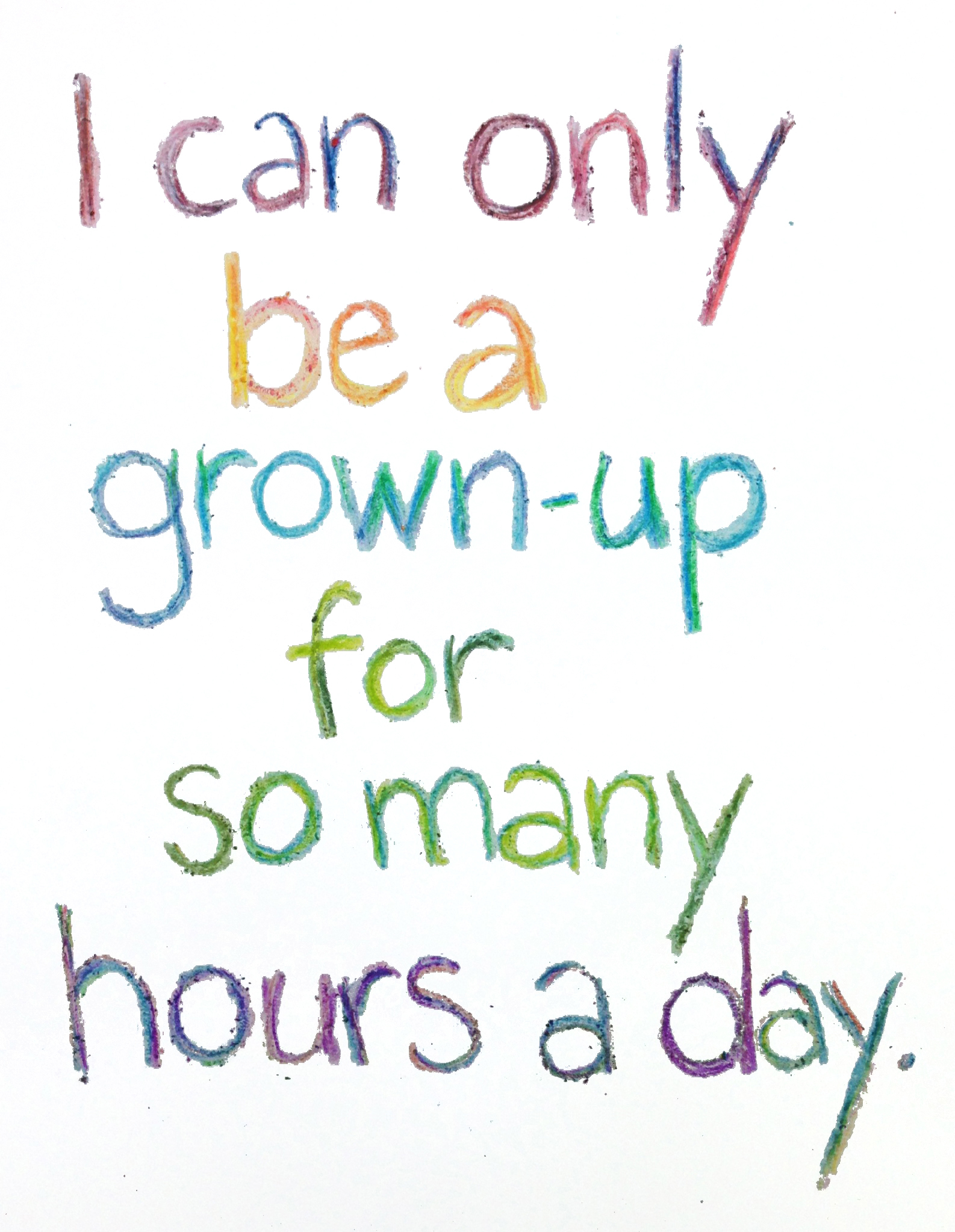
My friend Jason Donovan blurted this one day in rehearsal. (I think all artists can relate.)

Image © People and Chairs

Image © People and Chairs

Laughter is contagious. According to research by professor of psychology, Robert Provine, you’re 30 times more likely to laugh when someone else is around than when you’re alone.

What better reason to turn off the TV and go see a live show?

622744_10152206443740051_264829500_o

Photo © Steve Baerwald


People often argue about whether improvisation is art or comedy. Del Close believed the former, while Bernie Sahlins argued it was a tool to develop sketch comedy.

I think it’s both. And the more I learn about comedy, the more I realise the lines between art and comedy have been blurred for some time.

“Stop thinking about art works as objects, and start thinking about them as triggers for experiences.” – Brian Eno

Cameron and I have always been drawn to art with ideas.

Whether it’s Michael Craig-Martin’s Oak Tree (a glass of water and a piece of paper that explains how the glass is, in fact, an oak tree), or Gillian Wearing’s Signs That Say What You Want Them To Say, and Not Signs That Say What Someone Else Wants You To Say, it’s amazing how many great ideas are also funny.

David Shrigley, Jason Polan, and Banksy use humour liberally in their work. And like improvisers, they often do it to make a social statement. It’s the contrast of light and dark, frivolity and foreboding that often makes art so powerful.

Banksy Mobile Lovers

Image © Banksy

Other “serious” artists with a sense of humour include Damien Hirst, Janet Cardiff and George Bures Miller, Salvador Dali, and the venerable Gilbert & George.

And let’s not forget Andy Warhol. Anyone who films the Empire State Building with a locked-off camera for 24 hours and then shows the result in theatres is having a laugh.

When Canadian customs officers refused to let his Brillo boxes over the border because they looked like, well, Brillo boxes, and as such were subject to customs fees, Andy must’ve been pissing himself laughing back in New York.

Reporter: Does it bother you that you can’t hear what you sing during concerts? 
John Lennon: No, we don’t mind. We’ve got the records at home.

The Beatles weren’t just talented musicians, they were incredibly witty. Listening to their fan club’s Christmas records, you’d swear they were a tight-knit improv team.

John appeared on Peter Cooke and Dudley Moore’s sketch comedy show Not Only, But Also. And George later teamed up with Monty Python in The Rutles: All You Need Is Cash. He also helped fund The Life of Brian.

Some musicians inject humour more directly into their work. Bands like Cake, They Might Be Giants, and Godley & Creme combine solid tunes with quirky lyrics. For a tour de force that’s part song, part sketch, check out Godley & Creme’s classic, The Party.

And while Flight of the Conchords are arguably comedians who just happen to sing and play guitar, their songs are undeniably catchy.

Who’s Afraid Of The “C” Word?

The Academy of Motion Picture Arts and Sciences has long favoured drama over comedy.

It’s a safe bet that Elizabeth Taylor wouldn’t have won the Best Actress Oscar® if Who’s Afraid Of Virginia Woolf? had been billed as a black comedy instead of a drama. It’s both, in my opinion.

As Judd Apatow pointed out, “It’s been like five times in a zillion years that [a comedy] has won Best Picture.” Maybe next year we’ll finally see a category for films like The Edge Of Tomorrow. (That’s a comedy, right?)

“That’s the great thing about advertising. You could have a crawl space under your kitchen floor filled with little girls’ bones and as long as you can dream up a better Chuck Wagon commercial, you’re in.” – from Dry by Augusten Burroughs

Some of my favourite authors are laugh-out-loud funny, even when their material is dark. A few of my best-loved books include:

Magical Thinking by Augusten Burroughs (autobiographical short stories of growing up gay with a family of weirdos in middle America)

The Glass Teat by Harlan Ellison (television commentary with a hefty dose of vitriol)

Don’t Worry, He Won’t Get Far on Foot by the late, great John Callahan (harrowing but hilarious autobiography of a hardcore alcoholic who becomes a cartoonist)

My Custom Van by Michael Ian Black (which includes A Series Of Letters To A Squirrel, and What I Would Be Thinking If I Were Billy Joel Driving To A Holiday Party Where I Knew There Was Going To Be A Piano)

“Art is anything you can get away with.” – Andy Warhol

What makes any art truly great is its ability to connect with the audience.

We may not always remember things that are smart, but we remember the things that make us feel. That’s why improv will always be art to me.

I do not worry about the past and I am not fearful of the future because my life is supremely concentrated in the present, and the right response comes to me, to every situation as it occurs. – Vedic Seer

Photo © Kevin Thom

Photo © Kevin Thom


Photo © People and Chairs

Photo © People and Chairs

Top row, from left:

1. Improvise (inscribed “Fuck it! – Mick Napier”)

2. Burrito, the Official Food of Improvisers

3. Christmas gift (came with Portlandia DVD)

4. Because sometimes a photo booth is more fun than an iPhone

5. Kinder Egg Franken-toy made from two figurines

6. Nug Nahrgang’s Instagram feed

7. High-end U-lock key for piece-of-crap bike

8. Profits from show (split three ways)

2nd row:

9. Business card – Bam!

10. USB with Piñata Full of Bees

11. DIY guitar pick

12. Gum (for post-burrito green room politeness)

13. Old timey postcard for sending message from the past

14. Emergency toothpicks/Christmas gift igniter

15. Jetstream rollerball

3rd row:

16. Best. Show. Ever.

17. DCM wristband

18. Hipster room key

19. Master Class notes

Bottom row:

20. Koosh ball

21. Lucky dollar bill from CIF

22. Deodorant (for rehearsals)


What’s in yours?

I was talking with Suzanne Pope, creator of Ad Teachings recently, when she asked me if improv is helpful in the workplace.

“Hells yeah!” was my professional answer.

“If you could sum up just one thing it can do,” she said, “what would it be?”

“Uhhhhh…”

(So much for eight years of training in “Don’t think.”)

The truth is, my mind was teeming with answers. Because really, what doesn’t it help?

Tina Fey explains the core principles brilliantly in her Rules of Improvisation. If all you did was Agree, Say “Yes, And…”, Make Statements, and remember that There Are No Mistakes, you’d be further ahead than 95% of nine-to-fivers. But it doesn’t stop there. Improv can also help you:

Read The Room

Improv teaches you to pay attention to your scene partner. In real life that could be your client, your co-worker, or your boss. (It could also be your spouse, your child, your pusher or your taxidermist, but for now let’s keep it work-related.)

When you walk into a meeting and everyone’s frowning, the client is nervously fidgeting with his phone, or the person across from you is smiling but her eyes are lifeless circles, all of this is valuable information. Information that can and should be weighed before you open your mouth.

I used to go to client meetings thinking only about the work I was there to sell. Now, my focus is the people I’m presenting to.

You may not always make the sale, avoid conflict, or find a solution on the spot, but taking the time to connect with your audience almost always results in a better relationship.

Give And Take Focus

You know those people who never let you get a word in? You get in an occasional “Mmm” or “Huh,” while they never seem to take a breath. Or maybe you know someone who cuts you off, finishes your sentences, or talks over top of you.

What about competitive listening? That’s when someone pretends to pay attention, but they’re really just waiting for an opening to air their opinion.

We’ve all experienced these at one time or another, and a lot of us are guilty of them, too.

Learning to give and take focus is a skill. The more you practise – especially listening, which is more than just hearing and involves your whole body, as well as paying attention to the other person’s body language  – the better you’ll communicate.

Commit 100%

If you’re reading this on your smartphone while the TV is on and your son is asking you to look at his finger painting, stop. Choose one thing to focus on and give it your full attention.

When you’re not fully present…well…allow me to share a recent interaction:

Me: (looking at iPhone) (groan) I just realized I did something that I had already done.
Cameron: Well, I guess it’s really done now.
Me: (looking up from phone) What’s done?

When you’re present to your choices, it’s incredibly powerful. For you, and your audience – whether you’re on stage, in a boardroom, or sitting across from your loved one.

Try fully committing to your next handshake, hug, or crappy little low-budget, nobody-cares-about-it-so-no-one’s-paying-attention project, and see what happens.

Collaborate

I’ve seen countless ideas whittled away by committees, in brainstorming sessions, new business pitches, and creative presentations.

One person throws out an idea. Someone else says “I like it.” Heads start nodding as people become excited about the possibilities. Then the overthinking begins.

“Why is the dress yellow?”

“That bowl doesn’t celebrate the cereal.”

“How long is the logo on screen? We always super our logo right off the top.”

“I read some research that said people don’t like humour.”

“A Jack Russell terrier is a gay man’s dog.”

“I think these scripts are lame.”

*(All of those comments are actual feedback I’ve heard over the years.)

There’s a big difference between collaborating as a team and nay-saying a concept into the ground before it’s even had a chance to live.

Not every idea is gold. But 9 times out of 10, when something gets pecked to death, it’s coming from a place of fear. Which leads me to my last and favourite reason to take improv.

Take Risks

A lot of us don’t take risks because we’re afraid of failure. But when you realise there are no failures, only learning, it becomes a lot easier to try things. The more risks you take, big and small, the more experience – and experiences – you have to draw from.

Unfortunately, many businesses are risk averse. They’d rather do things the way they’ve always been done than risk possible failure by trying something new. But the truth is, change is constant. And those who embrace change are far more likely to stay relevant than those who cling to the past. (Kodak, anyone?)

Yes, change is scary. But as a wise man once said, “Shit happens.”

Companies evolve. People come and go. What was hot last year (or last week, or this morning) is already passé.

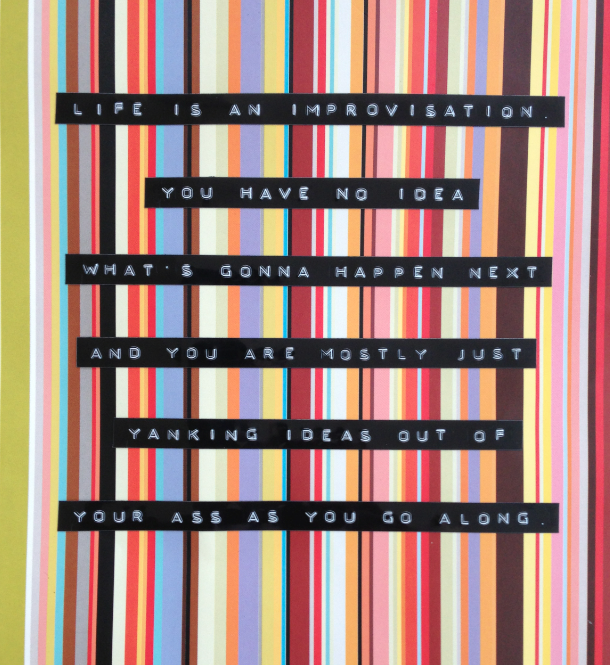
Improv teaches you to respond to whatever is happening, and be cool with it. The next time you find yourself fretting about a meeting, a project, or a new business pitch, just remember the words of Second City alumnus, Stephen Colbert:

Image © People and Chairs

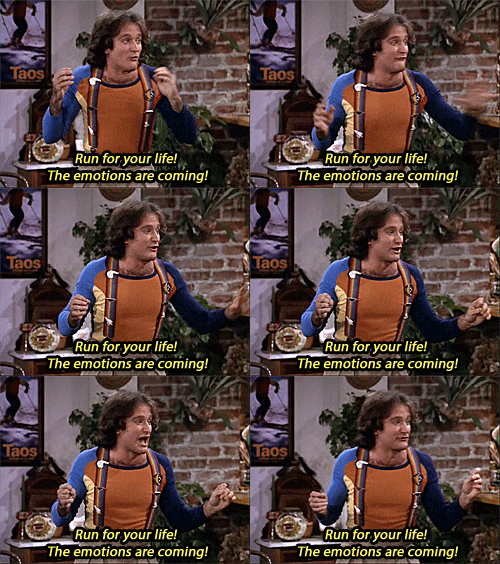
Image © People and Chairs