Info

Posts from the Improv Tips & Quotes Category

When you’re starting out as an improviser, being put on a Harold team is about as exciting as it gets. We’re talking The Dark Knight Rises in IMAX with a bagful of weed exciting.

At this stage, thoughts like “Who else is on my team?” or “Who’s our Coach?” (Director, for our American readers) are usually far behind thoughts like, “What if I suck?” “How do you do a tangent scene again?” and “I feel the sudden urge to take a crap.”

But once you’ve rehearsed for a couple of months and have some shows under your belt, you’ll find your focus turning to your fellow team members, your Coach, and your relationship with all of them.

After being on numerous teams and watching the development of dozens more, I’ve come to some conclusions about why certain teams shine while others struggle.

“If you’re not having fun, you’re the asshole.” – Susan Messing

You’ve probably heard this quote at some point, and if you haven’t, you will. While it’s pretty self-explanatory, I asked Susan to elaborate. She said, “You determine your joy ride. If you’re not getting off on this work, it’s not your teammate’s fault.”

As the Bible says, “And why beholdest thou the mote that is in thy brother’s eye, but considerest not the log that is in thine own eye?”

(Thanks for translating, Susan.)

So before you go around trashing others for being shitty improvisers, try working on yourself first.

Everyone on your team has their own strengths and weaknesses. Some people are natural editors. Others are great with physicality and spacework. Still others are geniuses at remembering offers and tying everything together.

That’s the beauty of being on a team. Very few people are great at everything, especially when you’re starting out. So go on easy on yourself, and your teammates.

But what if you feel disrespected? If you find yourself consistently getting tagged out, swept early when scenes are going well, or endowed as the “stupid ho” every show, maybe it’s time for a frank and honest talk with your team members or Coach. It could be they’re unaware of these behavioural patterns.

On the other hand, if you’re constantly tagged out or swept, it may be a sign that you need to step up your game.

Back when Standards & Practices had about 37 members, a few of them called Cameron out in rehearsal. He’d been hanging back in shows, and not contributing much to scenes. Kevin Whalen put it bluntly: get better, or get off the team. It was a tough-love moment from someone Cameron looked up to. Happily, he used it as the impetus to start bringing it every show.

That being said…

Chemistry Isn’t Everything, But It’s Pretty Damn Important

You can “yes and” your scene partner all you want, but at some point personalities come into play. And just as you may not love everyone at your day job, you may not be gellin’ like Magellan with everyone on your Harold team.

When you look at the top improvisers, there’s clearly a connection between great performances and great chemistry.

TJ and Dave, Joe Bill and Mark Sutton, Razowsky and Clifford, the UCB Four, Susan Messing and Blaine Swen…all of these people found kindred spirits with whom they enjoyed performing, and made a decision to pursue playing with them.

But when you’re put on a Harold team, you’re not The Decider.

Different Artistic Directors have different reasons for assembling teams. Chances are, whoever assembled yours wasn’t thinking purely of player chemistry.

Maybe they wanted an all-girl team. Maybe they needed a tall guy to balance out the short one. Maybe they wanted someone fat, thin, bespectacled, or heavily pierced.

It’s a bit like The Monkees.

Photo © Wikimedia Commons

The group was the brainchild of corporate executives who wanted to emulate the success of The Beatles. Instead of finding an existing band, they auditioned four guys and threw them together, leading to the moniker The Pre-fab Four.

Compare that to Nirvana. Never in a million years would a Casting Director have looked at Kurt Cobain, Krist Novoselic and Dave Grohl and said, “These guys are gonna be huge! They’re gonna change popular music and ignite a generation of kids!”

Nirvana may have looked a ragtag trio of oddballs, but they had chemistry and talent in spades.

When your team has chemistry, it’s a whole lot easier to form group mind. Yes, you can get there with exercises, focus and commitment, but when it comes naturally, it’s like Boom!

Chemistry is the reason why some Harold teams last years, while others implode in five minutes.

Most teams have a lifespan of anywhere from six months to three years. People come and go. Some quit, some are voted out by team members, and some asked to leave by the Coach.

It’s all part of the process.

But even if your team doesn’t have amazing chemistry, there’s a way that you can create it for yourself…

Broaden Your Mind – And Your Network

Attend shows. Lots of shows. Not just improv, either. Sketch shows, solo shows, plays and concerts are all great inspiration. So are art shows, movies, and all kinds of festivals. Anything that enriches your life offstage will automatically enrich your work onstage.

One way to meet new people and make new friends is to take workshops. Master Classes are not only good for learning skills, they’re also a way to connect with people who may be more seasoned than you.

Whether it’s a five-week intensive in Chicago, a weekend workshop to learn musical improv, or a two-hour drop-in class, push yourself to get out and try new things.

Duo nights are another option, and they’re becoming increasingly popular. Forming a duo is an awesome way to do something different with someone you don’t normally perform with.

The same goes for improv jams and cage matches. They may seem terrifying at first, but you’re all there to have fun, so accept the offer if the opportunity arises.

A Word On Coaches

Your Coach is a guide, mentor, and cheerleader, rolled into one. They are not a teacher, but they may teach you new skills or forms.

I’ve been blessed with a diverse range of Coaches: some were focused on acting and scenework, some were big on structure and theme, while others were all about play and being in the moment. I learned from each and every one of them.

Sometimes there will be differences of opinion. Whether you agree with every note, exercise or idea your Coach has to offer, try to at least accept it with an open mind.

But when rehearsals turn into debating sessions, it may be time to look for a Coach who shares the team’s vision.

Know When To Hold ‘Em, Know When To Fold ‘Em…You Know What? Just Know When To Walk Away

At some point, it will be time for you to leave: your team, your Coach, or the theatre company that trained you. This is a good thing.

When you do, try to do it with grace and respect.

That team who liked fast-paced shows while you prefer slowprov? Wish them the best as you both pursue your own interests.

That Coach who drilled you on game of the scene till you wanted to throw a chair? Be thankful for the skills they imparted, and for helping you define your own beliefs.

That theatre company that gave you a start? Say a silent “Shalom” and step aside to make room for some new up-and-comers.

Be grateful for each and every experience, then focus on doing more of what fulfills you. In life, as in the Harold, nothing is ever wasted.
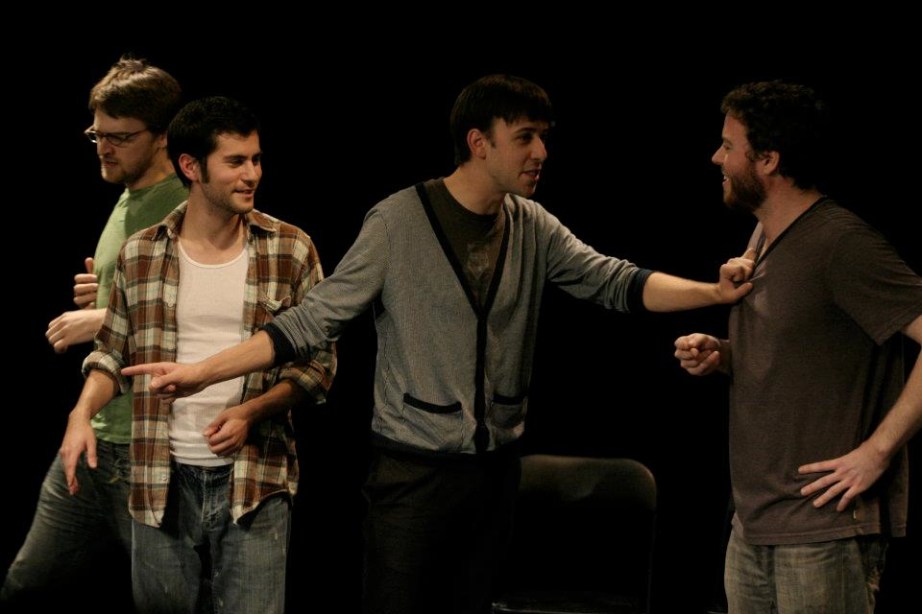
Photo © Joseph Ste Marie

Photo © Crista Flodquist

Matt Folliott is an actor/improviser/comedian, and member of Standards & Practices. He’s performed in festivals across North America, including DCM, CIF, VIIF, Out Of Bounds, Improvaganza, and Mprov. He even has a couple of souvenir tattoos – but that’s another post.

Inspired by Amy Shostak’s 12 Tips for Festival Organizers, I decided to write a post from the other perspective: that of the festival performer.

I’ve had the pleasure and honour of attending some of the best comedy festivals in North America. There’s nothing like a well-run festival. The energy is electric, the performers feel welcomed and supported, and everyone leaves saying the same thing: “I’ll come back!”

These are just a few tips to help make your festival experience even more enjoyable and worthwhile.

1. Have a game plan. Plan your trip. Plan your trip! PLAN YOUR TRIP! Most festivals will have activities planned for their guests, and that’s awesome, but it never hurts to have your own agenda. Take advantage of your time like a member of the illuminati takes advantage of our ignorance. Also, if you’re heading to the States, have a game plan of what you’re telling Customs. They don’t like performers crossing the border, so make sure you have another reason for entering. You don’t want your trip ruined before it even begins; ruin it with drugs, alcohol and sex with strange people, not poor planning. Key Word: Research

2. Smile, be friendly and engaging. Let’s be honest. Only ten percent of improvisers get paid for festivals, so get that out of your head right away. You ain’t doing this for the money! You’re there to meet fellow performers, create friendships and make professional connections. Always be thinking, “I’m so LA,” and force yourself out of that shell, Franklin! Meet people, you won’t regret it. Key Word: Shmooze

3. If you have the option, stay with your fellow performers in hotels or on their couches. Bonding is key at any festival, so if you get the chance to live or crash with other performers, do it. That’s also were all the fun happens; you know, when you’re hanging out with ten or so other funny people with nothing else to do but crack jokes and be silly all while you’re being fuelled by beer and bad food. Also, being billeted can really lower the cost of your trip, so look into it already! Key Word: Bonding

4. Be on time. For your call times, for festival workshops, for planned activities, for everything. No one likes a Late Larry or a Tardy Tamara. People get that you might be running behind, you were probably up late partying, but try your hardest to be on time. Festival organizers have put in work to get you there and set things up for you, so show some love back and show up. Key Word: Punctual

5. Don’t be a comedy snob. If you’re asked to do mixer shows or short form improv or to judge theatre sports, say yes! Maybe you don’t like mixer sets because they can be clusterfucks, or maybe you don’t like shows sprung on you without notice. Well, get over it pal. Being asked to do other shows at a festival is a compliment, as well as an opportunity to make new friends and admirers. Take the chance to try new things, and challenge yourself to find the fun in things you haven’t enjoyed in the past. Key Word: Try

6. Kill your shows! It’s easier said than done, but you’ve got to impress. Think of the song Lose Yourself by Eminem; that’s the type of attitude you have to have before every show. Now stop thinking about the song Lose Yourself by Eminem, and never revisit that thought again. Just remember you’re there to do what you already do at home, so don’t stress. Remember, you’re awesome! So stop shitting bricks and have fun. Believe me, audiences in other cities want to see you succeed. So take a deep breath and go out there and show them what you’re made of: star light and cosmic dust. Key Word: Play Hard

7. Meet your audience. After your show is the perfect time to say hello to the local crowd that came out to support you. Let them know you appreciate them coming, and get to know your potential fans. Plus, you never know what hilarity will ensue when you meet the people. Next thing you know you’re in the back of a van with a guy named Rainwater, hitting a four-foot bong and getting a back rub from a limber cat. What? It could happen at a festival, man. Put on your politician hat and get out there, shake hands and kiss babies, and then kiss the mothers of those babies to see if they have fathers. If not move in for the kill. Key Word: Approachable

8. Sleep. Just do it. If you go too hard you’ll burn out partying or exploring your new surroundings or getting super high with Rainwater the Albino Shaman from the strip mall. Sleep is needed at these festivals to keep your head in the game and your stick on the ice. Key Word: Nap

9. Take Workshops. Most festivals offer workshops, usually with instructors you may never have the opportunity to work with again. Did you hear me? You might never see these people again, so what you are waiting for? Take a workshop already! Anyhooter, workshops and classes are always less expensive for festival performers, and are sometimes free if you’re lucky. Plus you’ll get to meet other improvisers and have the chance to refresh your skills. If you’re really lucky, you might put a brand new tool in that old leather belt of yours, grandpa. So what are you waiting for? Sign up for that workshop! Key Word: Register

10. See shows! Festival shows are inspiring and motivating. So many of the most memorable shows I’ve seen have been at festivals or on the road. So get that performer’s pass  and watch a show. Watch a bunch of shows. Watch some shows, then watch some more. You catch the drift. Key Word: Watch

11. Meet festival volunteers and administrative staff. This one gets overlooked sometimes, and it’s a damn shame because those people volunteering to rip tickets at the door or those lovely humans sitting in the office are the life blood of festivals. Without people like them, nothing would get done. After all, we’re artists. We think with our hearts not our heads. We need these kind, caring, lovers of comedy to make sure dopes like us know where we are supposed to be and where to point the jokes. Their service is invaluable. God speed tiny dancers, you are the wind beneath our wings. Key Word: Volunteers

12. Communication. This is a two-way street and is super important if you are to enjoy yourself in your comedic travels. Ask questions, ask for help, and keep the lines open with festival organizers and fellow performers. I mean how are you going to know if you don’t ask? Key Word: Ask

Well that about covers it I think. Maybe you have a few of your own that you would have added in. You know what? Keep it to yourself, no one likes a know-it-all. Happy travels fellow comedy nerds!

Photo © James Binnie

Devon Hyland is one of those annoyingly talented people who acts much older than he is. (Meaning he’s as funny as Don Rickles, but without the receding hairline.) He writes and performs award-winning Fringe plays, plays a mean guitar with his band Fashion Tips, and does improv with The Second City among other things. When he’s not making people laugh, Devon has been known to attend the occasional Blue Jays game.

Photo © Ian Brown

DISCLAIMER:

Firstly, I was asked to write this article about improv. Don’t be getting all uppity because you think I’m not smart enough to be writing articles on anything.

Secondly, I was going to write an article called Shows Not Starting On Time! or Behaving Professionally! or Angry Face Emoticons: A Visualization Of My Views On Toronto Improv!, but I realized that was completely negative thinking.

Improv teaches us to be positive, so instead of telling people what I think is bad, I’m going to focus on the good. That’s why I chose to write this positive list of positive things that I have found to be positive (true) about improv.

1. People Change: You And Your Fellow Improvisers Will Get Better

When I was a younger pup than I am now, I’d sometimes watch performers and write them off. I determined that they were “the performers that they were,” and that I had seen all I needed to see from these people to know how good they would become. They did not have the “It” factor. Because of this, they were simply not destined to be performers.

I imagined they would eventually slip away and I would be left, alone, centre stage, reaping the benefits of being born with the “It” factor. It was only a matter of time.

Now, however, I do not believe that someone cannot obtain this coveted “It” factor.

This is because I’ve been shown over and over that I was wrong in my initial assessments. These performers are funny, I discovered, and I don’t know why! And it’s not just me; they now succeed in entertaining rooms full of varied audience members with ease. These are the same people I thought were never, ever going to become as mysteriously wonderful as I now think they are. And with good reason: they stunk!

They were lacking confidence, quiet, hunched, and non-deliberate in their actions. They literally repelled my eyes. Why couldn’t they realize they weren’t meant to be performers? Why couldn’t they realize that people like me – naturally wonderful people – had more of a right to the stage?

Now I look on and mope as a bubble of beautiful potential (the “It” factor, I’d argue) surrounds their bodies.

With hard work, performers have the power to find the gifts that are hidden within themselves. Maybe barking jokes isn’t your thing. Maybe subtle acting ain’t your forte. You’ll eventually discover what you believe to be your skill set. This skill set is the reason you started improv in the first place, and once you’re confident in it and can show it to your audience, the world’s your oyster.

People do change, and the boring performer you’re watching (or are), has the potential to blow you away (or blow yourself).

2. Somebody’s Probably Enjoying It

The unfortunate reality is this: many audience members do not want to be there. So as an improviser, you’ll often perform a show for crowd of people who:

a) have no interest in improv, or

b) have no interest in you

This is usually demonstrated by eye rolls and yawns. But even though it seems like the whole crowd is against you, I’ve found that there’s more often than not at least one person in the audience who’s enjoying him or herself. There’s no way to know where this quiet, happy peanut is sitting, so why don’t we just pretend he or she is at the back of the room? Play to this person and don’t worry about the naysayers.

And while you’re at it, why not play to someone else at the back of the room, too? Imagine a person you love and want to impress. Maybe it’s your soon-to-be-girlfriend/soon-to-be-wife/soon-to-be husband. Maybe it’s Lorne Michaels. Perform your heart out for that ghost person. Hopefully doing this will bring out a better performance in you, and those dumb yawners will shift their focus to the stage. After all, yawners change.

3. You Can Learn From Anyone

I used to think I was above taking classes from my peers. Ohhow wrong I was! Please don’t believe that just because you have equal or greater experience than someone that they can’t teach you anything. And please don’t disregard somebody’s opinion because you think you’re a better performer than they are.

Because I’ll tell you this: you are not a 100% all-around perfect performer. In at least one instance, I’ll bet these new scrubs have got you beat.

Whether it’s the way they drop puns into medieval references, or the way they paint the stage with more whimsical grace than an a-squiring knight, they have something to teach you. Everyone has something to teach you. There is no person in this world from whom you cannot learn, so take classes often and anywhere.

4. Don’t Wait Your Turn

Apparently I have been younger than everyone else my whole life, because no matter what my age, there’s always someone who pats me on the back and says, “Oh, you’re just a young thing.” I find this more telling of them than it is of me. After all, they’re only stating my age – something of which I should hope I need no reminder. In their case however, they’re pointing out that they see this as important. I do not.

While I’m not advocating that new improvisers should disregard experience as an asset, I would encourage newbies to believe that their experiences will resonate with an audience just as profoundly as those of a seasoned veteran.

It doesn’t matter how long you’ve been on this Earth; you’ve experienced life in an infinite number of unique ways that open-minded audiences are clambering to have shown to them. You’ve also experienced life in so many universally-common ways that crowds will have no problem connecting with you.

Show your audience you’re confident in the connection you have with them, and they will respond positively. You don’t need to wait until you’ve performed 300 shows before you start thinking your improv is worth watching. You are an interesting and funny person now.

Now get up there and let us all bask in your glory, jerkwad.

5. Good Show > Good Improv

I’ve watched improv troupes sink deeper and deeper into a hole of unfunny, boring improv about a thousand times. They’re stuck. The audience knows it, and they know it. What could the non-performing members on the sides be thinking at this point?

“This show is going so badly. I can’t wait for it to end. I’m going to stick on the sidelines of this scene and just ride it out. Eventually we’ll all get through this. Then I’ll grab a beer and think about my wrongdoings.”

Just sweep it. End it. Cut your losses. For your own sake and for the audience’s sake.

Nobody wants to watchfour more minutes of a boring scene so you can show us you’re able to weave your way out of a seemingly-contradictory situation. We won’t appreciate the accomplishment as much as we’ll appreciate laughing. And we want to laugh!

The positive angle on this seemingly-angry rant is this: you do not need to believe that your audience is only interested in “good improv.” They want to have a good time.

While it may be true that some on-looking improvisers will snub their noses at you for contradicting your stage mates, sweeping a struggling scene instead of saving it, breaking the fourth wall and engaging the audience, or pretending to eat what you’ve just said and moving forward as though it never happened (a favourite of mine), there are more people in the crowd who will thank God that they do not have to sit through any more “good improv.”

I’m not advocating that you sell your teammates down the river. I’m advocating for you and your teammates to recognize that the #1 goal in your performance… is a good performance.

Once we recognize something isn’t working, we have a chance to make it out alive. We just need to do something about it, instead of hoping the Improv Gods will respect us for playing nice and riding a terrible scene through to completion. Because they won’t respect you – they’ll be furious with you for boring the heck out of the audience members who aren’t improvisers themselves. This was positive, right?

6. Talk to People You Admire

One of my favourite early experiences in improv was congratulating Marty Adams after one of his first Second City Touring Company shows. He was thrilled. At least, he acted thrilled. He put on a big smile and shook my hand and said “Awww, thanks so much.” I felt great, I’m sure he felt great, everyone felt great. So don’t be afraid to talk to people you respect, unless you hate feeling great.

For a long time I was deathly afraid of talking to people I admired. I used to go and watch the improv sets at Second City, and afterward I would stand outside for a few minutes for the performers to come out. I’d only wait a few minutes because that’s how long my nerves would allow me. After that, I’d scurry back to the subway, thinking to myself, “I’ll never get the confidence to talk to those people and oh how they must think I’m square!”

My advice to shy people is this: engage the performers you respect. If you start a dialogue with a performer you admire, you’re more likely to learn something about why they are such a great performer.

On top of that, people love to be told they’re awesome. Can you name someone who doesn’t like to be told they’re awesome? If so, give him or her this email address: donttellmeimawesome@devonhyland.ca. I would love to talk to this freak. Seriously, that email address works and I would love to talk to this freak.

Drunks. Wiseguys. Louis C.K. wannabes. We’ve all had ’em. Here are three ways to deal with these show-stopping pests.

1. The Steve Martin Method

Dude in the fourth row drowning you out with his commentary? This one works well if you’re monologuing, or already downstage.

Look out to the audience, smile fondly and say, “I remember my first beer.” Then continue your scene.

(From Martin’s autobiography, Born Standing Up)

2. The Tom Vest Method

You’re doing a grounded two-person scene when a couple of dweebs decide to have their own conversation. Loudly.

Calmly walk downstage (or simply turn to face the audience).

Lean your upper body over, as if you’re sticking your head through an open window.

Yell “Shut up!”

Pull your head back in and mime closing the window. Bonus points for locking it, or pulling the curtains shut.

3. The Matt Folliott Method

For fearless performers only.

Bring the heckler up on stage and make them part of the show.

Matt did this during a show at Comedy Bar, and basically used the (by then mute) heckler as a silent scene partner. Genius.

Got any tried and true methods you’d like to share? Post a comment below.

Amy Shostak is a kickass improviser and the Artistic Director of Edmonton’s legendary Rapid Fire Theatre. She has performed across Canada, the US and Europe. She also created Kiss My Bus, a play literally performed on a bus for the Edmonton International Fringe. A graduate of the University of Alberta, she loves heavy metal and naps.

In a whimsical turn of events, I was given the power to curate a comedy festival. I get to hand-pick people that I deeply respect, people who inspire me, people who I have never met but love from afar, and give them an opportunity to do what we all love. Not to get all mushy, but it fucking slays.

Improvaganza is in its 13th year, and this will be my third time organizing it. Our guests vary from a few celebrities, to relative newcomers, to old favourites, to innovators. But no matter who comes to our festival, the focus is always on showing our guests a good time. And by “good time” I mean to say, we aim to make the festival fulfilling. Fulfilling socially, professionally, and artistically.

I don’t think Improvaganza is perfect, but I am darn proud of it. From my experiences travelling to other festivals around the world (some enlightening, some awful), I have thought a lot about what makes a festival enjoyable. Here is some advice for festival organizers that I think will launch your fest from zero to hero.

1. Have someone you like pick your guests up from the airport. There is no excuse for lost guests. Especially adorable international guests. So, do yourself a favour, and arrange a ride for them from someone you trust and find socially tolerable. No one likes weirdos, not even desperate artists. For an added bonus, have every driver take your guests by the theatre before taking them to their hotel. Once at the hotel, have your driver go into the hotel with them to make sure they check in without incident.

2. House all your guests together. If possible, have your guests stay all in the same place. This creates a sense of community. Billets can be fine, but hotels are better from our experience. If you do billet, make sure no one is abandoned in the suburbs.

If possible, pay for your guests’ hotel. This is a big chunk of change that you can cover with a decent sponsorship. Our sponsored hotel isn’t even nice – it’s on top of a blues bar, and can be described as rustic at best, sketchy at worst. Despite this, the staff at the hotel is super accommodating to our requests, all of our guests stay on one floor (which allows for fun, camp-esque door-knocking) and we are allowed to party in the hallways til 6am. It works for us.

3. Make your guests feel special. Go that extra mile, whatever that means to you. At Improvaganza, upon arrival at the hotel, guests find a six-pack of beer on ice in their sink, a full calendar of events (shows, workshops, social), contact info for important people, an embroidered Improvaganza towel/pillowcase (as I mentioned, sketchy hotel), coupons and gift cards for local restaurants, a map, and a festival pass.

4. Be there and be nice. Have a present and approachable staff. There’s nothing worse at a festival than not being able to get in touch with whoever’s programmed your show, or not knowing who they are. Worse, is being scared of them because they are jerkish. Guests should feel able to ask you for whatever they need: a tech rehearsal, a weird costume request, emotional support, a quiet place to work, anything. Your presence and availability will make your festival better.

5. Program Mixer Shows. Give your guests a chance to perform together – jam shows, experimental concept shows, ensembles – all these things are a great way to give more performance opportunities to your guests outside of their showcases. As obvious as it is, many festivals do not have these at all, or they don’t have enough of them.

6. Give your guests things to do. Care needs to be taken when it comes to the social schedule. If you program nothing, people will want to drink in your theatre every single night because they know no other alternative (which, if you’re providing free beer can become problematic). On the other side of the spectrum, if you program too much, there will be a guilt factor when your guests cannot keep up with you. Emphasize the planned activities are optional, and try to get a few key party people behind them.

In terms of what to program, we recommend: nights at bars with sponsored food and drink specials, or nights that feature your performers (maybe one is a DJ – set them up at a local club, or if you have a house band – get them gigs around town during your festival). Local experiences are good too:  your art gallery, cultural landmarks, etc. We have a barbeque at our GM’s acreage every year – which is one of the highlights of the festival. It is an all-day affair and includes hot tubbing, a poker game, bocce ball, soccer, and getting blotto. Rule of thumb:  if you genuinely think your social calendar is cool, other people will too!

7. Find Work/Party balance. For each of our visiting guests, we offer professional development workshops during the day. These workshops help make the festival full for its participants. They are led by world-class instructors, on a variety of topics. My hope is that when you leave our festival, you feel that you have some new ideas or exercises to take back to your respective cities, so our festival is fulfilling professionally and artistically, as well as socially.

8. Pay people. Ideally, a festival should pay performers. Realistically, a festival should try to make sure performers don’t lose money by being there. I know paying performers is impossible for some groups, but I dream of a day where people don’t have to shell money out of their pocket to come to our festival. We are not completely there yet, but we are getting there. If you can get your guests to teach workshops for other improv groups in the city, do paid corporate gigs, or offer them travel honourariums from public funding or corporate sponsorship, then you are moving in the right direction. If you are making money on box office, your guests should be seeing results… in their pockets.

9. Fill your house. Occasionally, a troupe from Rapid Fire will come home from a festival and say, “It was fun, but we only had eight people at our showcase.” Infuriating! How is this possible? It is not the international group’s job to do their own marketing and promotion. It is the job of the festival organizer. If there are eight people at a show, you have failed. Especially if they are all improvisers. If you can’t fill a house for a visiting troupe, then maybe you are running too many shows, your festival focus is too broad, or you need to seriously rethink your marketing.

10. Prove you’re legit! If you’re a performer in addition to an organizer, make sure you have an opportunity or two to perform at the festival, or at least your company does. Your guests will be curious to see you perform, and, the harsh truth is, it will add legitimacy to your festival if your company’s performances are also good.

11.  Please don’t complain. Whatever it is. A showcase bombs. Someone needs to go to the emergency room. People get in a fight. Do not complain during your festival. Do your best to fix what’s gone wrong, and continue on. Save your negativity for a festival post-mortem with your co-producers, but never let the ire take over in front of guests.

12.  Take care of yourself. A happy organizer breeds a happy festival. I can only speak from my experience, but leading up to IMPROVAGANZA, I like to take a few nights off drinking, sleep more than usual, and stock my fridge with Gatorade. The last thing you should do is get sick at your festival, or worse, be cranky. And, when your festival is done, take a vacation! You deserve it!

Photo © Improvaganza

Photo © Mike Riverso

Photo © Crista Flodquist