Info

20435_301306749904_5359564_n

This game uses physicality to find a character, heighten and explore it. Our thanks to Todd Stashwick for teaching us.

To begin, players walk around the room in a neutral gait. As you walk, become aware of what part of your body you normally lead with. It may be your nose, forehead, chest, shoulders, hips, knees… Whatever it is, heighten it.

Stay in this exaggerated walk for a minute or so, then be the complement to that walk. For example, if you were walking with your shoulders slumped and stomach protruding, throw your shoulders back and suck your stomach in.

Walk in your new character for a while, then be the complement to that walk. After 30 seconds or so, become the complement to that walk.

Staying in this last physicality, stop and find something in your environment. Reach out and shape the space in front of you. Feel space push back as you work with the object.

What have you found?

Is it heavy or light, large or small, rounded or angular? Feeling the weight and shape of the object, think about your name, age and occupation.

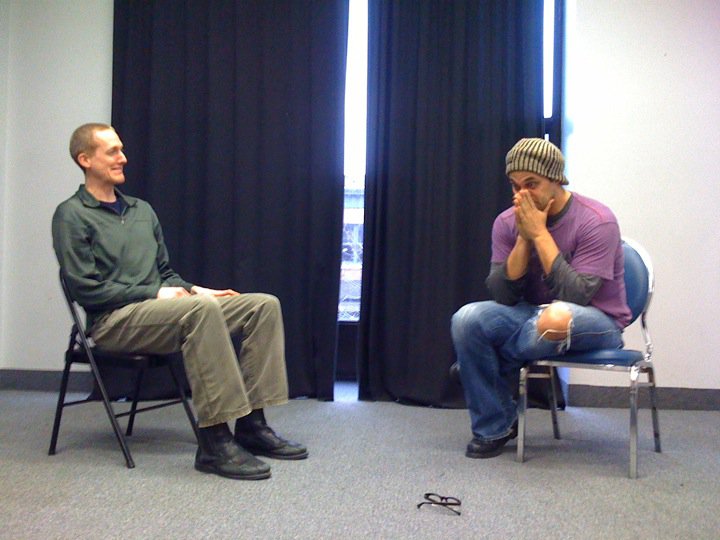
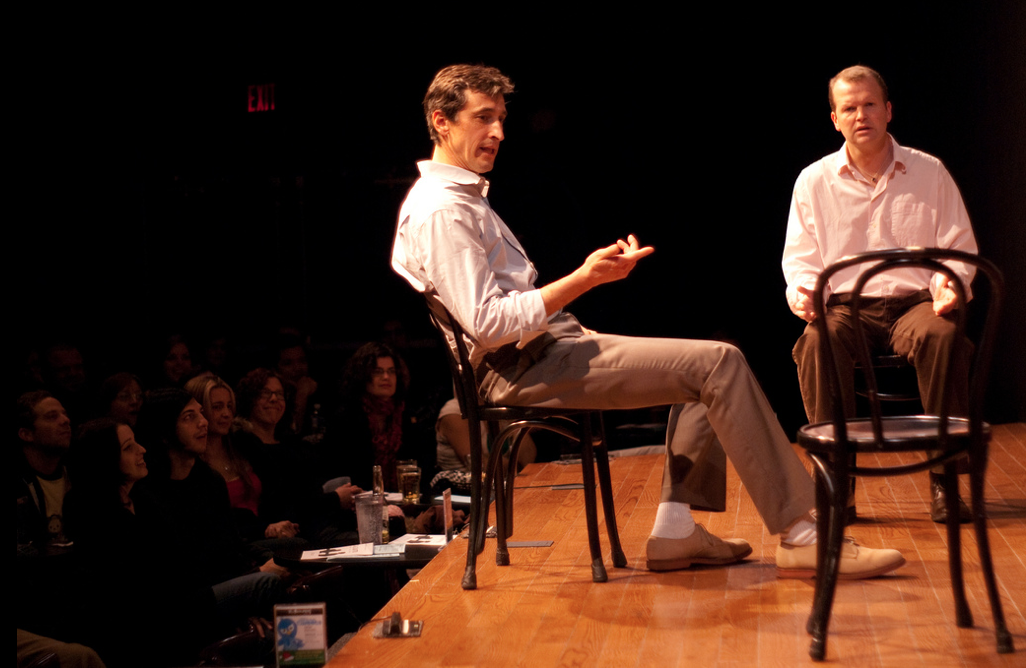
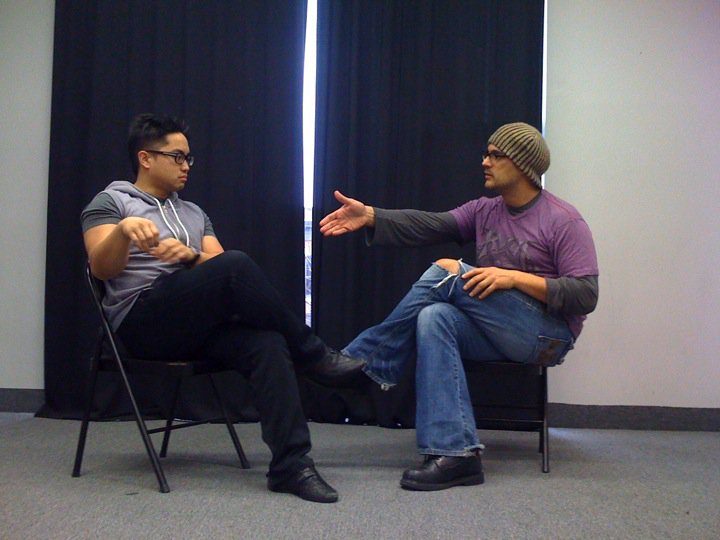
Remember your physicality and newfound characteristics as everyone takes a seat. At the front of the room are two chairs, angled towards each other. The Coach/Director sits in one. He or she will play the Interviewer, whose task is to hire a super spy.

The qualified applicant must know twelve languages, be a mixed martial arts expert, have excellent sniper skills, be able to crack codes and hack into enemy computers, etc. etc. Think James Bond meets S.H.I.E.L.D. on steroids.

The Interviewer buzzes an off-stage assistant to bring in the next job applicant. He or she then interviews as many unqualified applicants as there are players.

Each person’s unsuitability for the job will be revealed as the Interviewer questions them about their experience (or lack of), physical (dis)abilities,  personality and other quirks or tics.

When the Interviewer can take no more, he buzzes in the next applicant.

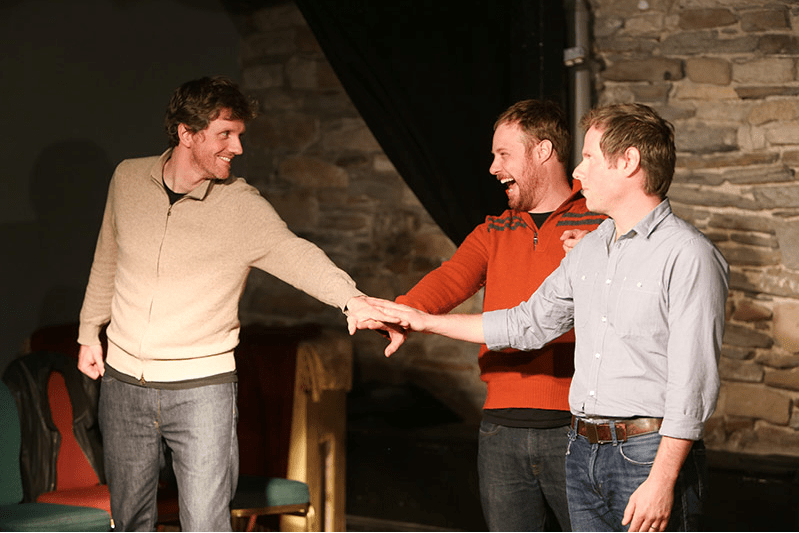
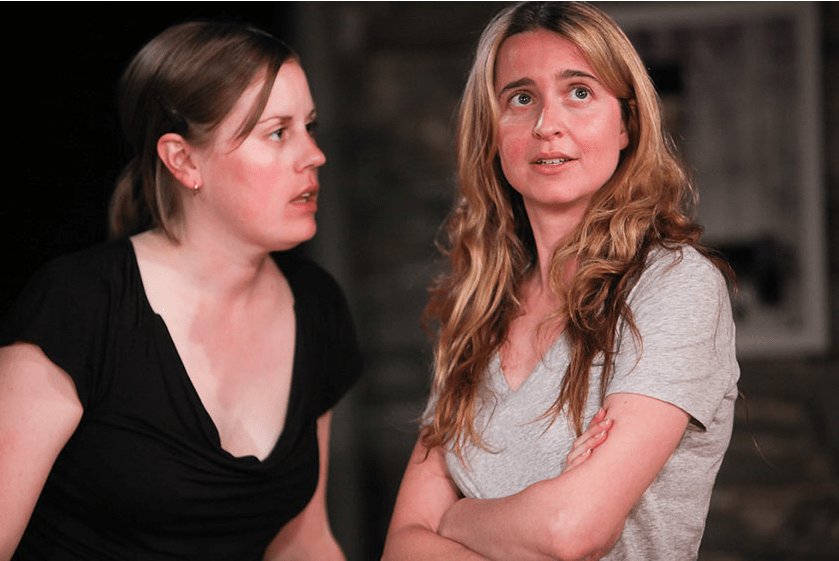
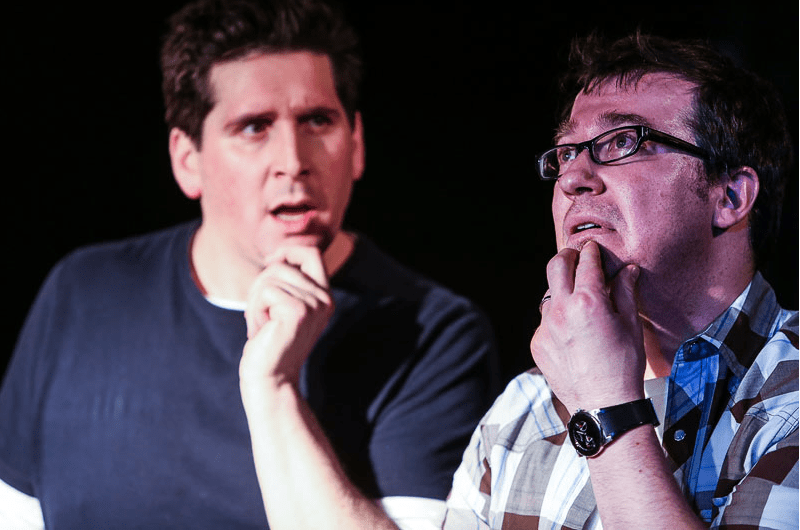
As you can see from the photos, it’s more fun than a season of The Americans. Try it at your next rehearsal.

20435_301308139904_6826959_n
20435_301307414904_3294774_n
20435_301307129904_1258898_n
20435_301306794904_3782327_n

20435_301308069904_2880755_n

All photos © Mark Cotoia
Photo © Janna Giocoppo

Photo © Janna Giocoppo

Can’t wait for Mick Napier’s new book? Well, great news: he now has a blog!

As you’d expect it’s thoughtful, smart, and brimming with helpful advice. His latest post dissects the advantages and limitations of studying and performing at Second City, Annoyance and iO, and the dangers of claiming responsibility for others’ success.

Read more and sign up for future posts at mickjnapier.tumblr.com.

Mick-Napier

All artists are improvisers. And all improvisers are artists.

That’s why we love this TED Talk by Shea Hembrey. It’s hard to fathom the sheer quantity AND quality of his creative output.

Like an improv set, he started out on his artistic journey without much more than a strong point of view. Where it led him will astonish you.

Click below to watch.

After years of being told to “work on my weaknesses,” at home, in school, and at work, I stumbled across this startling piece of advice:

Instead of focusing all your energy on things you don’t like or aren’t good at, focus on your strengths and get better at those.

(brain explosion)

Think about it. If you constantly focus on weaknesses, you’re effectively spending your time preoccupied with a negative. What if, instead, you spent your time getting great at things you enjoy?

Last year I got an email from my childhood best friend. When I read this, I laughed out loud:

“I remember we were going to be famous writers and those crazy plays we put on in grade three for the wonderful and patient Miss Van der Woude, and one in particular in which I was wearing Francis Walch’s glasses and you diverted from the script and went rogue chasing someone around the set for 10 minutes until Miss VW said ‘Enough is enough!’ and calmed everybody down with a good old maths equation.”

Four decades years later, all of those things (writing, comedy, improvisation) have taken centre stage in my life.

“But I already know I love improv,” you say. “How do I get better at that?”

Be creative as only you can.

If you’ve ever watched Chopped, you know that even world class chefs don’t excel at everything. Faced with the same ingredients, one chef will make flavours sing. Another will demonstrate a flair for presentation, while another might surprise with their out-of-the-box thinking.

The same goes for improv.

Cameron has natural acting ability. He’s also very comfortable with silent scenes. I, on the other hand, can count on that hand the number of silent scenes I’ve done. But I’m really good at initiating, editing, and giving context.

Find the things that make you excited, and become a master at those.

If you watch any long-running team perform, you can see the different personalities at play. Certain members do certain things more often, and that’s OK. Maybe one has training in clown, while another has a background in singing. They both bring something fun to the party.

The New York Times ran a piece last week on TJ and Dave. Even those guys have their own particular style, things they each do exceedingly well. TJ doesn’t try to be Dave, and Dave doesn’t try to be TJ.

That’s not to say you shouldn’t take classes, workshops, or try to improve your skills. But if you’re constantly beating yourself up for not being brilliant at every part of improv, it’s time to give your inner critic a big cup of shutthehellup.

What makes improv so magical is the collaboration and diversity of skills and talent. When you allow yours to shine, the universe will applaud.

(For more on this, see How To Succeed At Anything By Being Yourself.)

Portrait of the author as a young artist

Portrait Of The Author As A Young Girl


Photo © Mae Martin

Photo © Mae Martin

If you’re me and you like to write, you’ll rewrite something over and over again. In improv we don’t have this option. We are writing in the moment with no editor and sometimes no forethought whatsoever.

When we start off as improvisers doing this crazy thing like writing in the moment with others on stage, we often dislike or forget to honour and explore the first few things we offer up. I mean, why would we? We are just dumping our mind garbage, to quote my friend Freddie Rivas, all over the stage and hoping that within that heap of waste there is something worth taking a deeper look at.

We often run past or own brilliance at the top of a scene with blinding speed and agility. We think it can’t be that easy. That look, that line of dialogue, your body language. No it can’t be that simple. Let’s find something else to explore! We are complicated begins and when we make stuff up we often bring our own complexities on stage and forget to listen to the precious, brilliant and simple things we offer each other.

Everything we say and do on stage is precious.

Every look, every line, every movement or gesture can be the key to unlocking the greatest scene you’ve ever played. Stop running past the top of your scene and start being precious with every moment.

In improv you’re right. It’s not like the outside world, where we are constantly told we aren’t right, and that we aren’t good enough and that we have to be better. In improv we are always right.

The choices you make and the choices I make are right and they were never wrong, we just have to stop and recognize how beautiful, how simplistic and how precious these moments really are.

Only you can give yourself an improv scene, start trusting that your offers are good enough, start being precious with the things you say and do on stage, but remember: they are precious only in the moment. When that scene is over it will never be done again and there is no going back. That is when we no longer need to be precious. We celebrate the moment and move on, hopefully taking a lesson learned with us to the next.

This is The Precious Nature of Things, and I’m David Suzuki.

Kidding. I’m Matt Folliott.

Matt Folliott is an actor/improviser/comedian, and member of Standards & Practices. He’s performed in festivals across North America, including DCM, CIF, VIIF, Out Of Bounds, Improvaganza, and Mprov.

After eight years of doing improv, I’m finally comfortable on stage. Sometimes I still get butterflies before shows, but gone are the sweaty palms, the dizziness in the green room, the sudden urge to stay in the bathroom all night.

For a long time, just the act of getting on stage felt risky. Now I feel it’s time to push myself further.

This year, I want to do things I’ve never done, done only once, or never thought I could do. Things like…

Ghosting

TJ and Dave regularly incorporate ghosting in their sets. So does Toronto’s El Fantoma.

Both are masters at creating clearly defined characters whose posture, timbre, and gestures are easily identifiable. That’s important, not just for the performers, but so the audience knows what’s happening as well.

Definitely a skill I’d like to work on.

Using A Mic

Most venues have a microphone on hand, and savvy tech guys like Comedy Bar’s Mark Andrada will turn it on if they see an improviser wants to use it.

I’ve seen mics used (generally offstage) for the Voice of God, an airplane captain, a lounge lizard, and sound effects like wind, rain, a train, a gong, and beatboxing.

It looks like fun, but for some reason I’ve never dared try it. This year I will dare.

Interacting Directly With The Audience

I’ve done this once, maybe twice with my team, and never on my own. The idea of going into the crowd and mingling or talking with someone terrifies me as much as it probably does them. Which is why I have to do it.

Leaving The Stage Completely

Occasionally someone will exit the stage and never return (well, not for the rest of the set anyway). It always seems like a gutsy move, but somehow I felt if I tried it, I’d be abandoning my team.

When I think about it though, the people I’ve seen do it weren’t screwing over their scene partners. If the opportunity presents itself and it doesn’t feel forced, I’m gonna go for it.

Performing Behind The Curtain

For some reason, playing behind the curtain while staying in the scene scares the bejeezus out of me. Whenever I see people do it I think, “How do they know what’s going on? Can they really hear back there? What if the scene gets swept and they don’t know?” 

(Ahh, “What if…?” The birth – and death – of so many great things.)

Some people go one further and do their scene from the green room. This terrifies me even more, so I guess I’ve gotta try it at some point.

Making Bold Choices…And Sticking With Them

David Pasquesi sometimes plays with his back to the audience.

Anand Rajaram once stood motionless for a whole scene while saliva slowly dripped from his mouth to the floor.

Alex Tindal regularly hoists himself up to the rafters, and he’s even been known to get naked on stage.

While I’m not quite ready to get naked, I am ready to make changes. For years, I’ve struggled with “adaptive improviser” syndrome, where I come in with a strong character and then drop it when I think my scene partner’s offer is so much better.

This year I want to make brave choices and stick to them.

Taking Risks And Trusting

When S&P performed in Chicago a few years ago, Isaac Kessler played a character who died while seated. As his character stood up and slowly moved towards the light, Cameron came in behind him and slumped in the chair.

It was beautiful to watch. Not funny, but inspiring.

He told me after that he wondered for a split second if the team would know he was Isaac’s body, and not a new character, but he quickly dismissed the thought and made the move.

This year I want to make moves like that. I want to stop playing safe.

A friend on TourCo very kindly invited us to do the improv set after the show. As I feel my comfort with being on stage suddenly dissolve in a wave of nausea and sweaty palms, I’m contenting myself with the fact that I can always do it from the green room.

“The job is not to succeed, but fail more interesting than the last time – in a more subtle fashion or in a more intriguing way.” – TJ Jagodowski

1. Nobody forgot their medication. They’re always like this.

Photo © Kevin Thom

2. You don’t need to look for it. It’s right in front of you.

Photo © Kevin Thom

3. You have a surprisingly strong opinion about what your partner is doing.

Photo © Kevin Thom

4. If you really don’t want to do something, do it.

Photo © Kevin Thom

5. Yes, you should have edited there.

Photo © Kevin Thom

6. If you do it twice, you have to do it three times.

Photo © Kevin Thom

7. No house painter has ever had an amazing new house painting technique.

Reid&Jen@RevelbyKThom

8. You’re never just doing stuff. Figure out why you’re doing it the way you’re doing it.

Ken@RevelbyKThom

9. We don’t care about what you don’t care about.

M+A@RevelbyKThom

10. Why you do what you do is what you’ll do next.

Screen shot 2014-01-19 at 2.58.10 PM

All photos © Kevin Thom

Doug Sheppard is a Web developer by trade, and a writer and improviser by vocation. He lives in Toronto and considers it one of the finest places in all of Canada. You may also be amused by his twitter.

Gwinn