


Auditioning requires the patience of Job, the confidence of Tony Robbins, and the love of being rejected, time after time.
As someone who’s cast hundreds of actors for commercials, here’s are some tips that can help you go from in the room to on air.
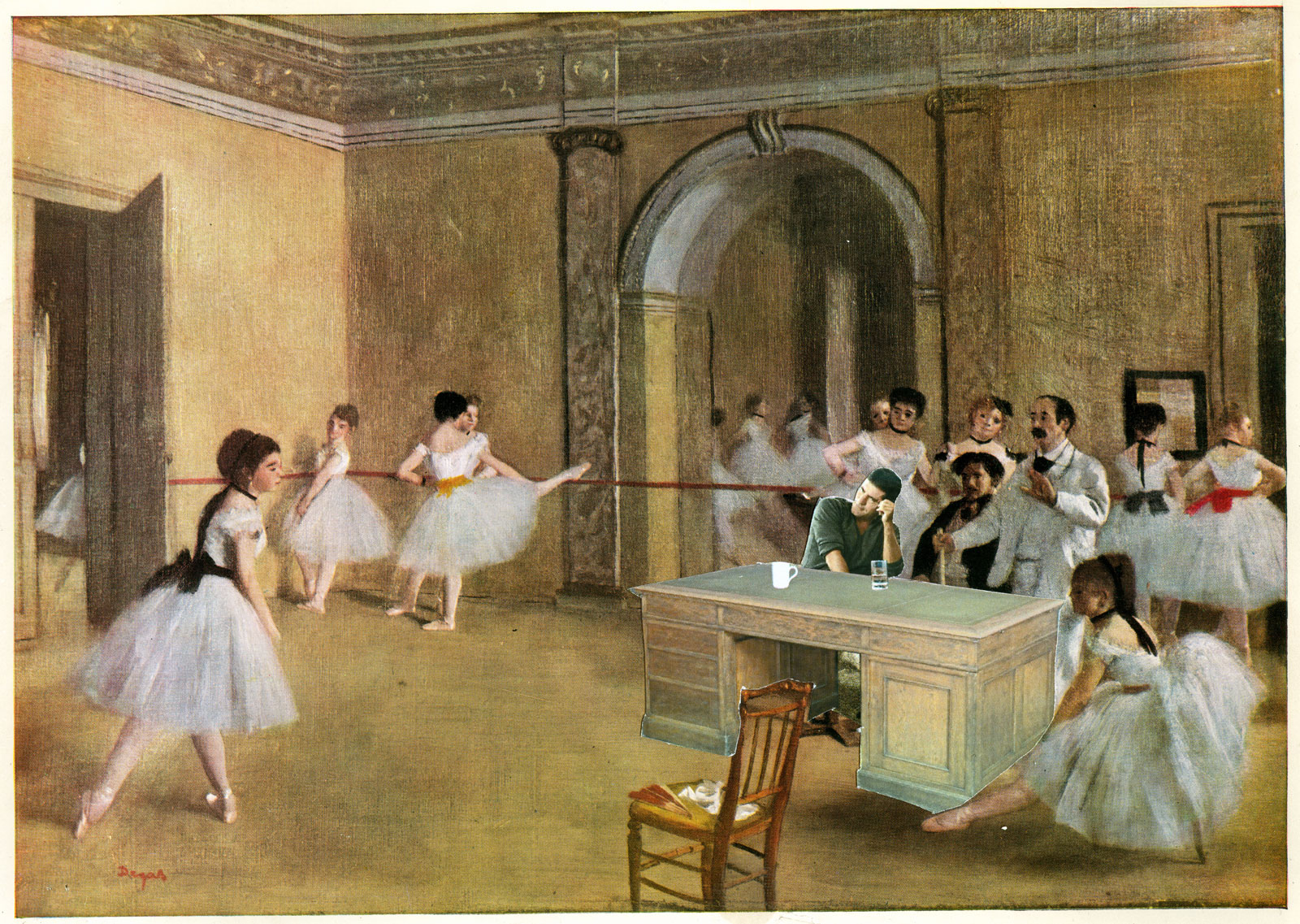
Image © Banksy
You Got An Audition! Now What?
If this is your first time auditioning, the first round is what’s known as the “cattle call.” It’s where you and approximately 300 others cram in a waiting room for one, two, sometimes three hours just waiting for your chance at 30 seconds of fame.
Read the script and memorize your lines, if any. If you have an agent, they should send you the sides (script) before you arrive. If you don’t have an agent yet, ask for the sides when you get to the casting house.
Don’t be afraid to take them with you into the audition. Sometimes they’ll have the lines written out on a whiteboard, sometimes not. Just know that we’d rather see you scanning pages than trying to remember your lines and having to be fed them during a take.
And if you’re unsure about anything, ask. Preferably before you’re in front of the camera.
Headshots
Headshots are a great investment, especially if you audition a lot. They show you’re serious about acting as a career. In Canada, you don’t need a headshot for commercials. The casting house will take a Polaroid, and staple it to your stats. You’ll need one for TV series, film and theatre auditions, though.
Make sure you keep it up to date. I’ve seen headshots that are 10 years old or more. If you’ve changed your hairstyle or colour drastically, or the photos are more than five years old, bite the bullet and get new ones.
What Allen Iverson Said
Yep, practice.
Even improvisers who are comfortable doing crazy shit on stage sometimes freeze up in auditions. That’s normal, especially your first few times. Maybe your first few dozen times.
If it helps make you less nervous, know that you’re probably not going to nail it the first time.
That doesn’t mean you shouldn’t try; it just means go easy on yourself. If you leave an audition feeling like you fucked up, remember: you showed up, and you did it. That’s your success. Be proud of that.
Use your time the night before to practice your lines and play with the character. Improvise in front of a mirror, or with a friend.
As with anything, the more you do it, the easier it becomes. So take every audition you can get, because you never know when you’ll get lucky.
Be Yourself…
Whatever the role, I want to see what YOU bring to it.
Whether you’re auditioning for a principal role or a minor SOC (Silent On Camera), let your personality and point of view shine. That doesn’t mean chew the scenery; it just means relax and show us why you’re perfect for the role.
If you’re feeling nervous before the audition, practise some of Amy Cuddy’s “power poses.” They can help calm and boost your confidence in as little as two minutes.
Lastly, I don’t care if the script calls for someone in his 40s, and you just turned 21. If you own the role, a good creative will fight to cast you for it. One time a client insisted they needed an actor in his 50s for a certain role. I snuck Alastair Forbes into the audition, and he blew everyone away. The client loved him, and he booked the job. He was maybe 25.
…But Keep Improving
I always, always request actors with improv skills. But improvisers who can act? That’s the gold, right there.
If you’re an improviser, take some acting lessons. If you’re an actor, learn to improvise. Both are invaluable, and can make the difference between getting the job or not.
Dress For Success
When you get the call, find out if you need a specific wardrobe. I know actors don’t have unlimited budgets, so if you don’t have it, borrow from a friend, or visit your local Value Village.
Otherwise, err on the side of business casual. A solid shirt and pants or nice jeans for guys, and a dress that doesn’t show too much skin for the ladies.
Some actors wear the same thing to callbacks that they wore to the initial casting. I’ve heard some actors do it “for luck,” because they think that somehow that paisley shirt and ripped cargo pants got them the callback.
In a word, no.
I can look past superfluous stuff, but many advertising people can’t. And even if my art director and I love you, if we can’t sell you to our boss or clients because they’re fixated on your Metallica t-shirt, it’s game over.
Give yourself the best possible odds. Dress the part.
A Note On Grooming
Beards are popular these days. But unless the role calls for a hipster, 99% of clients see “prisoner” or “pedophile” when presented with facial hair.
Shaving your beard, or at least trimming it down to Henry Cavill proportions, will increase your casting potential a hundredfold.
And never, ever cut your hair right before a shoot.
I once cast an actor with shoulder-length hair. She showed up on set two days later with a pixie cut. It’s the kind of thing that makes clients go ballistic – and can get you fired or blacklisted.
Even if you’re just contemplating a trim, always ask before doing it.
Be Professional When Those Around You Are Not
When you walk into a callback, there’s usually a producer, writer and art director sitting at the director’s table.
Sadly, many advertising creatives are oblivious to the actors in front of them. While you’re trying to rock your best Guy #2, they may be whispering, eating, scribbling, absorbed in their iPhone, or thinking about their next meeting with a face like thunder.
Ignore them.
Greet everyone with a smile as you walk in the room, then give your full attention to the director and/or camera.
Even if some people are focused elsewhere, a good director will take note of your performance and review it after the casting.
Agents And Stuff
You don’t need an agent to land gigs, but it helps. The catch? Most agents prefer that you already have a few roles under your belt before they’ll take you on.
Cameron and I have auditioned friends who didn’t have representation, and a number of them caught the eye of casting directors, who helped them find an agent. Look on Facebook or network with your fellow actors to find out about upcoming auditions.
However you get in the room, it’s important to know that once you’re there, if you’re good, you will get noticed.
You Got The Part. Now What?
Congratulations! You beat out dozens of other hopefuls, and now you’re ready for your close-up.
If this is your first on-camera role, you’re probably a little anxious. Try some simple breathing exercises to calm you. (You can listen to them on headphones on the way to the shoot.)
Allow yourself plenty of time to get to the location. Use Google maps the day before to gauge how long it will take you.
Once you’re on set, there’s a whole crew of highly-trained people, from hair & make-up, wardrobe, and script continuity, to the producer, AD, and director, whose job it is to help you give the best performance.
Take a deep breath, and enjoy the ride.
You Didn’t Get The Part. Now What?
Know that you’ll fail far more than you’ll succeed in getting roles. That’s not just you, that’s the business.
Even if you own the role, out-Brando Brando, or make everyone in the room laugh, you still might not get the part. I’ve seen actors rejected for being too tall, too round, too thin, too short, too good looking (yes!), not good looking enough…and the list goes on.
As personal as some of it sounds, don’t take it personally.
You have something to offer that no one else ever has, or ever will. Don’t let a handful of people determine how you feel about yourself.
It’s Not An Audition, It’s A Performance
If you treat every audition not as a dress rehearsal, but as the real deal, you’ll always bring your best self. And there’s no better gift you can give the world.
Speaking of gifts, watch Bryan Cranston’s advice for aspiring actors. It’s priceless.
Now go out there and knock ’em dead. I’ll be cheering for ya.
For more tips, check out 21 Things That Make Casting Directors Happy. It’s not just great advice for auditioning; it applies to every part of your life.










 People and Chairs